
Leave A Message
If you are interested in our products and want to know more details,please leave a message here,we will reply you as soon as we can.



Building‑integrated photovoltaics (BIPV) is often seen as a niche for less competitive PV products. But Bjorn Rau, Technical Manager and Deputy Director of PVcomB at Helmholtz‑Zentrum Berlin, argues this view may be unfair. He points out that the missing link for BIPV deployment lies at the intersection of the construction industry, building sector, and PV manufacturers.
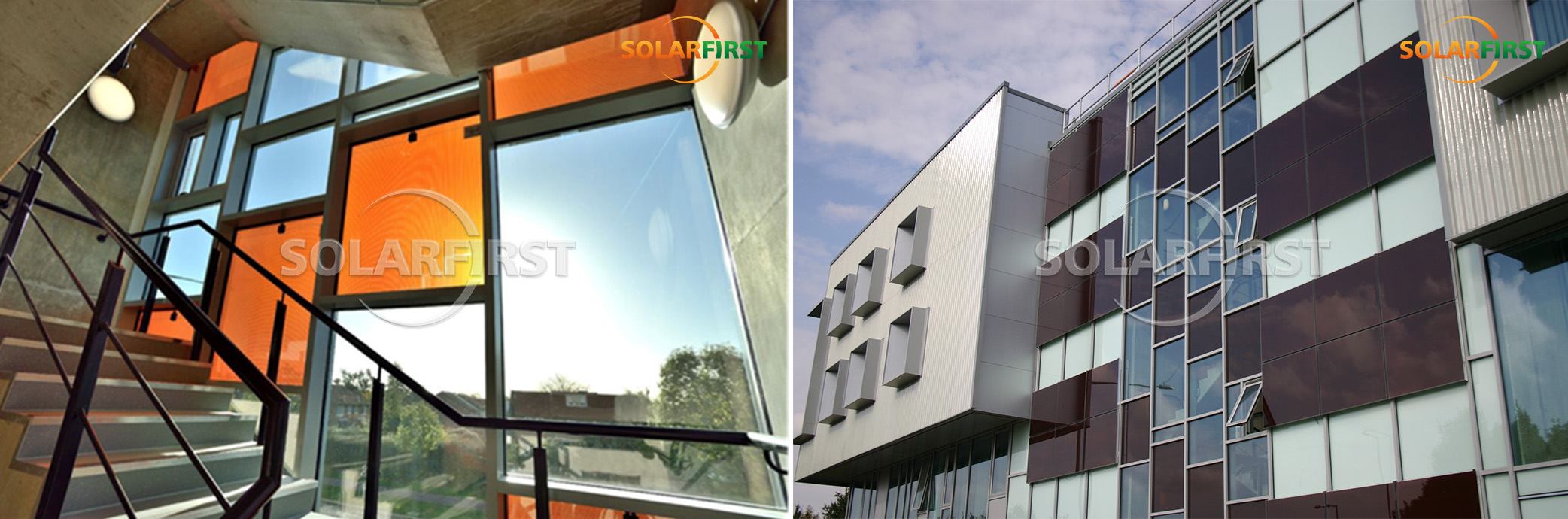
From PV Magazine: The PV industry has grown rapidly, reaching roughly 100 GWp of annual new installations globally – about 350‑400 million solar modules per year. Yet BIPV remains a niche. According to the EU’s Horizon 2020 project PVSITES, only about 2% of installed PV capacity was integrated into building envelopes in 2016. This is striking because over 70% of global energy consumption and 40‑50% of greenhouse gas emissions come from urban areas.
To tackle GHG emissions and promote on‑site generation, the European Parliament and Council introduced Directive 2010/31/EU on building energy efficiency, centered on “Near Zero Energy Buildings (NZEB)” . The directive applies to all new buildings after 2021 (public institutions’ new buildings from early this year). While it does not prescribe specific measures, active on‑site power generation is crucial to meeting NZEB standards.
Potential is huge: The Becquerel Institute found that in Germany, BIPV could supply over 30% of total electricity demand; in southern countries like Italy, nearly 40%.
So why does BIPV remain marginal? A seminar at Helmholtz Centre for Materials and Energy (HZB) in Berlin revealed that the problem is not a lack of technology – it is a knowledge gap. Most architects, planners, and building owners lack sufficient information about BIPV’s potential and supporting technologies. Concerns include insufficient design appeal, high cost, and excessive complexity. To overcome these misunderstandings, the needs of architects and building owners must be given top priority.
BIPV differs from traditional rooftop solar (which needs neither multifunctionality nor aesthetics). Manufacturers must rethink: building envelopes must first perform conventional functions – power generation is an added attribute. Key aspects for multifunctional BIPV components include:
▪ Cost‑effective customized solutions with variable sizes, shapes, colors, and transparency
▪ Standards and attractive pricing – preferably compatible with Building Information Modeling (BIM)
▪ Integration of building materials and power generation into new facade components
▪ High tolerance for temporary (local) shading
▪ Long‑term stability (power output attenuation, appearance stability like color)
▪ Monitoring and maintenance plans adapted to site conditions (installation height, replacement of defective components)
▪ Compliance with legal requirements (safety, fire prevention, building codes, energy regulations)

 en
en fr
fr de
de zh-CN
zh-CN ru
ru es
es pt
pt ja
ja ko
ko ar
ar