Leave A Message
If you are interested in our products and want to know more details,please leave a message here,we will reply you as soon as we can.



Building‑integrated photovoltaics (BIPV) holds significant promise, yet the industry currently suffers from low market concentration.
In recent years, driven by national policies, the number of domestic enterprises entering the BIPV sector has grown substantially. However, most remain small‑scale, resulting in a fragmented industry landscape.
What is BIPV?
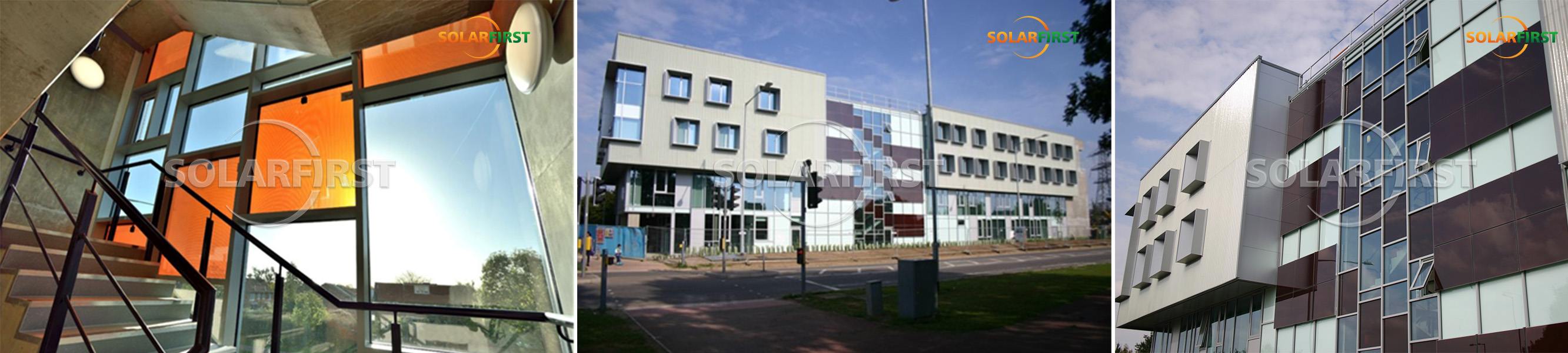
BIPV refers to photovoltaic systems designed, constructed, and installed simultaneously with a building’s structure, making the PV system an integral part of the building envelope. It serves a dual function – generating electricity while acting as a structural building component or material – and can enhance architectural aesthetics, achieving harmonious unity with the building.
Advantages and significance
As an organic fusion of solar power generation and architecture, BIPV offers superior economics, reliability, convenience, and aesthetics compared to retrofitted PV roofing systems. Under the national goals of “carbon peaking” and “carbon neutrality,” BIPV represents the optimal pathway for implementing renewable energy in buildings.
Policy drivers
Relevant authorities – including the Ministry of Housing and Urban-Rural Development, Ministry of Industry and Information Technology, National Development and Reform Commission, and various provincial and city governments (Beijing, Tianjin, Shanghai) – have issued policies to foster BIPV. Notably, in June 2021, the General Department of the National Energy Administration issued the “Notice on Submitting Pilot Programs for County‑Wide (City‑Wide, District‑Wide) Rooftop Distributed Photovoltaic Development,” organizing nationwide pilot projects for distributed rooftop PV.
Growth outlook
With this nationwide county‑level distributed PV promotion policy, BIPV is expected to enter accelerated growth. According to the “2022‑2026 Photovoltaic Integration Industry In‑depth Market Research and Investment Strategy Recommendations Report” released by the Xin Sijie Industry Research Center, China’s BIPV industry scale is projected to surpass 10,000 megawatts (MW) by 2026.
Industry structure
The BIPV sector mainly comprises PV enterprises and construction firms. Despite policy incentives driving many small domestic players into the market, low industry concentration remains a key characteristic.

 en
en fr
fr de
de zh-CN
zh-CN ru
ru es
es pt
pt ja
ja ko
ko ar
ar