Distributed PV Stations: Definition & Key Features
What is a distributed photovoltaic power station?
Distributed photovoltaic power stations generally refer to small‑scale PV power generation systems built near users by utilizing decentralized resources. They have a relatively modest installed capacity and are connected to the distribution network at close range (typically at voltage levels of 35 kilovolts or below). Through photovoltaic modules, this system directly converts sunlight into electricity.
Currently, the most widely adopted form of distributed PV is the power generation project built on rooftops of urban buildings. Such systems must be connected to the public grid and operate in coordination with it to supply nearby users. Without the support of the public power grid, distributed systems cannot guarantee reliable power supply or adequate power quality for end users.
Core features of distributed photovoltaic power stations
1. Small output power and flexible scale
Traditional centralized power stations often have capacities of hundreds of thousands or even millions of kilowatts, relying on large scale to improve economic efficiency.
The modular nature of PV generation means that system size can be adjusted up or down, and the capacity can be flexibly matched to site requirements.
Distributed PV projects typically have capacities within a few thousand kilowatts.
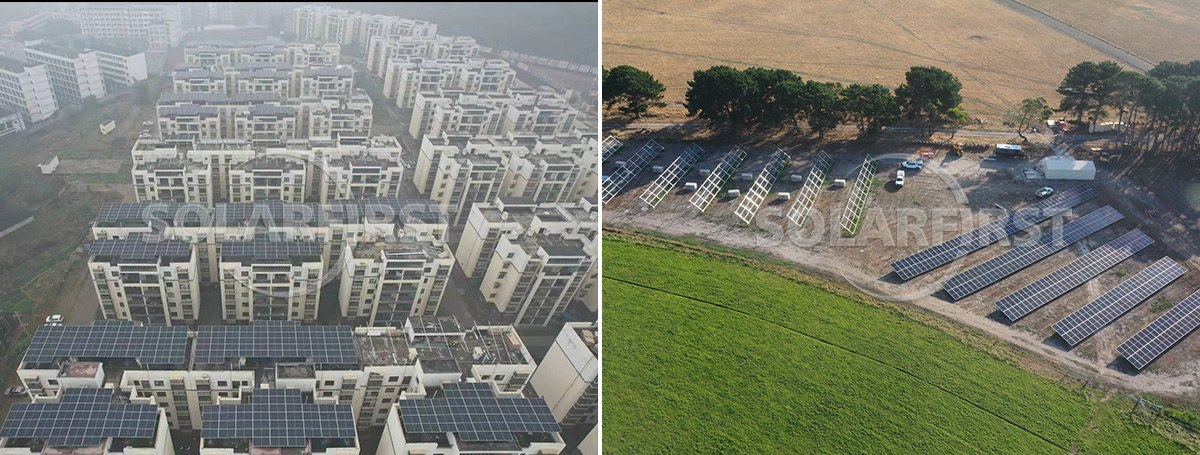
For example, the distributed projects implemented by Solar First Group around the world clearly demonstrate this flexibility: In Guangxi, they designed customised distributed roof mounting solutions for commercial and industrial buildings; in the vast territories of Australia, they deployed specially engineered distributed ground mounting systems. These cases show how distributed PV can be adapted to local conditions, ranging from compact rooftop spaces to open ground areas.
Unlike centralized plants, the scale of a PV station has little impact on its power generation efficiency, and therefore has a relatively small effect on its economic viability. The return on investment for small‑scale systems is no lower than that of large‑scale plants.
2. Minimal pollution and strong environmental benefits
Distributed power stations produce no noise during operation and do not cause air or water pollution.
It is worth noting that the development of distributed PV must harmonise with the surrounding urban environment. While harnessing clean energy, public concern for the aesthetic appearance of the cityscape should also be taken into account.
3. Partial relief during peak electricity demand periods
The maximum output of a distributed PV station occurs during daytime, which coincides with the period of peak electricity demand.
However, the energy density of distributed PV is relatively low (the system’s power per unit area is only about 100 watts per square metre), and the available rooftop area suitable for PV module installation is limited. Therefore, it cannot fundamentally solve power shortages; rather, it serves as an effective supplementary source during peak hours.



 en
en fr
fr de
de zh-CN
zh-CN ru
ru es
es pt
pt ja
ja ko
ko ar
ar