As the weather shifts from spring to summer, the frequency of severe convective weather increases. The hot summer months bring extreme conditions such as high temperatures, heavy rainfall, and thunderstorms, posing multiple challenges for rooftop photovoltaic power stations. So, how can we take proper precautions to ensure stable operation and protect power generation revenue?
Coping with high temperatures and heat:
Maintain ventilation and heat dissipation: Regularly clear any obstructions around the power station to keep the modules in a well‑ventilated and cool environment.
Clean modules wisely:
Clean in the early morning or late evening when temperatures are lower.
Avoid cleaning at noon or in the afternoon when the sun is intense and temperatures are extremely high – sudden cooling of the glass panel under a large temperature difference may cause cracking.
Ensure inverter heat dissipation:
High temperatures can accelerate aging of internal inverter components. Good ventilation and heat dissipation are critical.
Inverters are usually installed outdoors. Choose a location out of direct sunlight (e.g., behind modules, under eaves, or in other shaded areas).
For outdoor inverters, install sunshades and ensure smooth airflow around them.
Dealing with summer rainstorms:
Heavy rain can reduce the insulation performance of cables and modules. If damage occurs, power generation may be interrupted.
Pitched roofs: Typically have strong drainage capacity, so little extra concern is needed.
Flat roofs: Increase inspection frequency to promptly identify and address any ponding risks.
Important safety warning:
During operation and maintenance checks in rainy weather, never operate electrical equipment by hand!
Do not directly touch inverters, modules, cables, or terminal blocks with your hands!
Insulated rubber gloves and insulated rubber boots must be worn to significantly reduce the risk of electric shock.
Foundation of safety – reliable mounting systems:
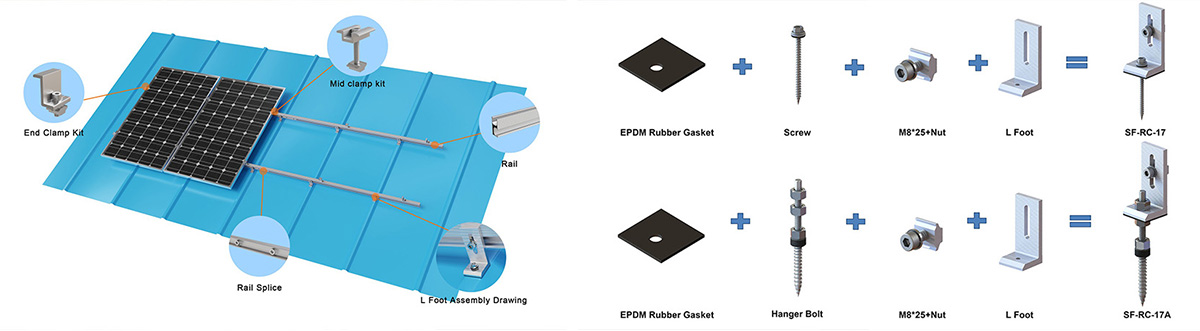
A stable and reliable mounting system is essential for a power station to withstand wind and rain and ensure safe operation. For example, the series of rooftop mounting solutions provided by Solar First Group – such as SF Metal Roof Mount, SF Tile Roof Mount, and SF Concrete Roof Mount – were designed with extreme weather challenges in mind.
Key advantages include:
✅ Excellent structural performance
Wind load resistance up to 60 m/s, effectively resisting strong wind environments.
Snow load capacity up to 1.4 kN/m², meeting safety requirements in snowy regions.
System design allows solar modules to be installed parallel to the roof surface, keeping the building’s appearance neat and tidy.
✅ High‑quality, durable materials
Main structural material: high‑strength anodized aluminum AL6005‑T5 – lightweight, corrosion‑resistant, and strong.
Choosing such high‑performance bracket products greatly enhances the structural safety and long‑term stability of power stations under adverse weather conditions.
Dealing with summer lightning:
Regular inspection of lightning protection facilities: Routine checks on the PV station’s lightning protection devices are essential.
Effective lightning protection: The most widely used and effective method is to reliably ground the metal parts of electrical equipment (equipotential bonding). The grounding system consists of four parts: grounding devices, grounding electrodes, down conductors, and the earth.
Safe operation: Avoid manual maintenance of electrical equipment and circuits. Be sure to wear insulating rubber gloves to strictly prevent the risk of electric shock. At the same time, implement comprehensive protective measures against high temperatures, heavy rain, typhoons, and lightning strikes.
Summary and recommendations:
Weather is unpredictable. Increasing the frequency of inspection and maintenance for your power station can effectively prevent faults and even accidents – the key to ensuring power generation income.
You can perform basic daily maintenance yourself.
Alternatively, professional operation and maintenance engineers can be entrusted to conduct comprehensive inspections and maintenance, ensuring the system operates safely and efficiently.



 en
en fr
fr de
de zh-CN
zh-CN ru
ru es
es pt
pt ja
ja ko
ko ar
ar