
Leave A Message
If you are interested in our products and want to know more details,please leave a message here,we will reply you as soon as we can.



The newly enacted Inflation Reduction Act (IRA) in the United States provides tax credits for domestic manufacturing of solar tracker components, which is expected to boost local tracker production. The federal spending bill offers credits for torque tubes and structural fasteners produced within the U.S.
▪ Torque tubes qualify for a manufacturing tax credit of $0.87 per kilogram.
▪ Structural fasteners qualify for $2.28 per kilogram.
▪ Both components are typically made of steel.
Ed McKiernan, President of Terrasmart, stated: “For tracker manufacturers that have moved torque tube or structural fastener production overseas, these credits will prompt a return to domestic manufacturing. End customers – PV array owners and operators – will benefit from more competitive pricing.” Compared to fixed brackets, trackers will become more cost‑advantageous.
The IRA focuses on tracker systems because they dominate large‑scale and ground‑mount U.S. solar projects. Trackers generate more energy than fixed‑tilt systems by rotating to keep panels facing the sun.
Gary Schuster, CEO of OMCO Solar (a domestic racking manufacturer), noted that measuring the credit’s impact on tracker manufacturing investment is challenging, but using torque tube weight as a metric is reasonable – the torque tube is the rotating component that runs through the entire tracker array, supporting rails and modules.
Structural fasteners have broad applications: connecting torque tubes, drive assemblies to torque tubes, and mechanical systems to tracker bases. Schuster estimates fasteners account for 10–15% of total tracker composition.
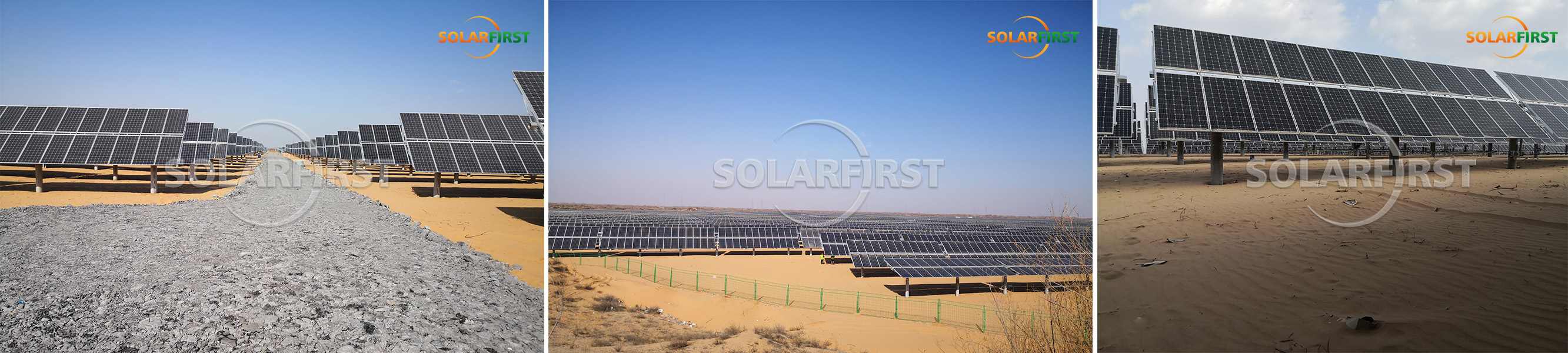
Fixed brackets are not included in the IRA’s capacity credit but can benefit from the “domestic content bonus” under the Investment Tax Credit (ITC). If at least 40% of a PV array’s components are U.S.-made, the system’s tax credit increases by 10%. For projects meeting apprenticeship and prevailing wage requirements, owners can receive up to 40% tax credit. Since fixed brackets are largely steel‑based, and U.S. steelmaking is active, the domestic content clause only requires steel components to be fabricated in the U.S.
Challenges remain. Ed McKiernan pointed out that reaching the local content threshold is difficult with only racking and inverters – local alternatives are limited and may face shortages. Eric Goodwin, Business Development Director at OMCO, added: “The biggest issues include not only local content guidelines but also the timing of the first eligible projects. Customers are asking: When can I get this credit? Is it retroactive? Some have requested tracker component definitions, but we await Treasury confirmation.” The U.S. Department of the Treasury is currently soliciting public comments on IRA clean energy tax credit implementation details.

 en
en fr
fr de
de zh-CN
zh-CN ru
ru es
es pt
pt ja
ja ko
ko ar
ar