Leave A Message
If you are interested in our products and want to know more details,please leave a message here,we will reply you as soon as we can.


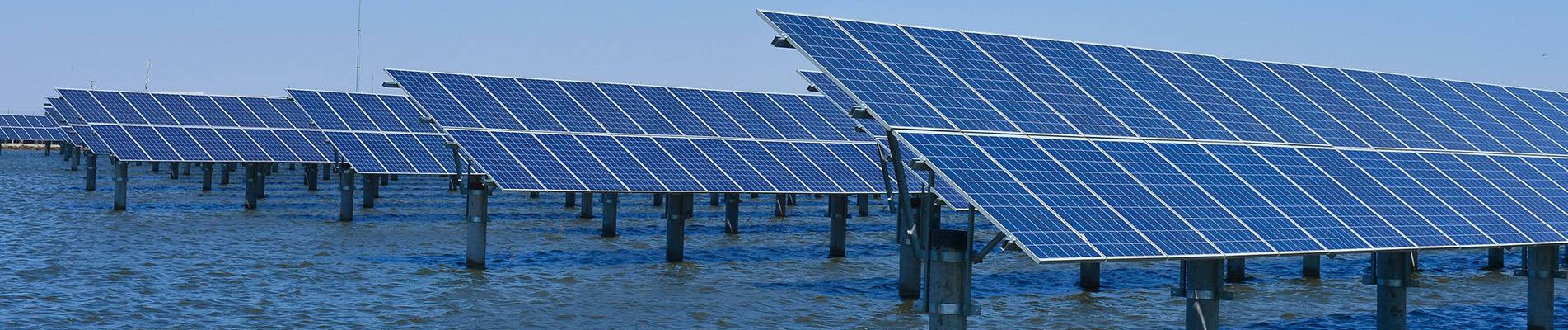


This product is a dual-axis tracking system that allows photovoltaic modules to be more effectively aligned with the sun's position through angle adjustments in both horizontal and vertical directions. Compared to fixed brackets or single-axis tracking systems, the dual-axis design can achieve higher solar energy reception potential in different seasons and at different times. The system adopts a modular unit layout, with each tracking unit independently driven and equipped with remote monitoring capabilities, making it suitable for ground-mounted power plant scenarios with high requirements for power generation output.

Product Description
This dual-axis tracking system consists of structure, drive system, and a control system. The number of solar modules on each tracker can be customized according to the project. The azimuth angle range is ±120°, and the elevating angle is 0° to 60°, covering the main range of changes in solar azimuth and altitude angles throughout the day.
The drive method uses closed-loop time control + GPS. The MCU controller automatically adjusts the motor action based on the location's latitude and longitude in real-time, and data from anemometers. The system supports reverse tracking, which can reduce the impact of inter-array shading during early morning and late afternoon hours. For communication, both wireless or wired solutions are provided, facilitating centralized monitoring of the operating angle, fault status, and other information of each tracker unit by the maintenance platform. The system includes an automatic stow function for nighttime and high wind conditions, helping to reduce wind load and mechanical wear during long-term standby.
Product Components

Advantage
▶ Strong Adaptability:
The system is adaptable to varying terrain slopes, utilizing independent foundations and adjustable connectors to accommodate site undulations, making it largely unrestricted by terrain (except for large gullies or steep slopes).
▶ High Durability:
The structural materials are made of high strength building steel, and the surface anti-corrosion coating provides long-term corrosion resistance under most atmospheric conditions.
▶ Good Accessibility:
Each tracking unit is independently arranged, with sufficient spacing between adjacent units to minimize mutual obstruction and facilitate passage for construction vehicles, inspection personnel, and maintenance equipment.
▶ Safe and Reliable:
The system features a one-to-one independent control design. The status of each support unit (real-time angle, fault codes, motor current, etc.) can be remotely viewed through the system platform, helping to detect anomalies early and reducing long-term power generation losses due to single-point failures.
▶ Intelligent Tracking:
The system can automatically track based on GPS timing and solar position algorithms. The tracking strategy can be automatically adjusted in strong wind weather or heavy snow to ensure system safety. The backtracking function can further optimize the array layout during morning and evening hours.
Tracker Structure
| Tracking Technology | Dual Axis Tracker |
| System Voltage | 1000V/1500V |
| Tracking Range | Azimuth +120°, Elevation 0-60° |
| Working Wind Speed | 18 m/s (Customizable) |
| Max. Wind Speed | 55 m/s (Customizable) |
| Modules per Tracker | ≤40 Modules (Customizable) |
| Principal Materials | Hot-Dip Galvanized Q235B/Q355B, Zn-Al-Mg Coated Steel |
| Mean Coating Thickness | ≥65μm |
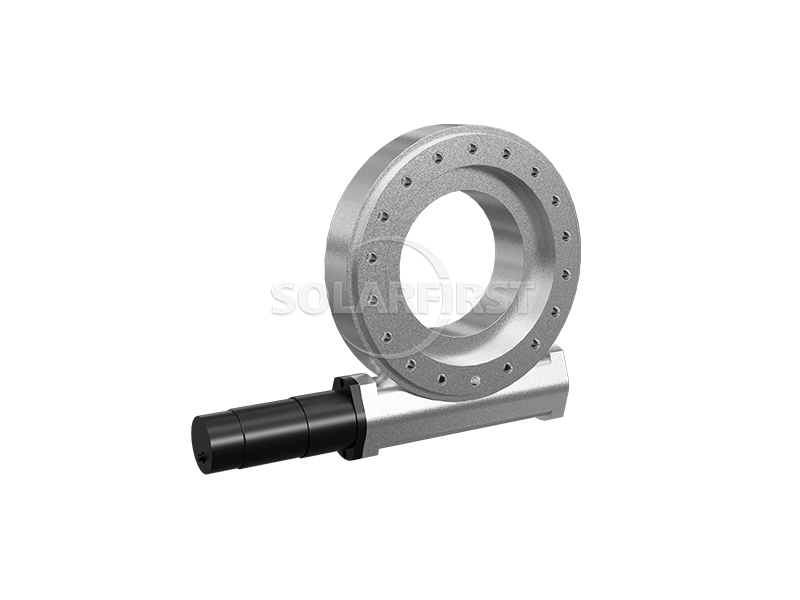
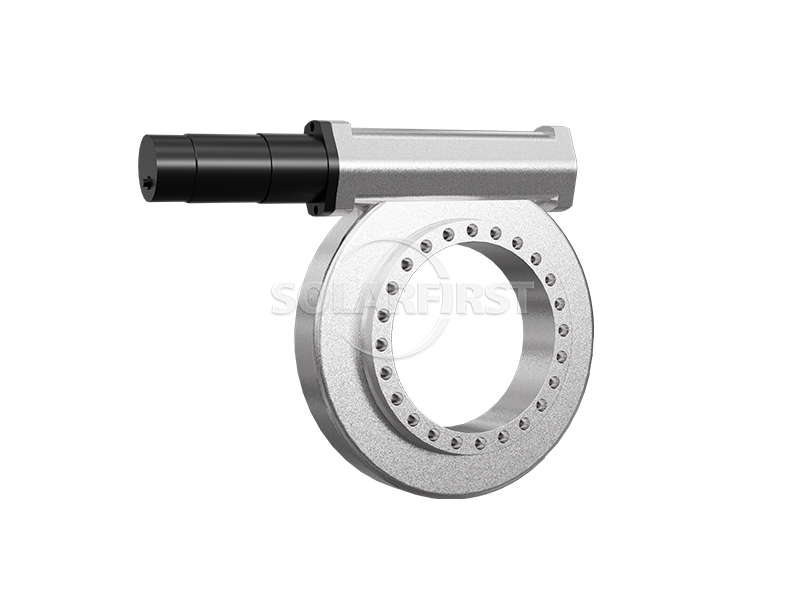
| Drive System | Slewing Drive |
| Foundation type | PHC/Cast-in-Place Pile/Steel Pile |
Control System
| Control System | MCU |
| Tracking Mode | Closed Loop Time Control+ GPS |
| Tracking Accuracy | <2° |
| Communication | Wireless (ZigBee, LoRa); Wired (RS485) |
| Powder Acquisition | External Supply/StringSupply/Self-Powered |
| Auto Stow at Night | Yes |
| Auto Stow During High Winds | Yes |
| Optimized Backtracking | Yes |
| Protection Degree | IP65 |
| Working Temperature | -30°C~65°C |
| Anemometer | Yes |
| Power Consumption | 0.5kWh per day |
Applicable Scenarios
▪ In midium to high latitude regions, arid and cloudless areas, the potential gain of dual-axis tracker is relatively more significant.
▪ Ground-mounted power plants with high requirements for increasing average annual power generation and controllable land costs.
▪ Areas with some undulations but no drastic elevation changes, requiring independent foundations.
▪ Projects with certain accessibility requirements, such as those involving complementary agriculture or fisheries (requiring a reasonable increase in the clearance at the base of the structure).
Important Notes:
▶ Civil Engineering Requirements:
The concrete pouring location, elevation, and embedded part accuracy of the independent foundation directly affect the movement trajectory and structural lifespan of the tracking mechanism. Site surveys and foundation design should be conducted before construction.
▶ Wind Speed Risk:
The maximum operating wind speed is 18 m/s. Exceeding this speed will automatically and immediately switching to stow mode and stop tracking. In areas with frequent strong winds or typhoons, it is neccessary to increase the wind resistance design or add physical limit devices.
▶ Communication Reliability:
Wireless solutions (ZigBee/LoRa) require consideration of signal obstruction and repeater deployment in large-scale power stations; wired RS485 solutions have slightly higher cabling costs but stronger anti-interference capabilities, and can be selected based on project scale and environment.
▶ Factors Affecting Tracking Accuracy:
An accuracy of <2° is a typical value under conditions of good calibration, no sensor drift, and no loose mechanical connections. In actual operation, accuracy may decrease due to factors such as foundation settlement, wind vibration, and motor hysteresis, requiring regular calibration.
▶ Maintenance Recommendations:
It is recommended to check the lubricating oil condition of the slewing drives and the tightness of fasteners every season; perform zero-point calibration of the angle annually.
Summary
This product is a dual-axis tracking system. Through dual-axis movement in the horizontal direction (usually 120° and customizable) and the pitch direction (usually 0~60° and customizable), it drives the photovoltaic modules to more accurately follow the sun's position.
The system is adaptable to various terrains while maintaining good overall stability. Each system is equipped with an MCU controller, GPS, anemometer, with support to closed-loop time-controlled tracking, reverse tracking, and automatic stow in strong winds and at night. Remote status monitoring is achieved through wired or wireless communication. The structural materials are mainly hot-dip galvanized or magnesium-aluminum-zinc coated steel. The maximum operating wind speed is 18m/s, with a wind resistance design of 55m/s.
The daily self-consumption of a single unit is approximately 0.5kWh. Overall, it is suitable for large and medium-sized ground-mounted photovoltaic power plants with high power generation requirements and relatively complex site conditions.
Solar First Project Reference
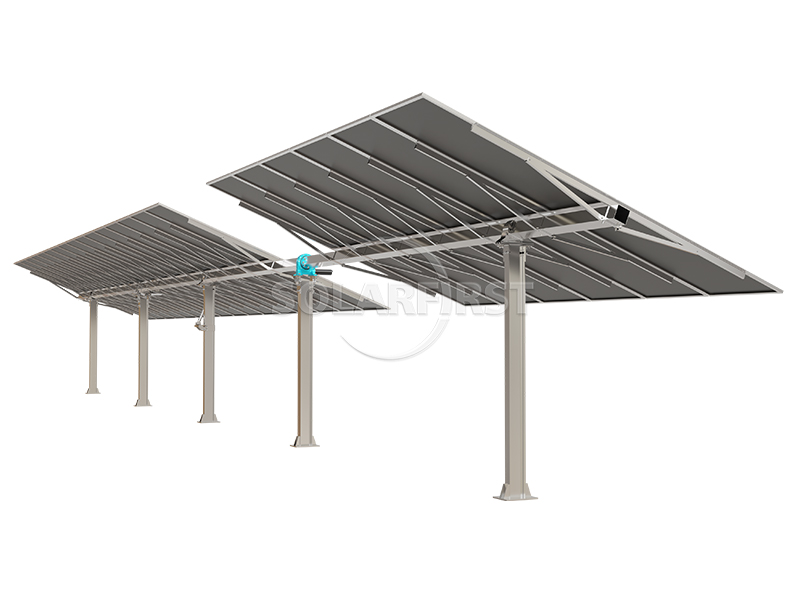
This product is a horizontal single-axis tracking system, primarily used in photovoltaic power plants to support and drive the solar module array to follow the sun. The system employs independent control and a modular design, reducing the amount of foundation piles required under certain terrain conditions and ensuring compatibility with current mainstream large-size modules. Its overall structure has been verified through wind tunnel testing and is suitable for various ground-mounted power plant scenarios.
Read More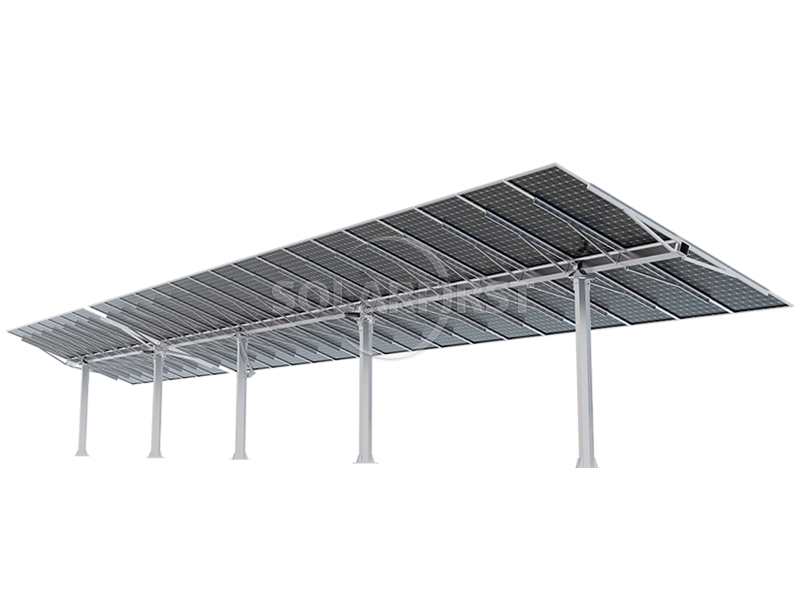
This product is a horizontal single-axis tracking system, primarily designed for ground-mounted photovoltaic power plant scenarios. The system employs a multi-point drive design to enhance the structure's torsional resistance and critical wind speed levels. It can adapt to continuous undulations and irregular terrain, and meets installation requirements with a maximum north-south slope of 15%.
Read More
This product is a dual-axis tracking system that allows photovoltaic modules to be more effectively aligned with the sun's position through angle adjustments in both horizontal and vertical directions. Compared to fixed brackets or single-axis tracking systems, the dual-axis design can achieve higher solar energy reception potential in different seasons and at different times. The system adopts a modular unit layout, with each tracking unit independently driven and equipped with remote monitoring capabilities, making it suitable for ground-mounted power plant scenarios with high requirements for power generation output.
Read More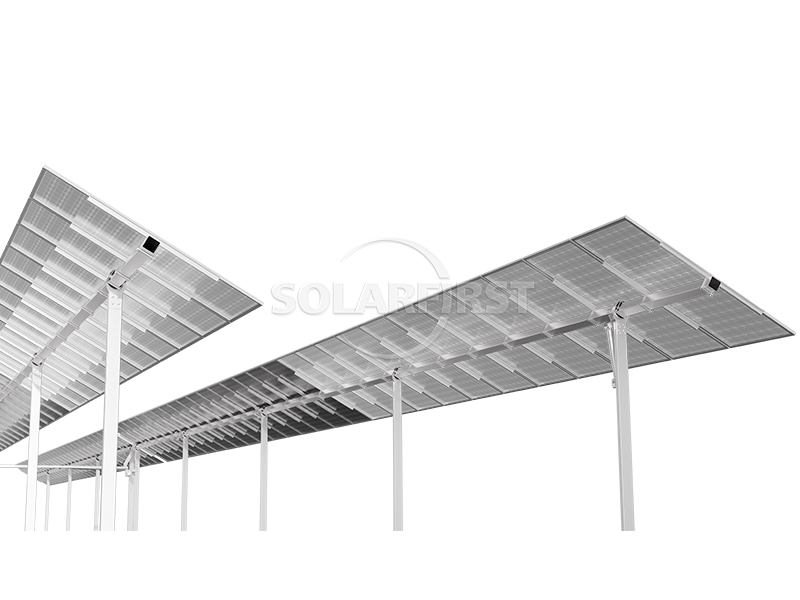
The single-axis tracking system is a linked type solar tracking device used in photovoltaic (PV) power plants. Through a single-axis rotating structure, the system allows PV modules to roughly follow the sun's azimuth from east to west throughout the day, helping to improve the power generation efficiency of the PV array. The system employs a linkage design, which links multiple tracker into one set. The tracker control unit supports multiple power supply methods and communication protocols, making it suitable for power plant projects of varying sizes and terrain conditions.
Read More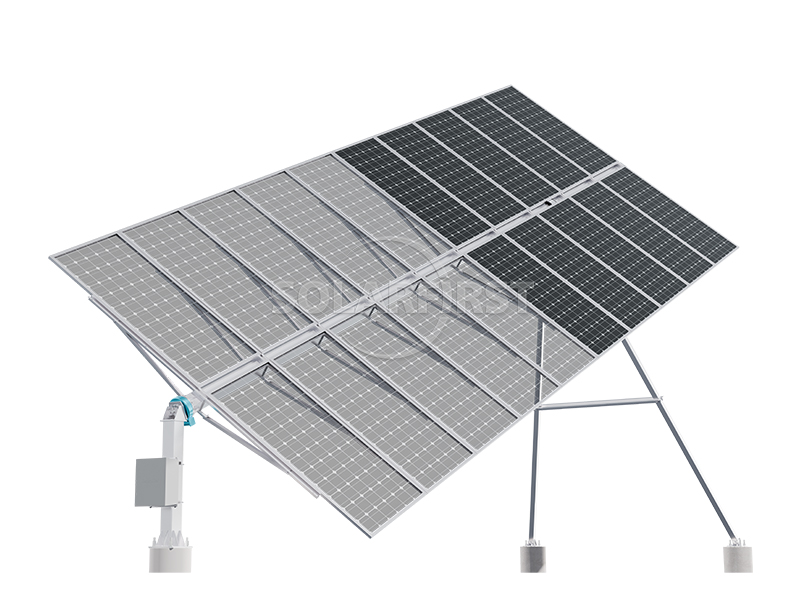
The tilted single-axis tracking system is an intelligent tracking solution suitable for photovoltaic power plants. This system uses a single-axis rotation mechanism to allow photovoltaic modules to track changes in the sun's azimuth angle around a tilted axis, thereby improving solar energy reception efficiency at different times. The system is optimized for complex terrain conditions and can be deployed on uneven sites such as mountains and slopes, providing photovoltaic projects with an option that balances increased power generation with engineering adaptability.
Read More
 en
en fr
fr de
de zh-CN
zh-CN ru
ru es
es pt
pt ja
ja ko
ko ar
ar