Leave A Message
If you are interested in our products and want to know more details,please leave a message here,we will reply you as soon as we can.


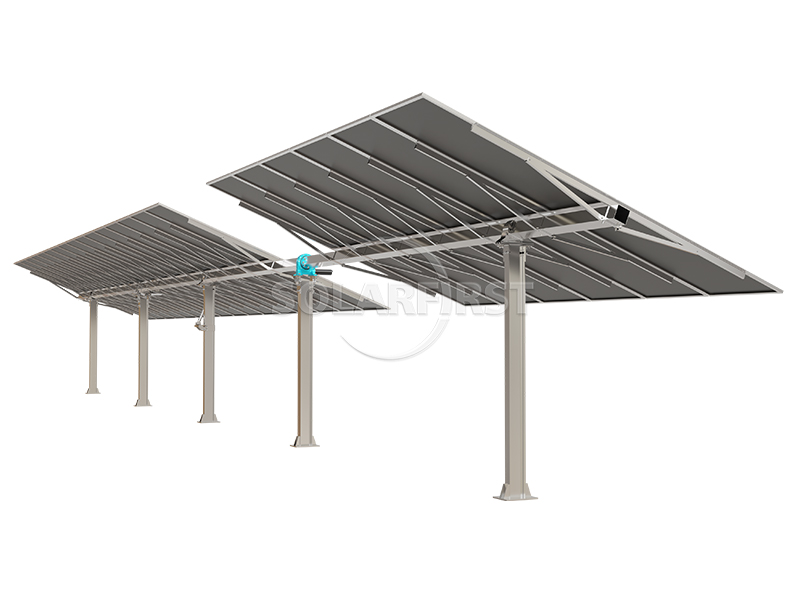
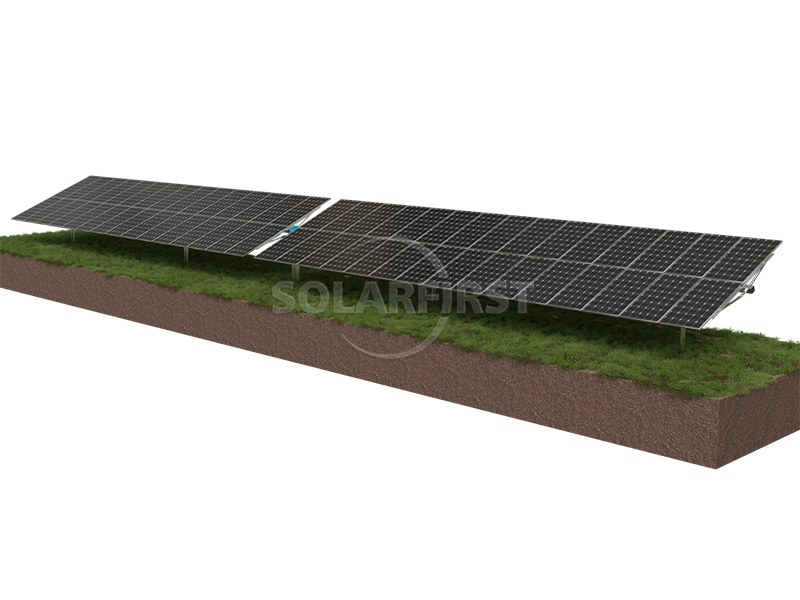
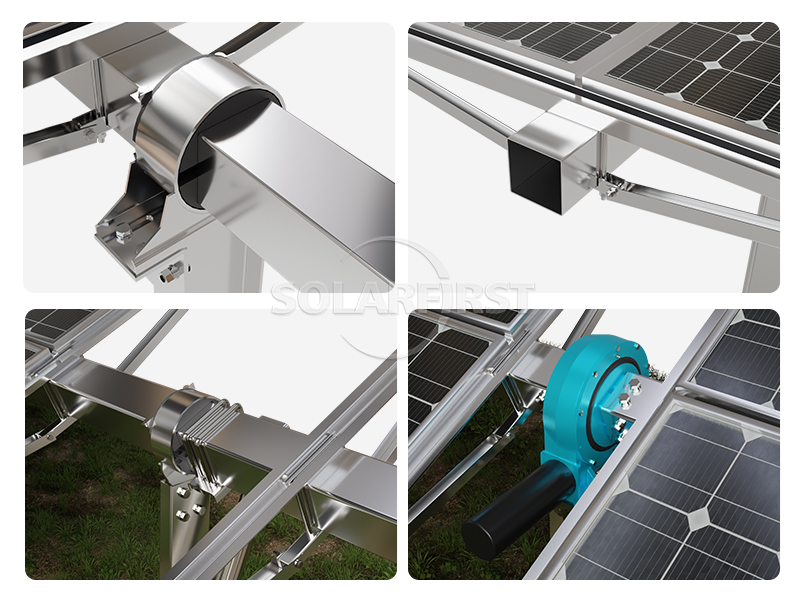
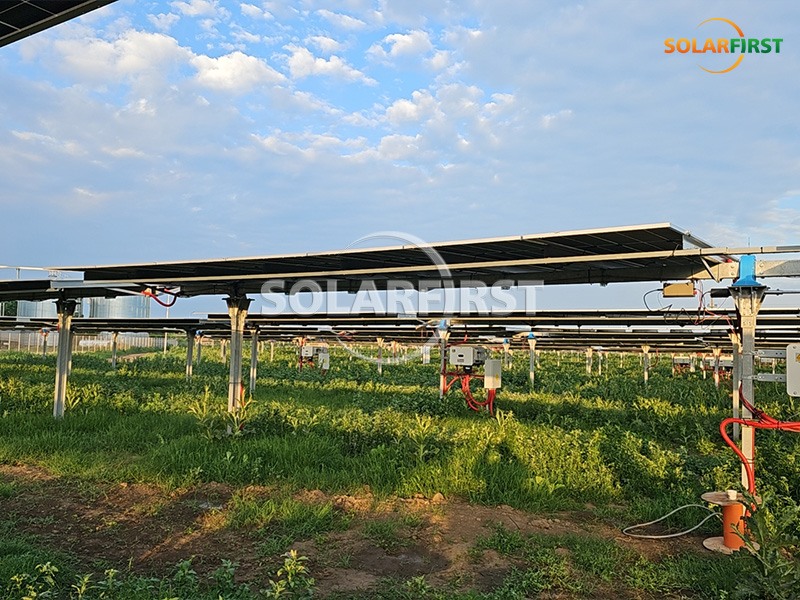
This product is a horizontal single-axis tracking system, primarily used in photovoltaic power plants to support and drive the solar module array to follow the sun. The system employs independent control and a modular design, reducing the amount of foundation piles required under certain terrain conditions and ensuring compatibility with current mainstream large-size modules. Its overall structure has been verified through wind tunnel testing and is suitable for various ground-mounted power plant scenarios.

Product Description
Unlike conventional fixed mounting structure or linked tracking systems, this system is designed based on the principle of independent operation of each tracker, with no mechanical linkages between the trackers, facilitating the layout of construction and maintenance access routes. The system control unit can adjust the tilt angle according to terrain undulations and real-time meteorological data, aiming to improve irradiance reception efficiency under different weather conditions.
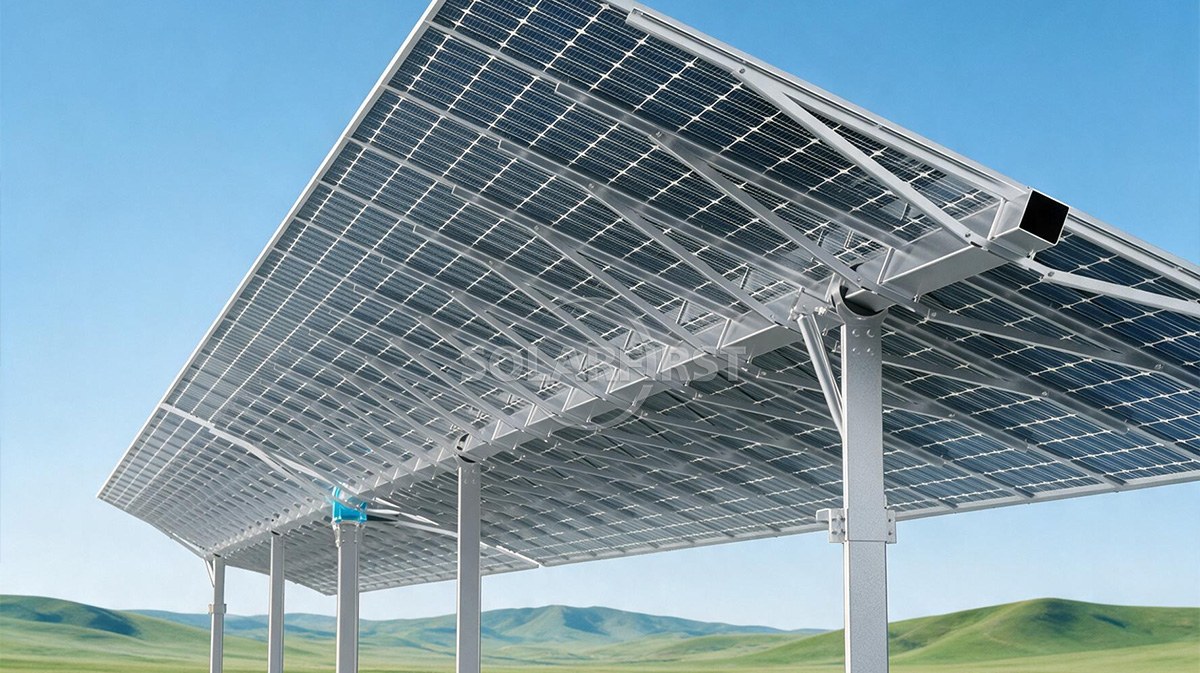
Product Components

Advantage
▶ Terrain Adaptability
Applicable to uneven sites with a north-south slope difference around 15%, reducing site leveling work. If the land undulation is higher, the design can be customized to adapt to site.
▶ Pile Quantity
The design helps reduce the number of piles per megawatt, with a reference value of approximately 140 piles/MW, thus controlling foundation costs.
▶ Maintenance Ease
Independent trackers are free of linkages, providing access for maintenance and cleaning.
▶ Fault Monitoring
The independent control system can report the location of faults, assisting maintenance personnel in rapid response and reducing potential power generation losses.
▶ Tracking Strategy
The tilt angle can be adjusted based on terrain and meteorological data, potentially achieving higher power output under certain weather conditions compared to a fixed angle.
▶ Structural Validation
Through proprietary structural design and wind tunnel testing, stability is expected within the specified wind speed range.
Tracker Structure
| Tracking Technology | Horizontal Single Axis Tracker |
| System Voltage | 1000V/1500V |
| Tracking Range | ±45%/±60° |
| Working Wind Speed | 18 m/s (Customizable) |
| Max. Wind Speed | 55 m/s ASCE 7-10 (Customizable) |
| Modules per Tracker | ≤60 Modules (Customizable) |
| Principal Materials | Hot-Dip Galvanized Q235B/Q355B, Zn-Al-Mg Coated Steel |
| Mean Coating Thickness | >80μm |
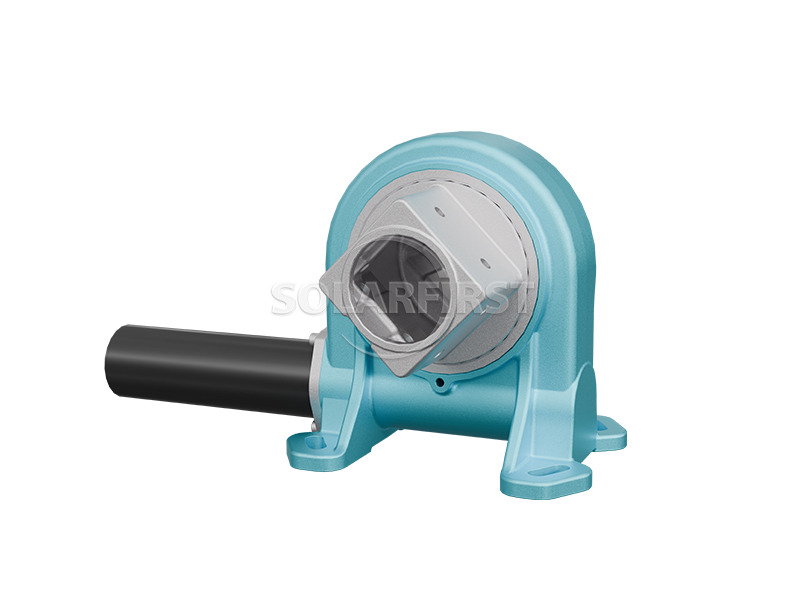
| Drive System | Slew Drive |
| Foundation type | PHC/Cast-in-Place Pile/Steel Pile |
Control System
| Control System | MCU |
| Tracking Mode | Closed Loop Time Control+ GPS |
| Tracking Accuracy | <2° |
| Communication | Wireless (ZigBee, LoRa); Wired (RS485) |
| Powder Acquisition | External Supply/StringSupply/Self-Powered |
| Auto Stow at Night | Yes |
| Auto Stow During High Winds | Yes |
| Optimized Backtracking | Yes |
| Protection Degree | IP65 |
| Working Temperature | -30°C~65°C |
| Anemometer | Yes |
| Power Consumption | 0.3kWh per day |
Applicable Scenarios
▪ Large-scale ground-mounted power plants
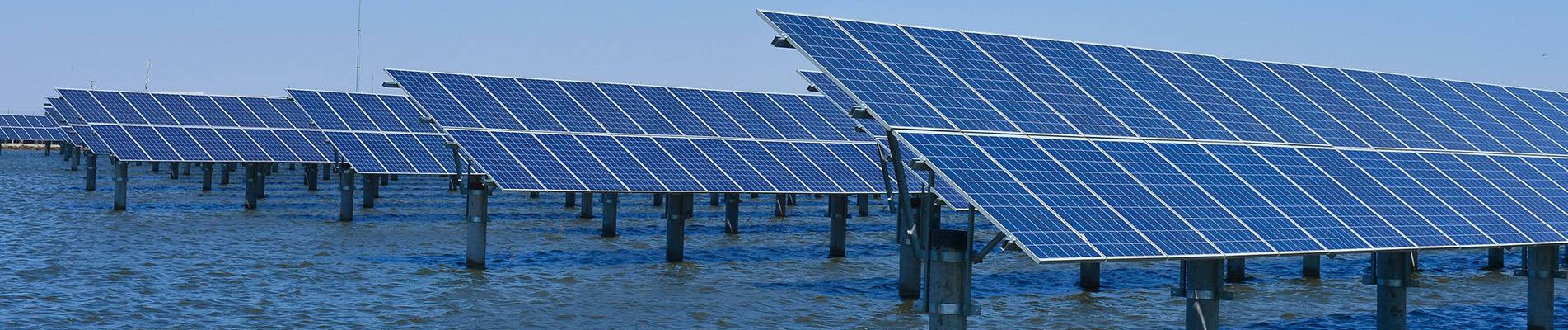
▪ Fish-solar/agricultural complementary power generation
▪ Ecological restoration scenarios: such as saline-alkali land, deserts, etc., improving the ecological environment while generating electricity.
Important Notes:
▪ The operating wind speed is 18 m/s. When the wind speed exceeds this value, the control system will return the support to a protective angle to avoid prolonged exposure to over-design loads.
▪ The tracking range of ±45° or ±60° can be selected based on the project's latitude, terrain and site conditions. Large-angle tracking is not suitable for all sites.
▪ The intelligent tracking algorithm requires accurate terrain and meteorological data. A small weather station at the project site to improve data reliability.
▪ During installation and maintenance, attention should be paid to electrical grounding and regular lubrication of the slewing drive mechanism.
Summary
This single-axis tracking system adopts independent control, with a tracking capability of ±45° to ±60°, and adaptable to various foundation types. It maintains good adaptability in terrains with north-south slopes not exceeding 15%, and by reducing the number of pile foundations and eliminating linkage obstacles, it positively impacts the initial investment and operational convenience of the power station. All performance data is based on wind tunnel testing and structural design verification; actual application should be evaluated in conjunction with specific project conditions.
Solar First Project Reference
This product is a horizontal single-axis tracking system, primarily used in photovoltaic power plants to support and drive the solar module array to follow the sun. The system employs independent control and a modular design, reducing the amount of foundation piles required under certain terrain conditions and ensuring compatibility with current mainstream large-size modules. Its overall structure has been verified through wind tunnel testing and is suitable for various ground-mounted power plant scenarios.
Read More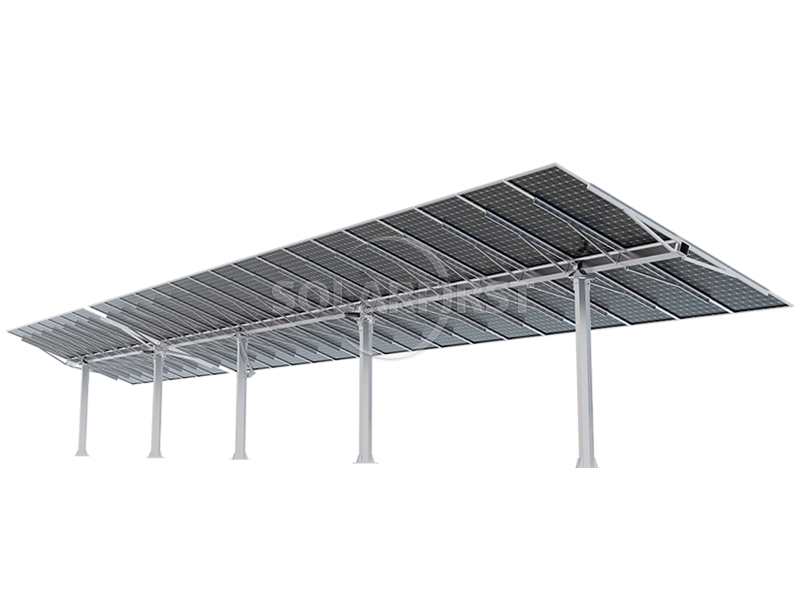
This product is a horizontal single-axis tracking system, primarily designed for ground-mounted photovoltaic power plant scenarios. The system employs a multi-point drive design to enhance the structure's torsional resistance and critical wind speed levels. It can adapt to continuous undulations and irregular terrain, and meets installation requirements with a maximum north-south slope of 15%.
Read More
This product is a dual-axis tracking system that allows photovoltaic modules to be more effectively aligned with the sun's position through angle adjustments in both horizontal and vertical directions. Compared to fixed brackets or single-axis tracking systems, the dual-axis design can achieve higher solar energy reception potential in different seasons and at different times. The system adopts a modular unit layout, with each tracking unit independently driven and equipped with remote monitoring capabilities, making it suitable for ground-mounted power plant scenarios with high requirements for power generation output.
Read More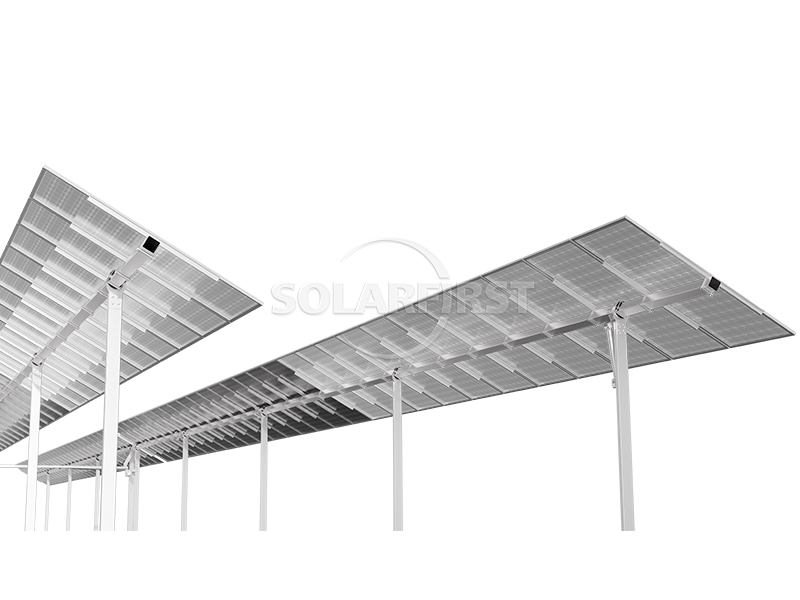
The single-axis tracking system is a linked type solar tracking device used in photovoltaic (PV) power plants. Through a single-axis rotating structure, the system allows PV modules to roughly follow the sun's azimuth from east to west throughout the day, helping to improve the power generation efficiency of the PV array. The system employs a linkage design, which links multiple tracker into one set. The tracker control unit supports multiple power supply methods and communication protocols, making it suitable for power plant projects of varying sizes and terrain conditions.
Read More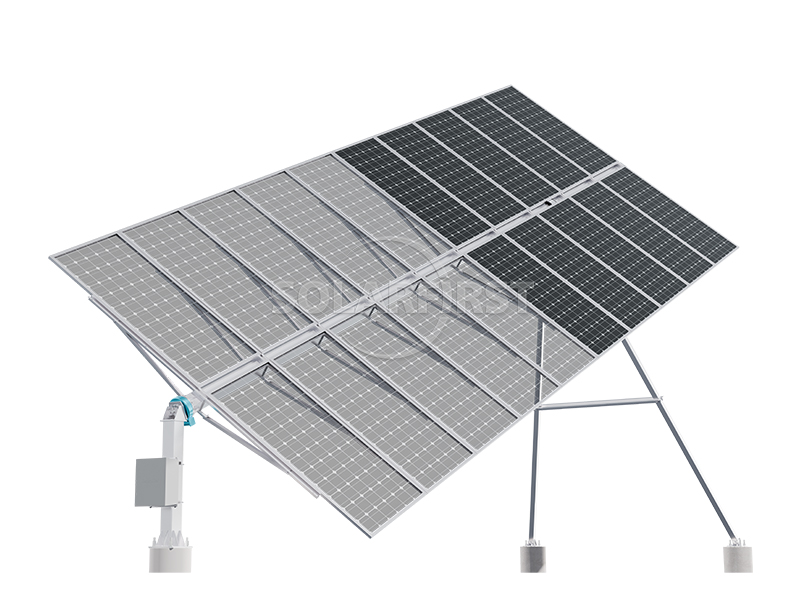
The tilted single-axis tracking system is an intelligent tracking solution suitable for photovoltaic power plants. This system uses a single-axis rotation mechanism to allow photovoltaic modules to track changes in the sun's azimuth angle around a tilted axis, thereby improving solar energy reception efficiency at different times. The system is optimized for complex terrain conditions and can be deployed on uneven sites such as mountains and slopes, providing photovoltaic projects with an option that balances increased power generation with engineering adaptability.
Read More
 en
en fr
fr de
de zh-CN
zh-CN ru
ru es
es pt
pt ja
ja ko
ko ar
ar