Leave A Message
If you are interested in our products and want to know more details,please leave a message here,we will reply you as soon as we can.


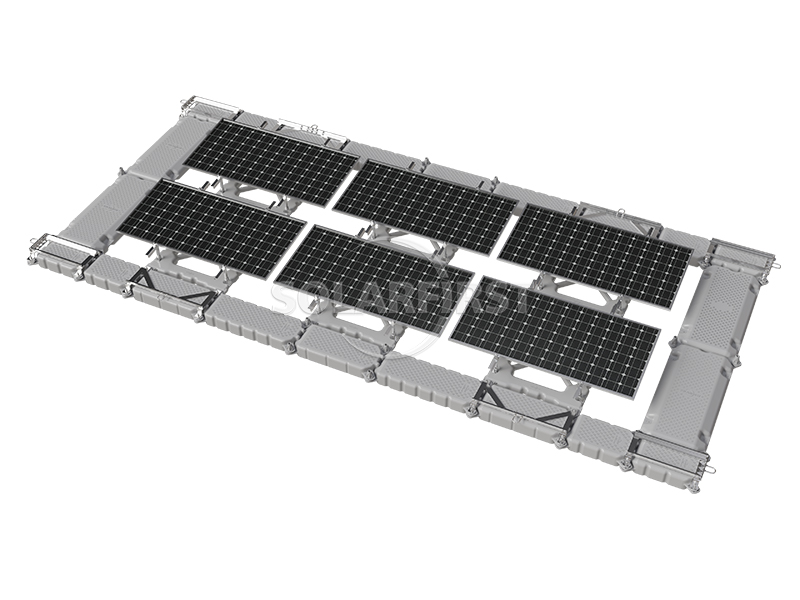
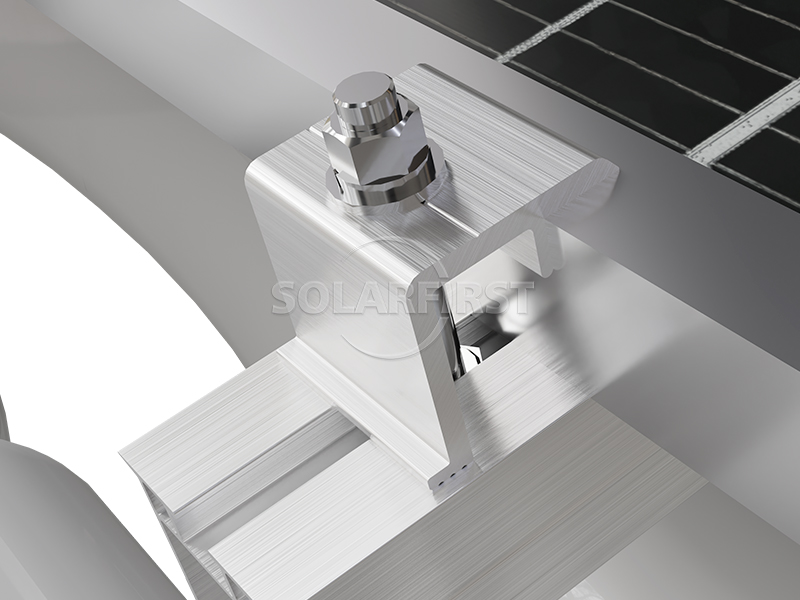
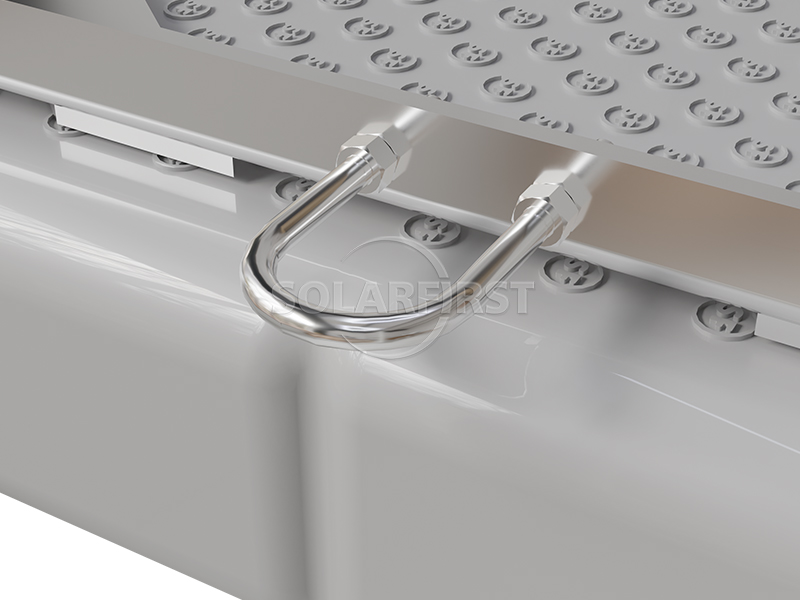
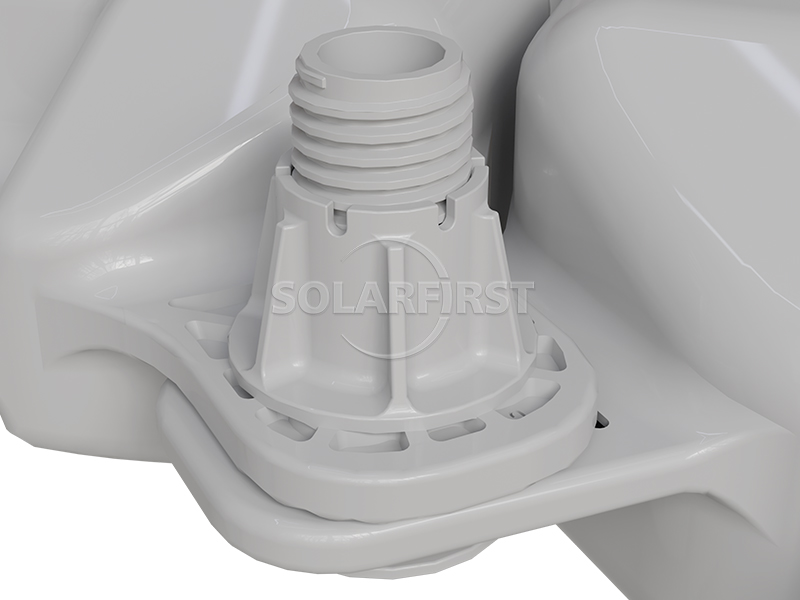
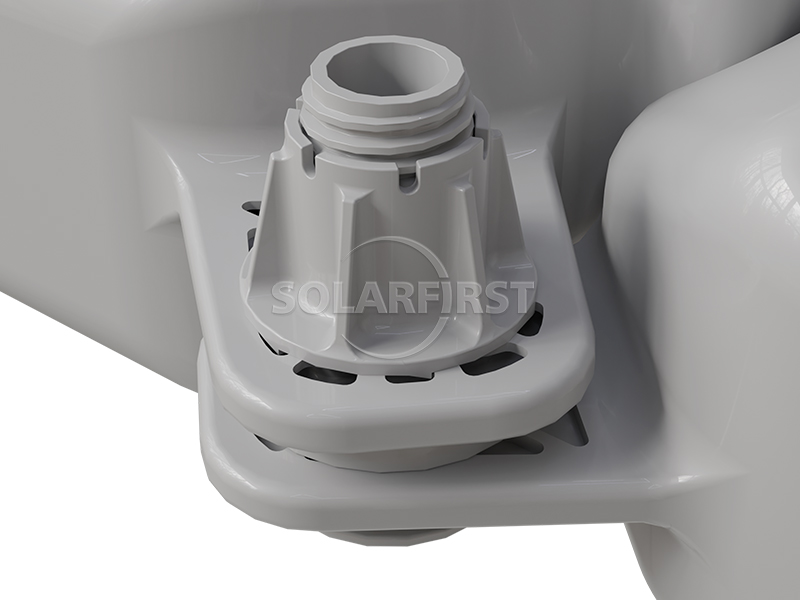
The TGW02 series floating photovoltaic mounting system is primarily designed for floating photovoltaic power station applications, using a modular floating structure to support photovoltaic modules. The system's design balances installation efficiency with adaptability to different water environments, making it suitable for lakes, reservoirs, mines, and some near-shore areas. Its overall flexible connection helps mitigate the impact of water surface fluctuations on the structure, providing a feasible floating solution for photovoltaic projects of varying sizes.

Product Description
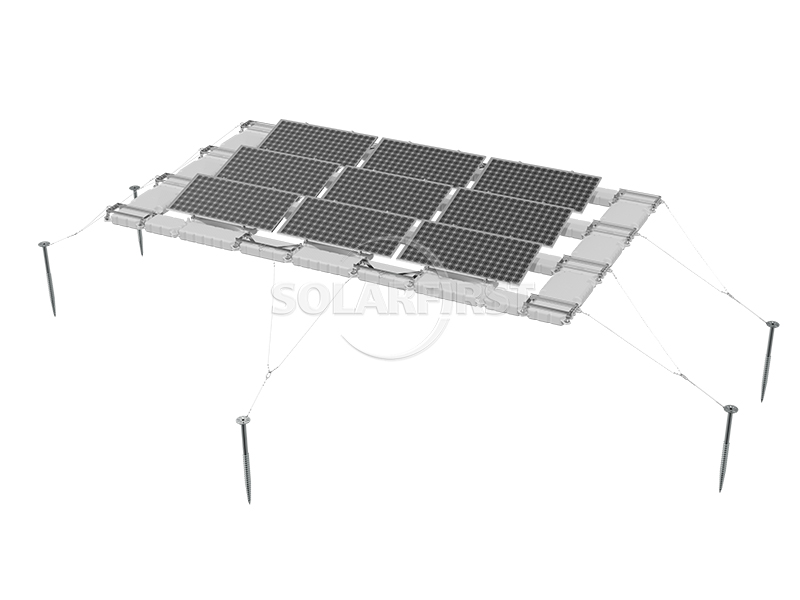
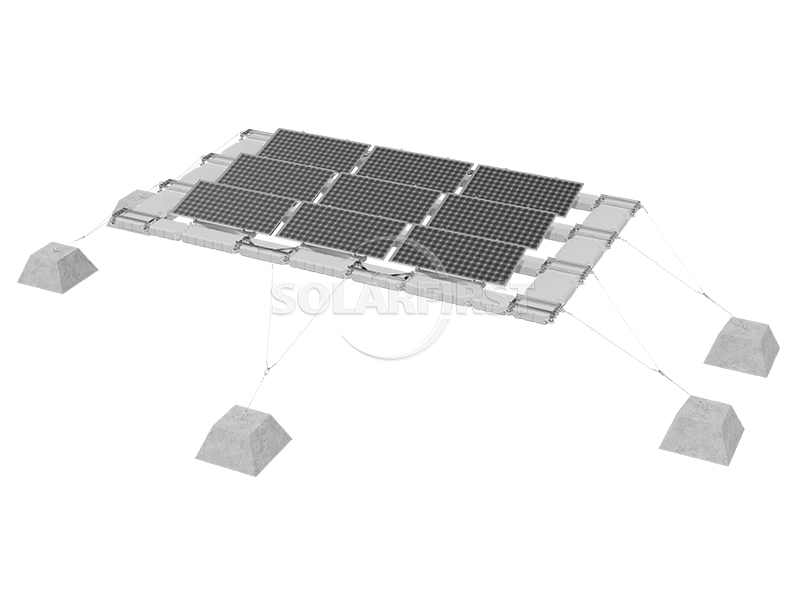
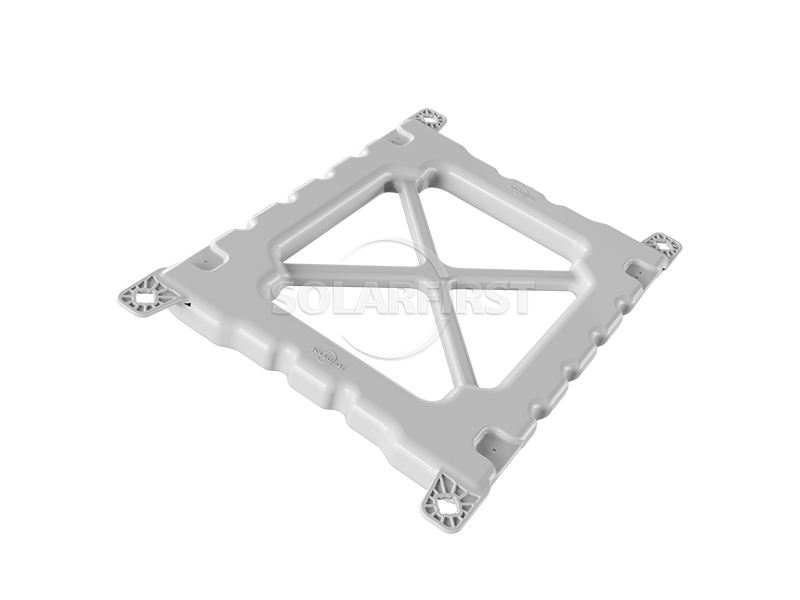
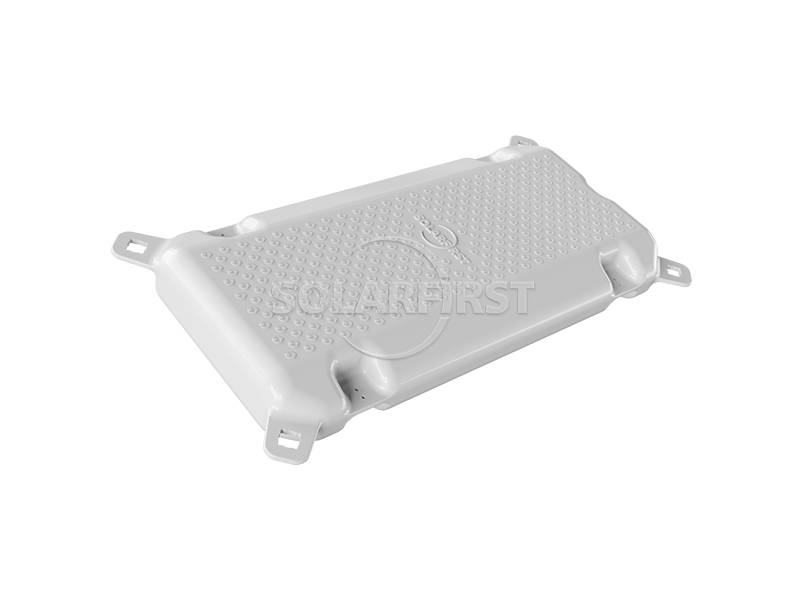
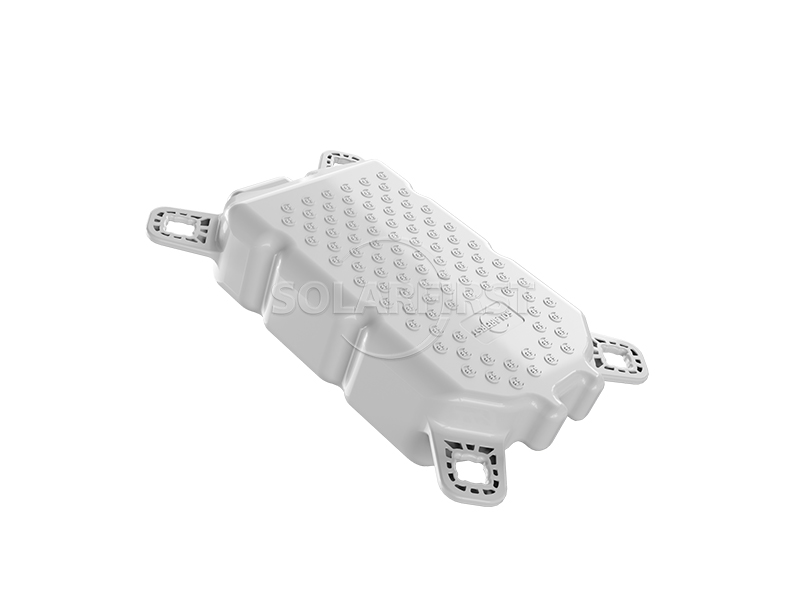
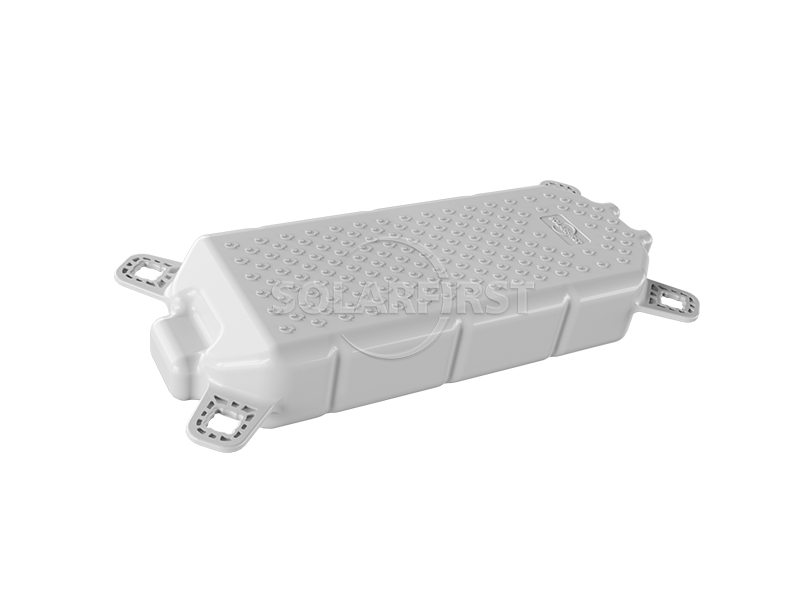
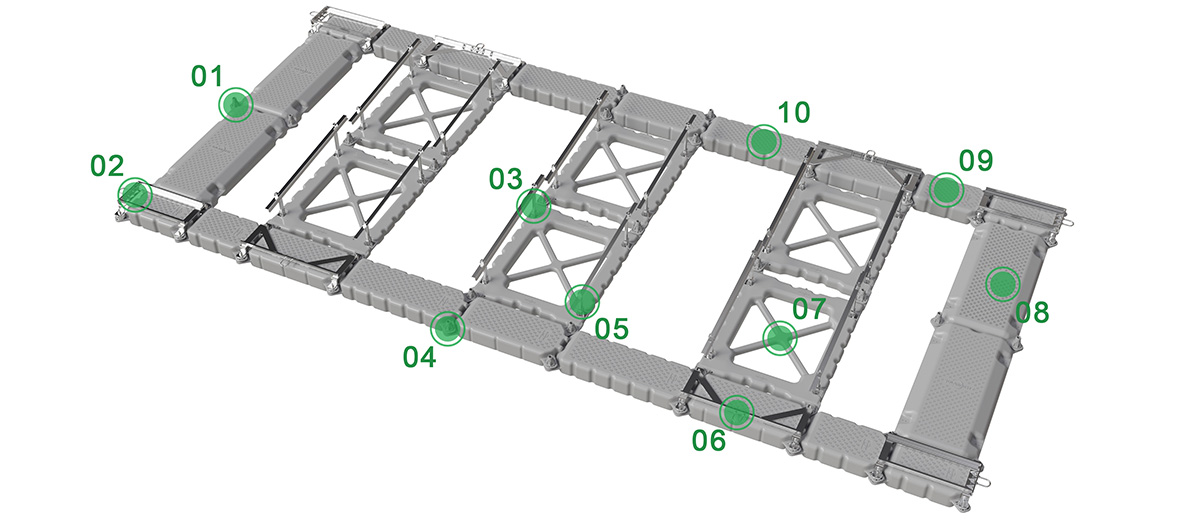
The TGW02 series floating photovoltaic system uses a main float positioned beneath each individual module as its basic unit, resulting in relatively uniform buoyancy distribution. The maintenance walkway provides ample walking space for daily inspections. Plastic bolts connect the channels, giving the array a degree of flexibility to adapt to water level changes and wave disturbances. For wiring arrangement, cable trays can be flexibly arranged in north-south or east-west directions to accommodate different power station layouts. The anchoring system supports various methods, including on shore screw pile anchors, concrete block anchors, and underwater concrete anchors, allowing selection based on the specific geological conditions of the water area.
Anchoring System
Product Components
Advantage
▪ Installation Efficiency: Simple front and rear support structural components and fewer fastening bolts result in a relatively streamlined construction process.
▪ Flexible Layout: Different angle solution for different latitudes; and the main floaters can be connected to accommodate 2~4 rows design to install more solar module and increase installation density.
▪ Safe Movement: Wide walkway width provides basic protection for personnel passage.
▪ Float Adaptability: The flexible structure with plastic bolt connections can deform to some extent with water surface fluctuations, reducing the risk of rigid damage.
▪ Floating Body Strength: SGS testing showed no significant damage or deformation of the overall structure under 50m/s wind speed conditions, meeting most wind load requirements.
▪ Convenient Cabling: Cable tray can be selected (north-south or east-west) to adapt to diverse layouts.
▪ Multiple Anchoring Options: Three anchoring methods are provided for different water geological conditions, facilitating project adaptation.
Parameters
| Installation | Water Surface |
| Anchoring Methods | Onshore pile anchors/underwater pile anchors/concrete block anchors |
| Sueface Wave Height | ≤0.5m |
| Sueface Flow Rate | ≤0.5m/s |
| Wind Load | up to 60m/s |
| Snow Load | 0.5kn/m² |
| Tilt Angle | 5°, 10°, 15° |
| Standards | GB50009-2012, EN1990: 2002, ASCE7-05/ASCE7-10, AS/NZS1170, JIS C8955: 2017 |
| Material | HDPE, Anodized Aluminum AL6005-T5, Stainless Steel SUS304 |
| Warranty | 10 Years Warranty |
Applicable Scenarios
▪ Lakes and reservoirs
▪ Aquaculture ponds (solar-fishery complementary)
▪ Waste mining pits
▪ Saline water areas
▪ Nearshore areas
▪ Flood-prone areas
Important Notes:
▪ The anchoring method must be designed and selected based on the specific water depth, bottom sediment, and water current velocity conditions.
▪ For use in nearshore or salty water environments, the anti-corrosion coating of metal connectors and bolts need to added up in line with corrosion category.
▪ To install on sea, the water flow speed and wave height need to be considered. Dams should be built or wavebreakers should be installed to reduce water flow speed and wave height.
Summary
This floating mounting system uses a main floater with flexible connections as its core structure, providing various angle, arrangement, and anchoring options while ensuring basic buoyancy and safety walkway width. Its installation process is simple and it is adaptable to complex aquatic terrain. Third-party verified wind load resistance capacity makes it a viable application reference in most areas. Overall, the system is suitable for various aquatic environments and can serve as a reliable technical solution for floating photovoltaic projects.
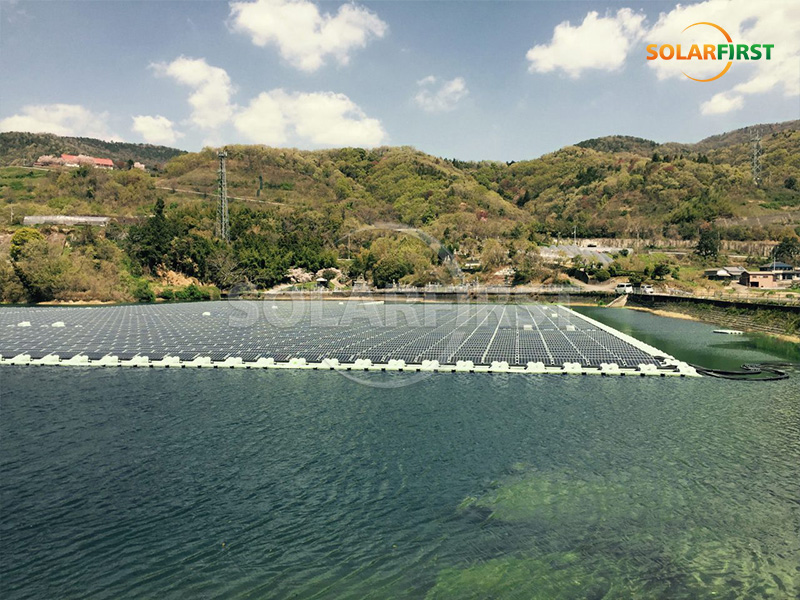
Solar First Project Reference
The TGW02 series floating photovoltaic mounting system is primarily designed for floating photovoltaic power station applications, using a modular floating structure to support photovoltaic modules. The system's design balances installation efficiency with adaptability to different water environments, making it suitable for lakes, reservoirs, mines, and some near-shore areas. Its overall flexible connection helps mitigate the impact of water surface fluctuations on the structure, providing a feasible floating solution for photovoltaic projects of varying sizes.
Read More
The TGW03 series floating photovoltaic system adopts a combination design of high-density polyethylene (HDPE) floats and adjustable metal supports, making it suitable for lakes, reservoirs, coal mining subsidence areas, and other water bodies. The system supports installation tilt angle adjustment from 0° to 15° and is equipped with hinged connectors and various anchoring solutions (onshore pile anchors, underwater pile anchors, concrete block anchors, etc.), enabling relatively stable operation under different hydrological conditions. The width of the maintenance access channel and the buoyancy per unit area are designed according to safety requirements, facilitating later inspection and maintenance.
Read More
 en
en fr
fr de
de zh-CN
zh-CN ru
ru es
es pt
pt ja
ja ko
ko ar
ar