Leave A Message
If you are interested in our products and want to know more details,please leave a message here,we will reply you as soon as we can.


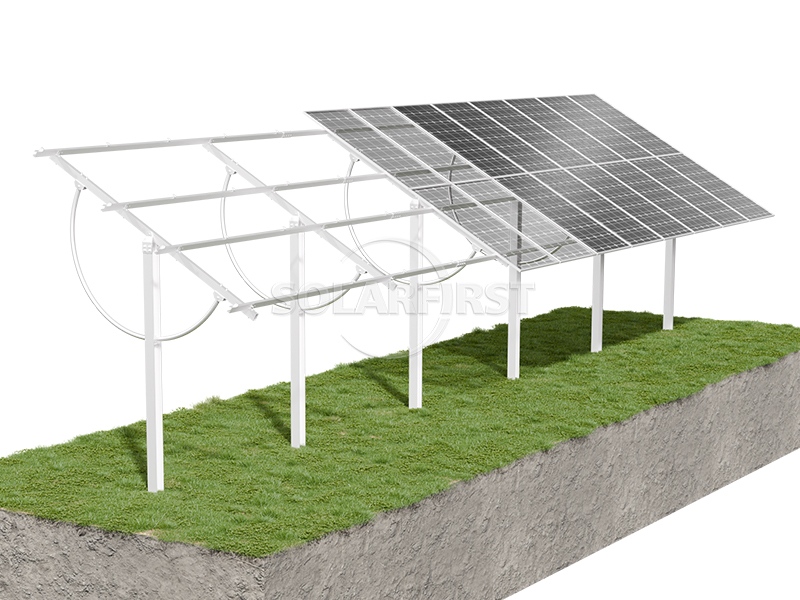
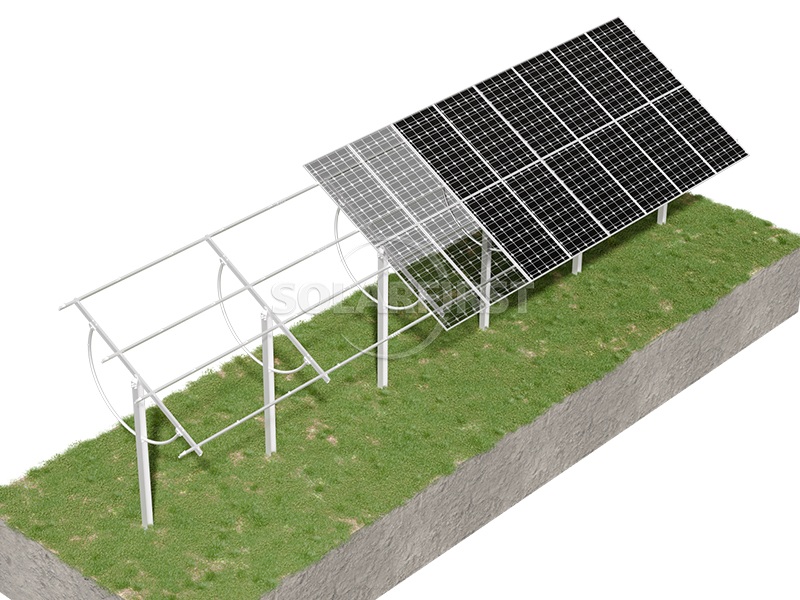
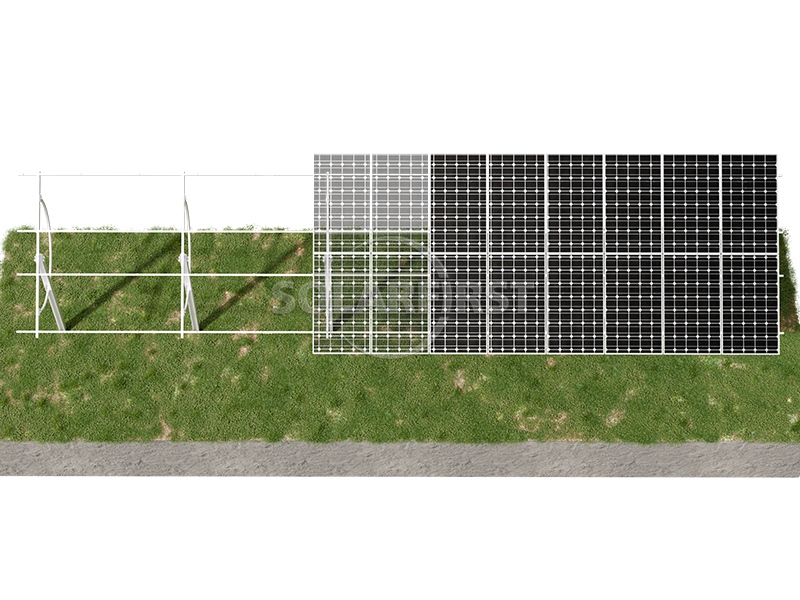
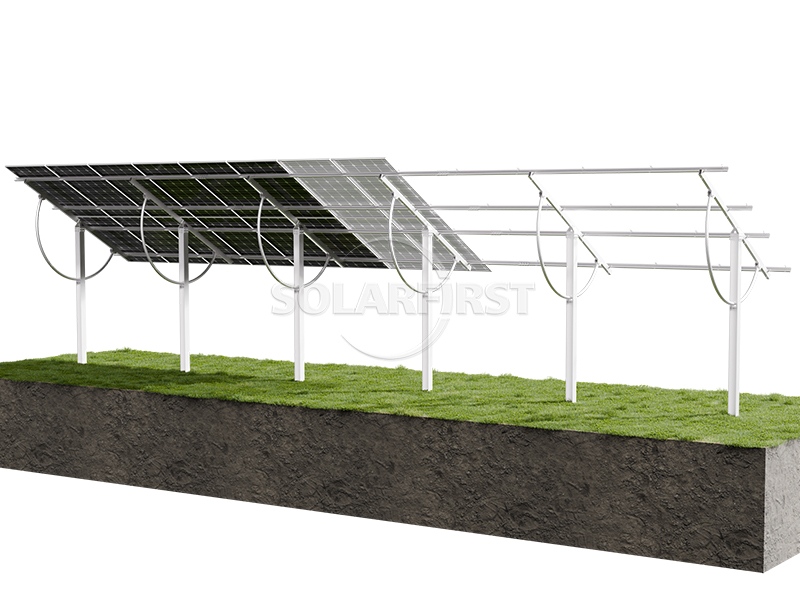
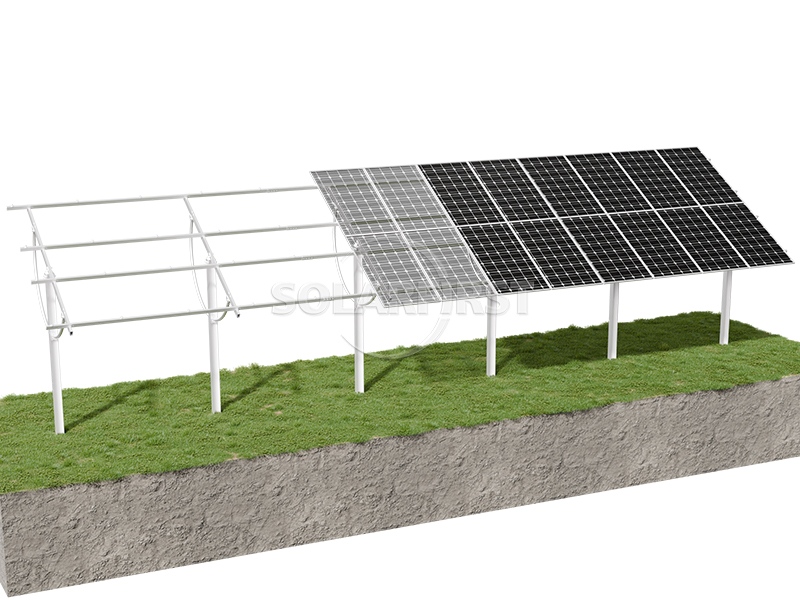
The arc-shaped bracing manually adjustable ground photovoltaic mounting structure can achieve a manual angle adjustment of 0°~±60° in the north-south direction through the arc-shaped bracing mechanism. It can adjust to the best inclination angle in every season, increasing the power generation by 3%–10%. The main body is made of high-strength hot dip galvanized steel or zinc-aluminum-magnesium coated steel, which are corrosion-resistant and durable. This solution is suitable for large-scale ground power stations and compatible with mainstream photovoltaic modules. It is a reliable solution that balances economic efficiency and power generation efficiency.
Color :
Silver (hot-dip galvanized) / Silver-gray (zinc-aluminum-magnesium coated)Certification :
CE, TÜV, ISO9001, SGSMaterial :
Hot Dip Galvanized Steel, Zn-Al-Mg pre-coated steel, Stainless Steel SUS304Product Origin :
Tianjin, FujianShipping Port :
Shanghai, Ningbo, Tianjin, Xiamen, Shenzhen ports
Product Description
The arc-shaped bracing manually adjustable ground photovoltaic mounting structure is an innovative mounting system developed based on the fixed type mounting structure. This system introduces an arc-shaped bracing adjustment mechanism on the single-column, enabling the modules to be manually adjusted in the north-south direction according the seasonal optimum angle, thereby increasing the received solar radiation vertically incident on the surface of the photovoltaic modules, and significantly improving the power generation.
This product does not require motor drive. It can achieve flexible adjustment of angles through manual operation, ensuring system stability while significantly reducing equipment costs and subsequent maintenance expenses. Compared with tracking system, this product has a simple structure, and high land utilization rate. It is a cost-effective solution between fixed mounting system and tracking system.
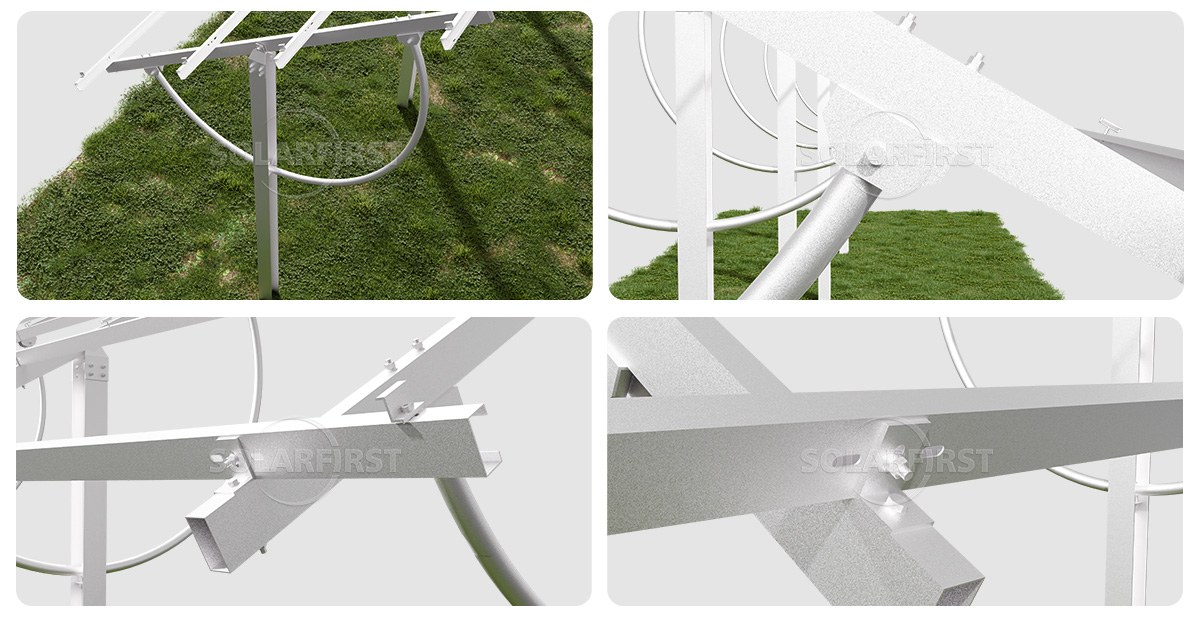
Product Components
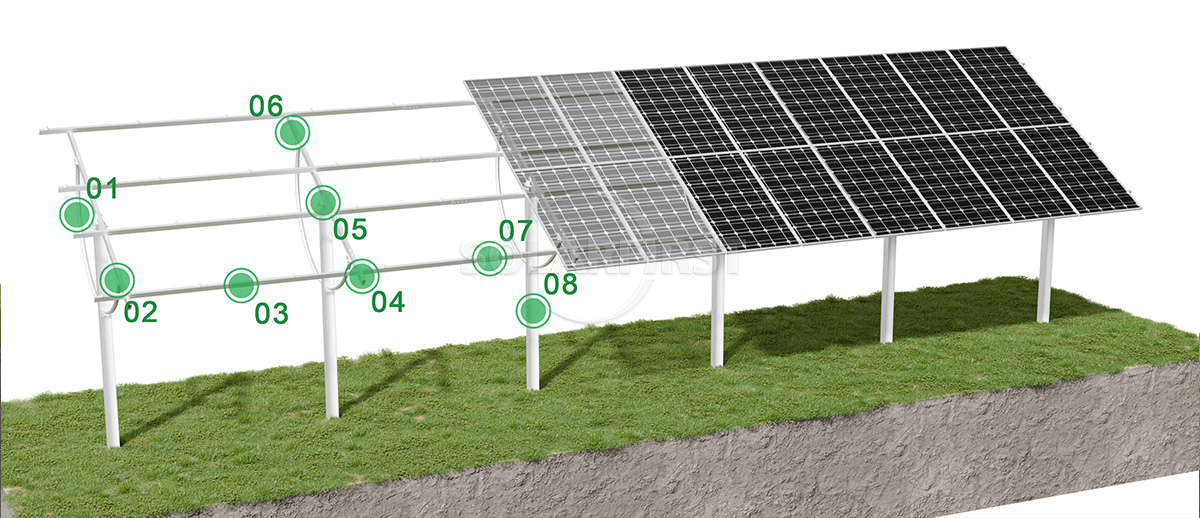
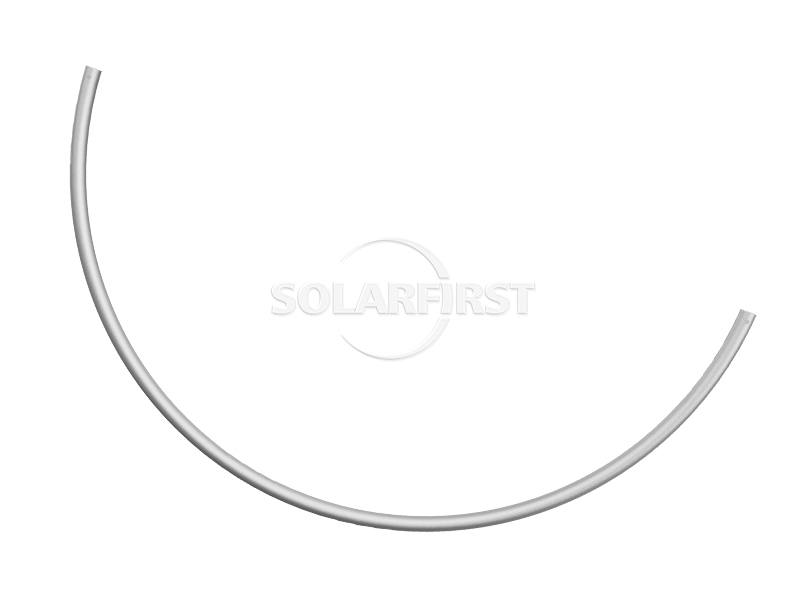
01 Arc-shaped bracing
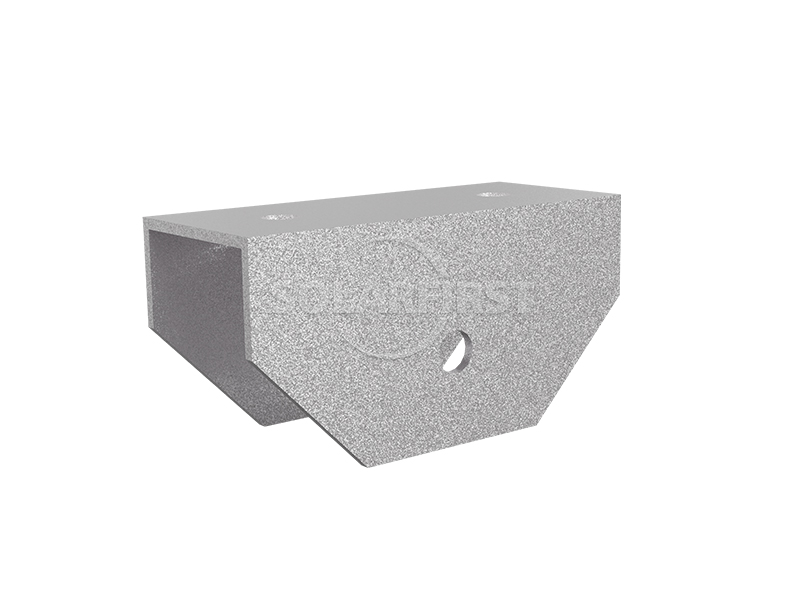
02 Triangular connector
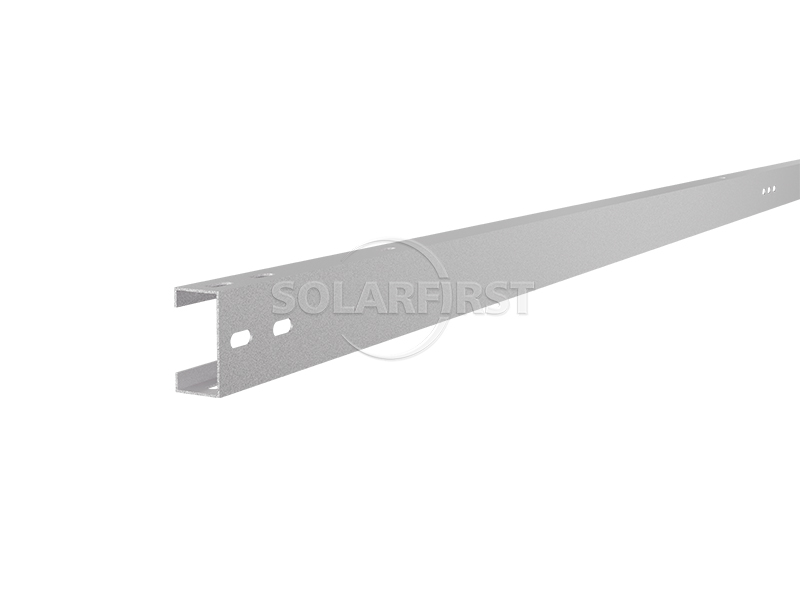
03 Purlin
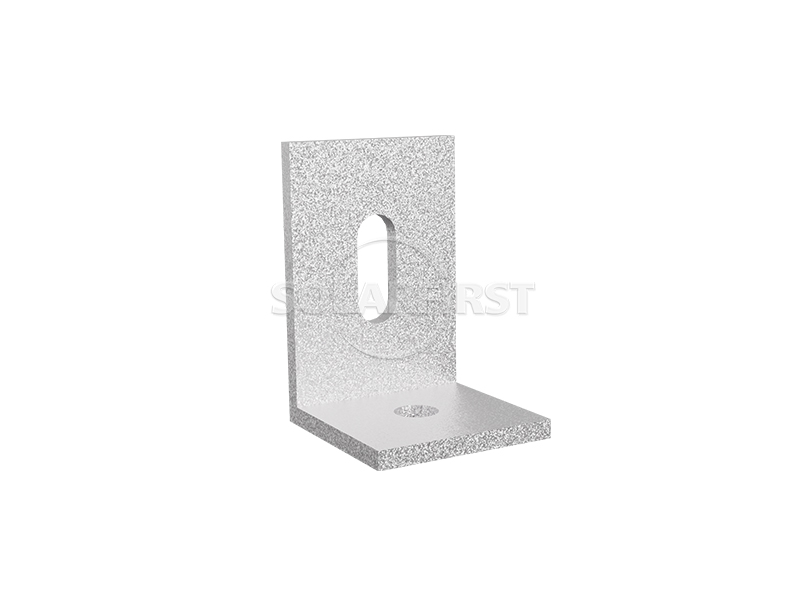
04 Purlin support
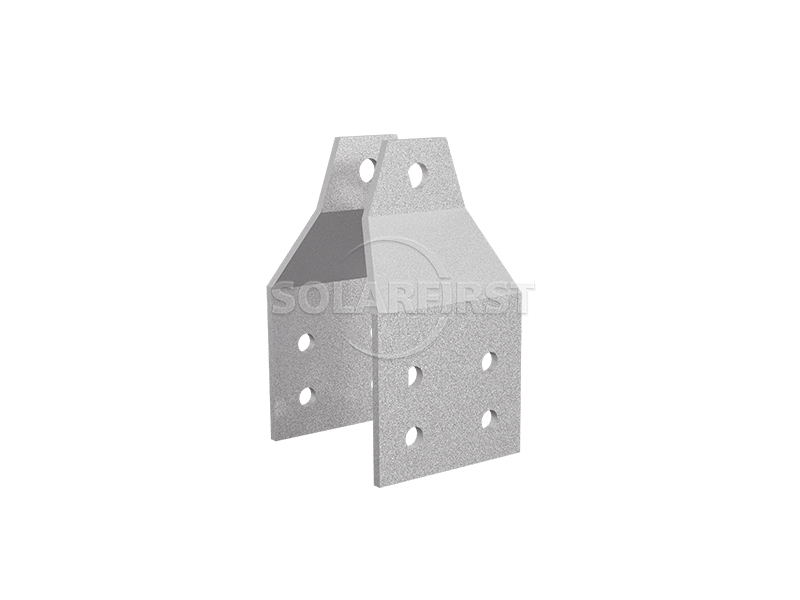
05 Beam connector
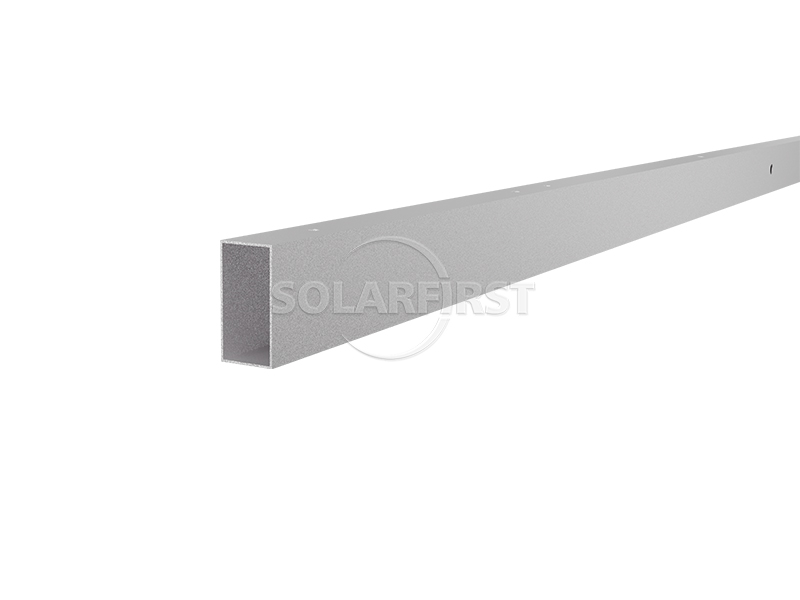
06 Beam
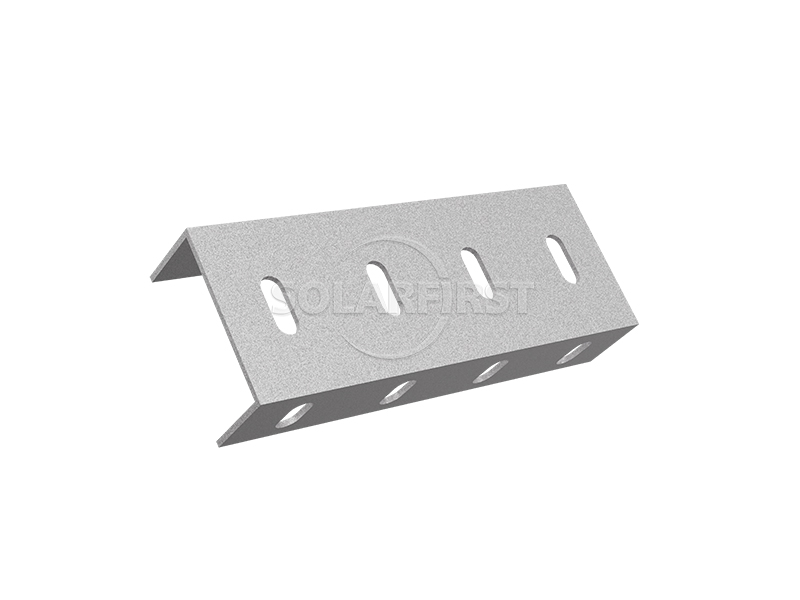
07 Purlin connectors
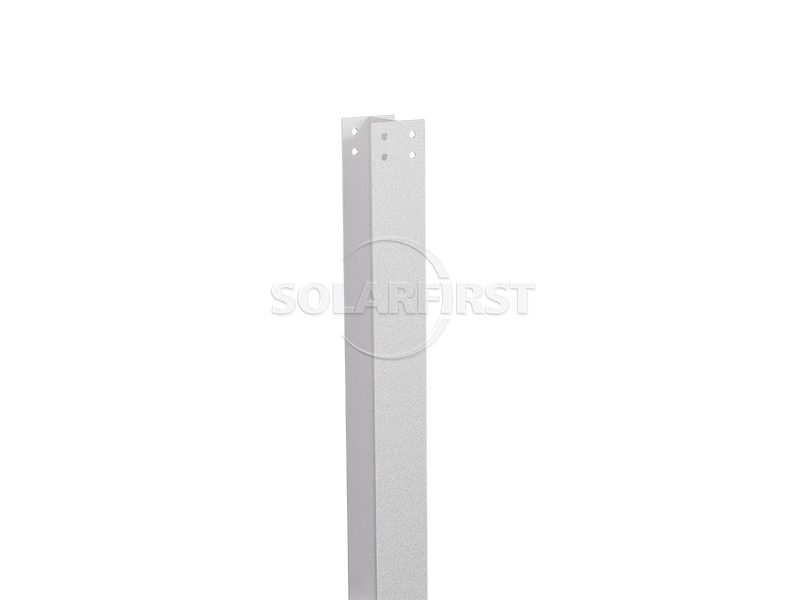
08 Column
Advantage
▶ The arc-shaped bracing adjustable structure is easy to operate
This product uses a semi-circular arc bracing as the core adjustment mechanism. By setting multiple positioning holes on the arc-shaped bracing and cooperating with the pins on the column for fixation, it precisely fixes the angle of the photovoltaic panel mounting structure. During the adjustment process, simply pull out the pin, push the bracing to the desired angle (any position within the range of 0° to 60°), and then reinsert the pin to complete the adjustment. This structural design makes the manual operation very convenient and safe.
▶ High-strength material, durable and resistant to corrosion
The main components are made of carbon steel, and their surfaces are treated by hot-dip galvanizing or zinc-aluminum-magnesium. This process ensures excellent corrosion resistance, effectively preventing rust and aging. The structure is of high hardness and good stability, and are not prone to deformation, with a long service life.
▶ Structural optimization design, with efficient installation
The system has a simple structure with few components and easy connections. The main components are prefabricated in the factory, and only fasteners are needed for on-site assembly and connection to complete the installation. The foundation can be prefabricated, further shortening the on-site construction period. Each array only requires a small number of columns, effectively reducing the amount of foundation and installation costs.
▶ The power generation efficiency has significantly improved
Compared with fixed installation systems, seasonal inclination adjustment can increase power generation by 3% to 10%. Users can select the optimal inclination angle within the range of 0° to 60° based on the latitude of the project location and astronomical conditions, achieving the maximum utilization rate of light resources.
▶ Low maintenance cost
Pure manual operation, without the need for electrical drive devices such as motors and controllers, there are no potential mechanical faults caused by electrical control, and the maintenance cost is extremely low.
Parameters
| Installation | Ground |
| Adjustment method | Pure mechanical manual lever transmission |
| Tilt Angle | 0° ~ 40° adjustable |
| Wind Load | up to 60m/s |
| Snow Load | 1.4kn/m² |
| Standards | GB50009-2012, EN1990:2002, ASCE7-05, AS/NZS1170, JIS C8955:2017,GB50017-2017 |
| Material | Anodized Aluminum AL6005-T5, Hot Dip Galvanized Steel, Galvanized Magnesium Aluminum Steel, Stainless Steel SUS304 |
| Warranty | 10 Years Warranty |
| Designed service life | 25-30 years |
Applicable Scenarios
▪ Large-scale ground-based photovoltaic power station:
This product is specifically designed for large-scale commercial and public utility power stations, and is widely applicable to various terrains such as plains, hills, and mountains. Thanks to its flexible design and manual adjustment function, it can maximize power generation efficiency under different regional and climatic conditions.
▪ Seasonal adjustment demand scenario:
Applicable to projects that need to adjust the solar module inclination according to seasonal changes. It can be adjusted 2 or 4 times a year. In low-latitude regions, a smaller inclination (such as 0°–15°) can be set to cope with seasons with larger solar altitude angles. In high-latitude regions or snowy areas, it can be adjusted to a larger inclination (such as 30°–40°) to optimize winter light reception and promote snow sliding.
▪ Projects with high terrain adaptability requirements:
The slope in the east-west direction can be adjusted within ±15°, and there is no limit on the slope in the north-south direction. They can be flexibly arranged on irregular land to increase land utilization.
Summary
The arc-shaped bracing manually adjustable ground photovoltaic mounting system is an innovative solution specially designed for large-scale ground power stations. It realizes manual inclination adjustment within the range of 0°~60° in the north-south direction through the arc-shaped pull rods and the pin positioning mechanism.
It can better optimize the solar module light reception angle according to seasonal changes, increasing power generation by 3%–10%. The main body of the support is made of carbon steel and undergoes hot-dip galvanizing or zinc-aluminum-magnesium treatment, which is sturdy, durable, and has excellent corrosion resistance.
It can adapt to various terrains such as plains, hills, and mountains, and is compatible with mainstream framed/unframed modules and horizontal/vertical layouts.
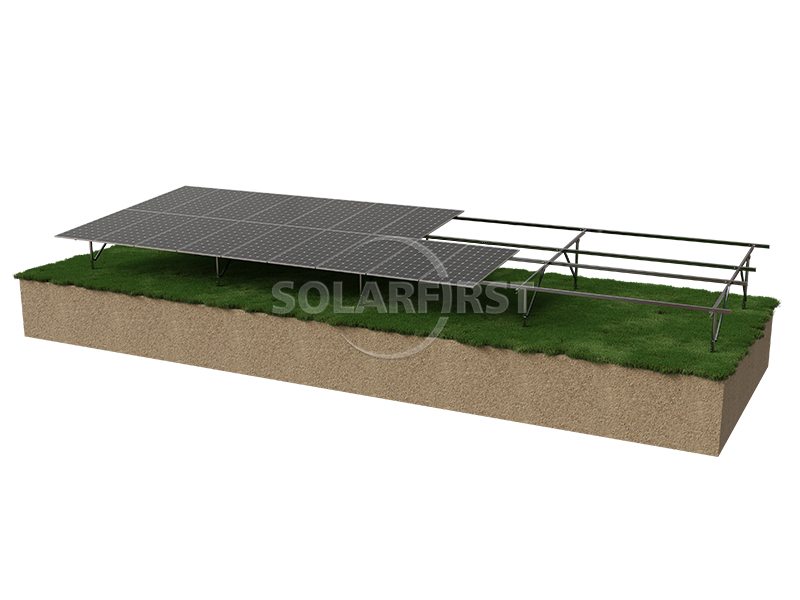
Carbon steel ground solar module mounting strucutre - ground screw pile foundation: The core material is galvanized or Zn-Al-Mg coated steel. It consists of screw piles buried underground, and the mounting structure above ground. The ground screw pile is installed by piling machine by screwing into the soil to serve as the load-bearing foundation for the photovoltaic array. All components are treated with hot-dip galvanizing or ZAM coating, achieving full metal connection.
Read More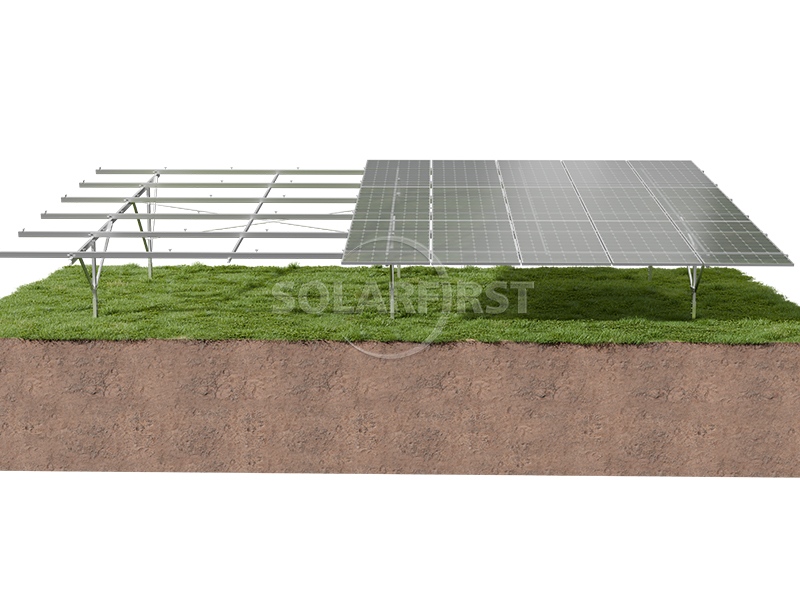
The ramming pile ground solar module mounting systems are PV mounting structure where foundation piles are driven directly into the soil using piling machine.
Read More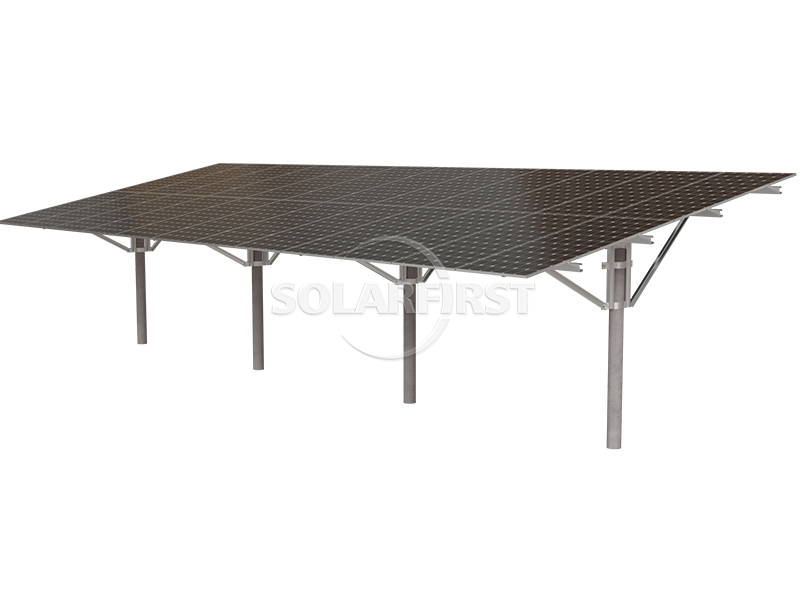
Carbon steel solar module ground mounting system integrated prestressed high-strength concrete piles (PHC piles) as the foundation.
Read More
The aluminum alloy spiral ground anchor-based photovoltaic support system adopts the "rotational insertion installation" and "fully aluminum anti-corrosion" design, providing a ground installation solution with lower environmental impact and higher construction efficiency for small and medium-sized photovoltaic projects.
Read More
Aluminum alloy ground photovoltaic mounting system - concrete foundation solution refers to a mounting structure that uses high-strength aluminum alloy as the main structural material and concrete blocks cast on-site or prefabricated as the load-bearing foundation, and is used to fix solar photovoltaic modules in open areas on the ground.
Read More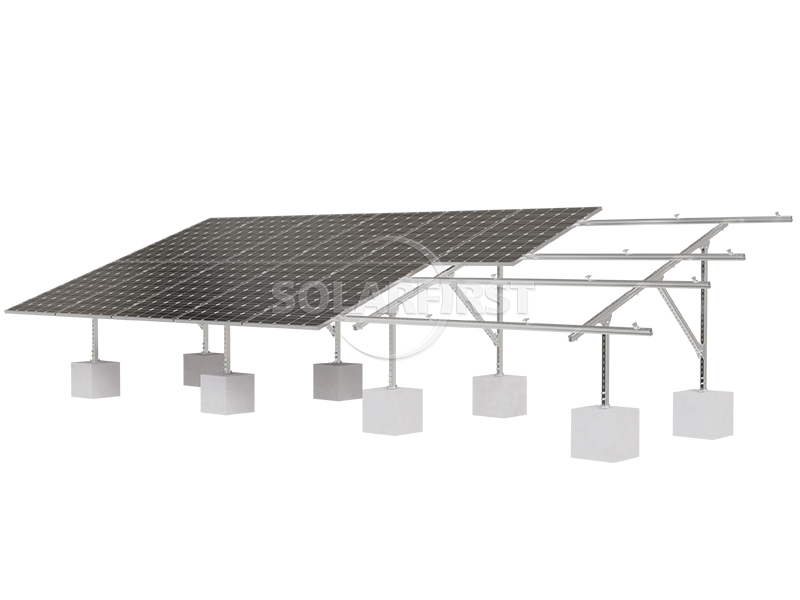
U steel is a core load-bearing component of ground-mounted photovoltaic mounting systems and belongs to a type of cold-formed thin-walled steel. Its cross-section is U shaped, with inward lips on both sides.
Read More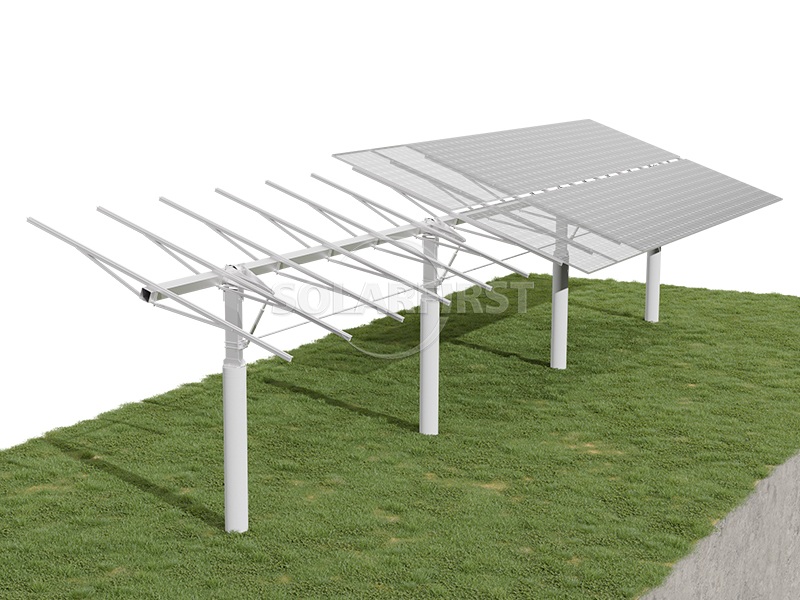
Rotary type manually adjustable photovoltaic mounting system, with pure mechanical hand-crank drive, supports continuous adjustment of tilt angle from 0° to 60°. It does not require electricity and is nearly maintenance-free in the long term operation. It is widely applicable to agricultural photovoltaic project or small and medium-sized ground photovoltaic power stations.
Read More
The arc-shaped bracing manually adjustable ground photovoltaic mounting structure can achieve a manual angle adjustment of 0°~±60° in the north-south direction through the arc-shaped bracing mechanism. It can adjust to the best inclination angle in every season, increasing the power generation by 3%–10%. The main body is made of high-strength hot dip galvanized steel or zinc-aluminum-magnesium coated steel, which are corrosion-resistant and durable. This solution is suitable for large-scale ground power stations and compatible with mainstream photovoltaic modules. It is a reliable solution that balances economic efficiency and power generation efficiency.
Read More
 en
en fr
fr de
de zh-CN
zh-CN ru
ru es
es pt
pt ja
ja ko
ko ar
ar