Leave A Message
If you are interested in our products and want to know more details,please leave a message here,we will reply you as soon as we can.


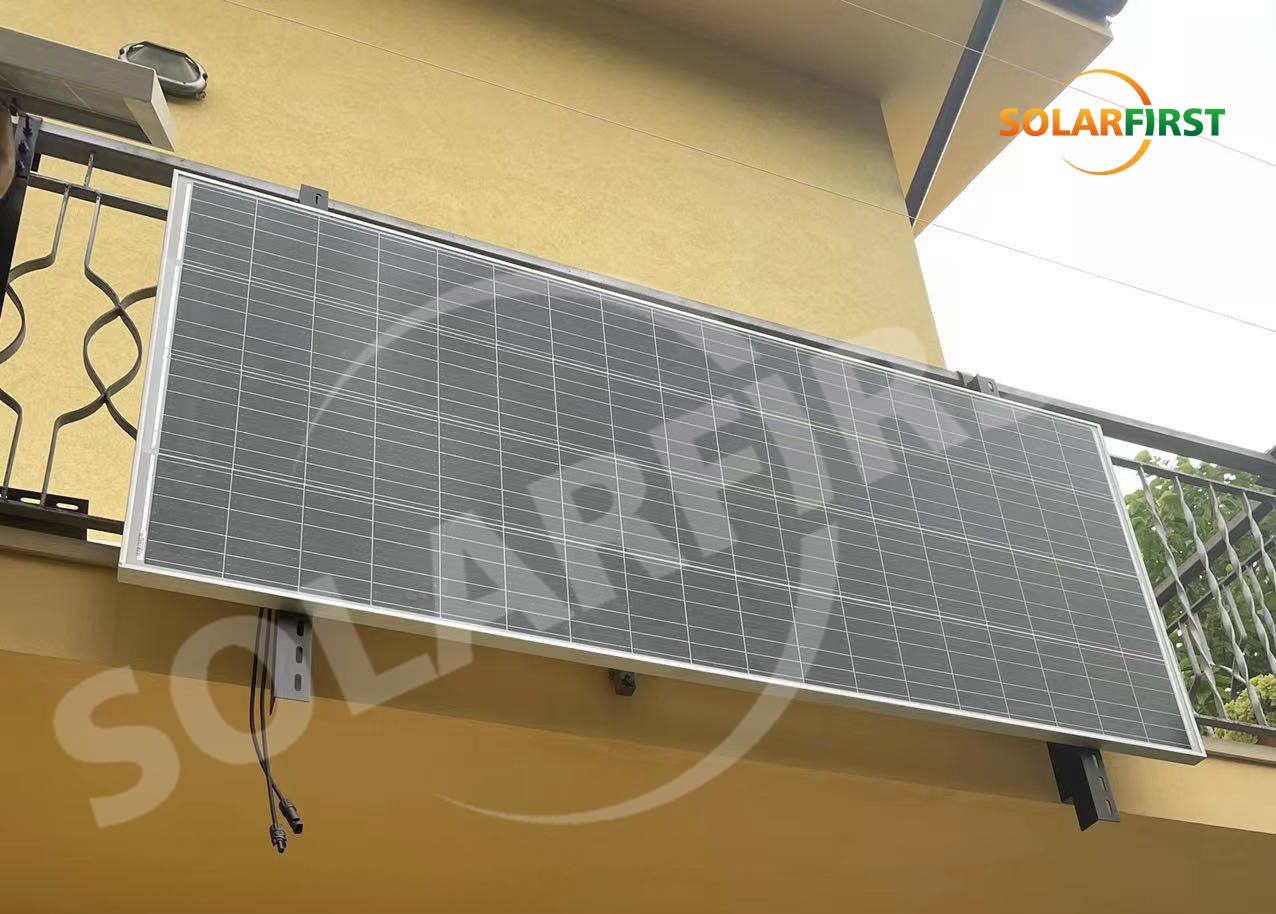
When choosing solar panels for residential and small villa balconies, a key trend is now towards "lightweight, integrated, and plug-and-play solutions," rather than simply purchasing separate brackets. These products are becoming increasingly popular with families due to the convenience of "solar appliances."
Color :
Natural silver/ black(Colored according to customer requirements)Certification :
ISO,SGS,CEMaterial :
Anodized Aluminum 6005 T5, Stainless Steel 304Product Origin :
Tianjin, FujianShipping Port :
Shanghai, Ningbo, Tianjin, Xiamen, Shenzhen ports
Product Description
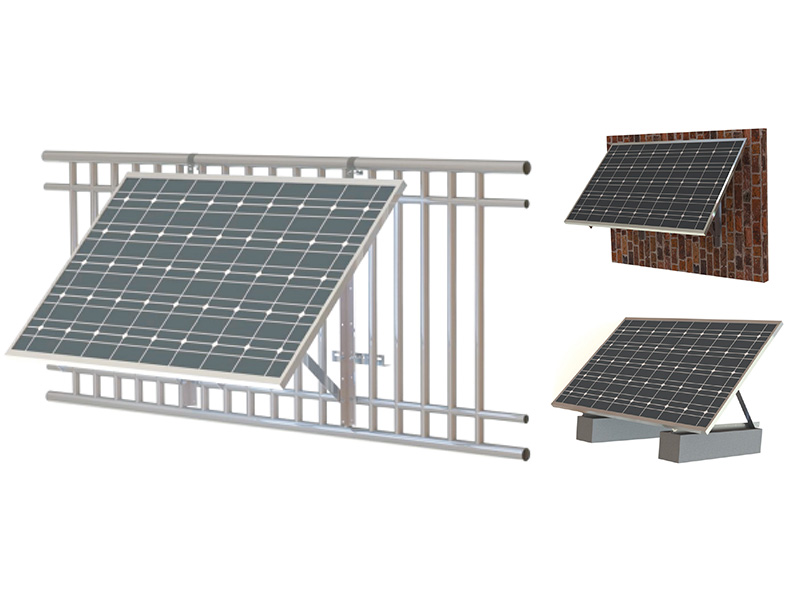
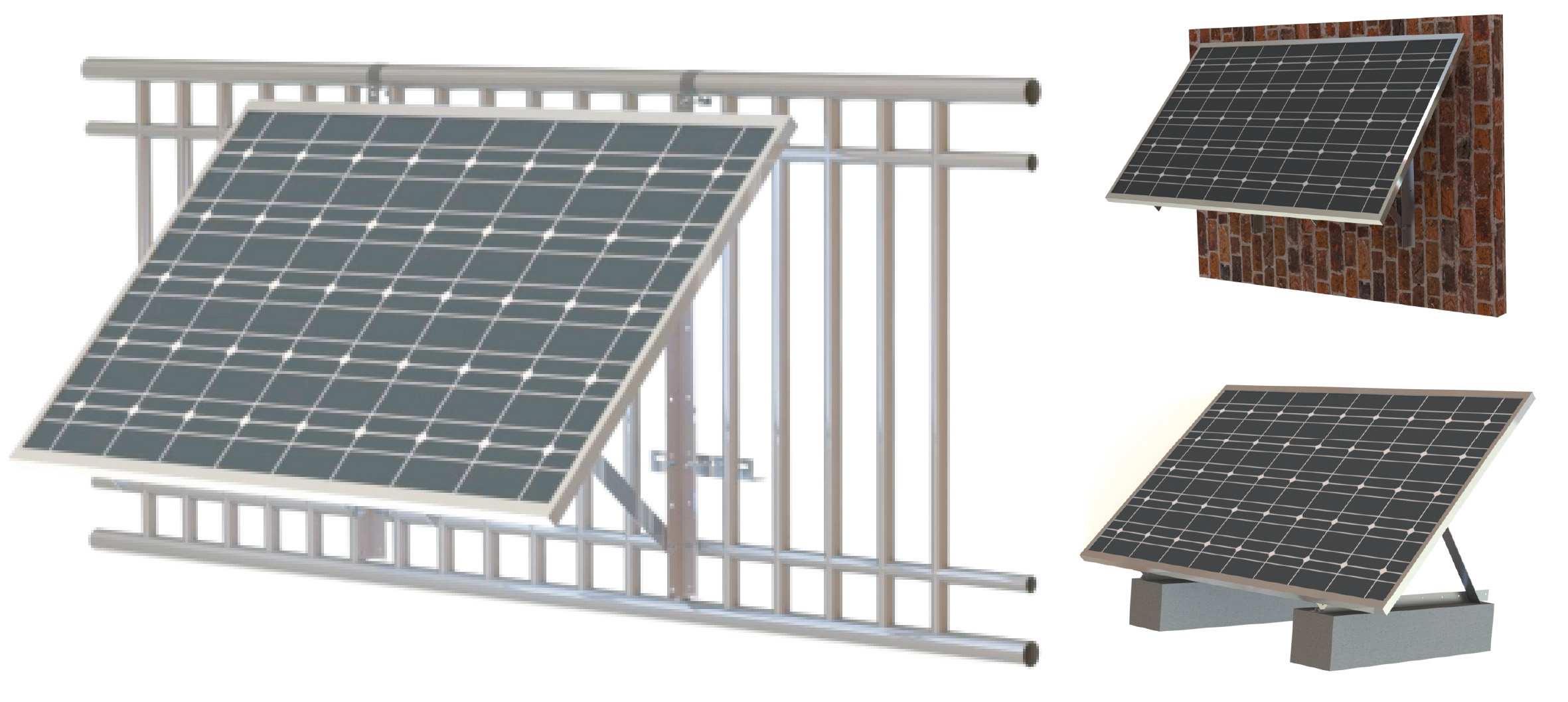
A residential balcony photovoltaic (PV) bracket is a support system used to mount solar photovoltaic (PV) panels on residential balconies, terraces, or the exterior walls of small villas. Serving as the foundation for balcony PV power generation devices, it allows PV panels to be installed on railings, walls, or the ground, helping families utilize unused balcony space to generate green electricity.
These brackets typically feature a lightweight design to accommodate the limited load-bearing capacity and installation space of residential balconies. Most products achieve installation through modular pre-assembly and standard fasteners, eliminating the need for large power tools or complex construction. In recent years, the design of balcony PV brackets has trended towards "home appliance-like" designs, meaning they can be easily assembled and put into use after unpacking, reducing reliance on professional installers.
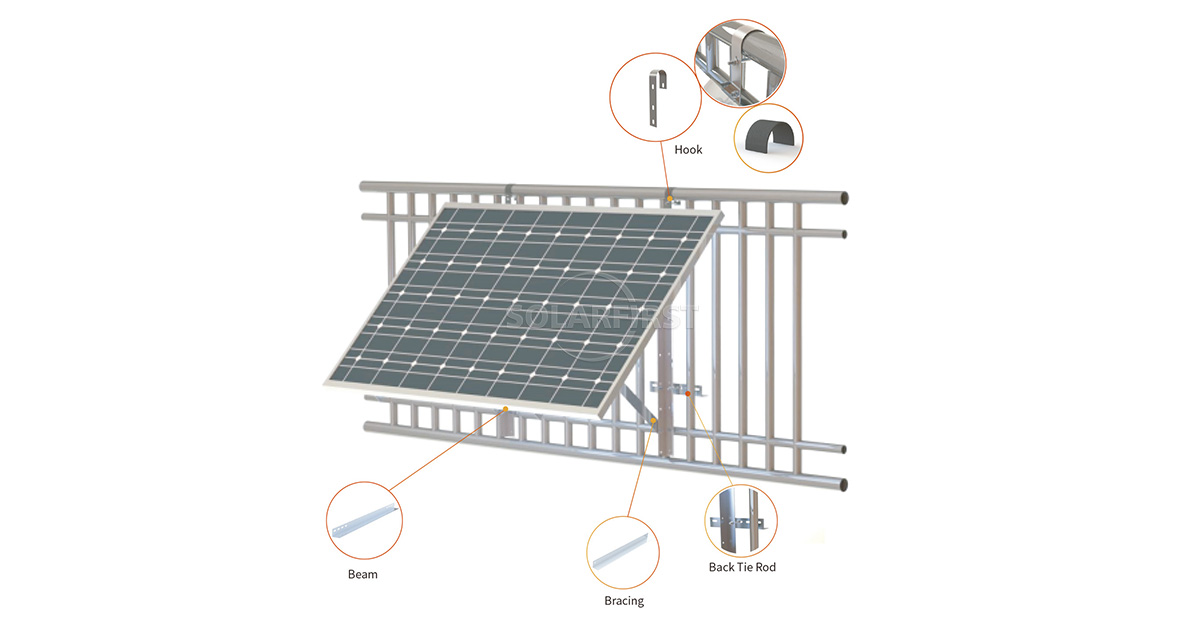
Product Components
Advantage
▪ Installation is relatively simple:
The integrated pre-assembled design minimizes assembly steps after unpacking, allowing most home users to complete installation without specialized tools. According to feedback from some products, installation time is typically under 30 minutes.
▪ Lightweight materials:
The aluminum alloy bracket typically weighs 8–10 kg per set, making handling and positioning relatively easy and placing less extra load on the balcony structure.
▪ Adjustable angle to adapt to different seasons:
Supporting a tilt range of 0° to 60°, users can adjust the solar panel's angle of reception according to seasonal changes, helping to increase annual power generation.
▪ Strong environmental adaptability:
The anodized aluminum alloy or stainless steel material exhibits good corrosion resistance under most climatic conditions (including daily sun exposure, rain, and humid environments).
▪ Compatible with common solar panel sizes:
Suitable for mainstream solar modules on the market (length ≤ 2200mm, thickness 30–50mm), compatible with monocrystalline or polycrystalline silicon panels.
▪ Minimal impact on the original structure:
Installed via clips, hooks, etc., it usually does not require drilling holes in the balcony wall or floor, preserving the original integrity of the building.
Parameters
| Installation | Ground/Concrete Roof |
| Wind Load | up to 60m/s |
| Snow Load | 1.4kn/m² |
| Tilt Angle | 25-50° |
| Standards | GB50009-2012, EN1990:2002, ASCE7-05, AS/NZS1170, JIS C8955:2017, GB50429-2007 |
| Material | Anodized Aluminum AL6005-T5, Stainless Steel SUS304 |
| Warranty | 10 Years Warranty |
Applicable Scenarios
▪ High-rise apartment balconies: For residents without roof access, solar panels can be installed using the front edge of the balcony via railing mounting.
▪ Villa or townhouse terraces: Floor-standing or wall-mounted brackets can be used to install larger solar panels to supplement household electricity.
▪ Balconies with metal or wooden railings: Fixing with clamps or hooks is suitable for various railing types, eliminating the need for drilling holes in the railing.
▪ Solid wall balconies without railings: Solar panels can be fixed to the exterior wall of the balcony using wall-mounted brackets.
▪ Small courtyards or ground-level areas: Floor-standing brackets can be placed on the ground floor, in gardens, or on rooftop terraces, suitable for users with extra space.
▪ Older neighborhoods or rental properties: Because the installation process requires minimal structural alteration, it is suitable for residential scenarios where permanent renovations are not feasible.
Important Notes:
▶ Assess the balcony's load-bearing capacity before installation:
The total weight of a single photovoltaic system (including brackets and photovoltaic panels) is typically between 25–35 kg. It is recommended to confirm that the balcony railings and floor slab can withstand this load.
▶ Choose appropriate materials based on the environment:
In coastal areas with high salt spray or in environments with consistently high humidity, it is recommended to use stainless steel brackets or reinforced anodized aluminum alloy brackets to improve corrosion resistance.
▶ Ensure secure fixing:
Plug-in photovoltaic modules are recommended to use a multi-point fixing method (e.g., four points or more) to avoid relying on a single point of fixation at the top or bottom, reducing the risk of loosening due to long-term vibration.
▶ Electrical connections should comply with regulations:
The connection between the balcony photovoltaic system and the household electrical circuit should be performed by a qualified electrician, paying attention to the rated current, voltage matching, and overload protection of the circuit.
▶ Consider the impact of wind load:
While inclined installation is beneficial for sunlight, it increases the area exposed to wind. In high-rise buildings or areas with frequent strong winds, vertical installation or products with better wind tunnel testing data can be considered.
▶ Pay attention to shading and sunlight duration:
Before installation, observe the daily effective sunlight duration of the balcony (generally recommended to be no less than 4-6 hours), and avoid continuous shading from nearby buildings, trees, or air conditioner outdoor units.
▶ Communicate with property management and relevant departments:
Before installation, it is recommended to understand the management regulations of your community. If grid connection is required, you should also consult the local power grid company regarding connection requirements.
▶ Regular inspection:
It is recommended to check the bracket fixings for loosening, wear, or corrosion every six months or after extreme weather such as strong winds or heavy snow.
Summary
Residential balcony solar PV systems offer homeowners a relatively simple and accessible distributed photovoltaic (PV) solution. Through lightweight materials, adjustable angles, and diverse mounting methods, they adapt to various installation environments, including railings, walls, and floors. Compared to traditional rooftop PV systems, balcony PV systems prioritize ease of installation, minimal disruption to existing building structures, and seamless integration with everyday home environments.
When choosing a suitable balcony PV system, it is recommended to focus on the material's corrosion resistance, the appropriate PV panel size, the adjustment range, and the load-bearing capacity and sunlight conditions of the actual installation location. Proper design and standardized installation ensure stable operation of the balcony PV system over a long period, providing clean electricity to the home while improving space utilization efficiency.
Solar First Project Reference
Related Knowledge Points

This product is a photovoltaic (PV) bracket accessory specifically designed for Klip-Lok metal corrugated roofs. It employs a non-penetrating clamping design, eliminating the need for drilling into the roof surface. The clamps secure themselves to the Klip-Lok rib of the roof ridge, providing a reliable connection point for rails and PV modules. This design avoids damage to the roof panels caused by drilling, effectively reducing the risk of roof leaks, and is particularly suitable for commercial and industrial roofs with high waterproofing requirements.
Read More
The "L" shaped roof clamp (often called L-foot, L leg, or L bracket) in a metal roof solar module mounting system is a simple but universal connector for reliably fixing the rails that supports solar modules to the trapezoid metal roof. It has a right angle (L-shape) shape, a lightweight structure, and mainly serves as an anchoring element connecting the upper and lower parts of the structure.
Read More
The standing seam roof clamp is specifically designed for standing seam (or seam lok) metal roofing sheet as a non-penetrating solution. It is fixed to the standing seam of the roof by clamping, allowing the photovoltaic modules to be installed securely without drilling a single hole in the roof.
Read More
The U rail for photovoltaic (PV) mounting on corrugated steel roofs is a solar panel installation solution specifically designed for trapezoid corrugated metal roofs. It is widely used due to its high efficiency and reliability. It is a design that ensures a balance between structural strength and ease of installation.
Read More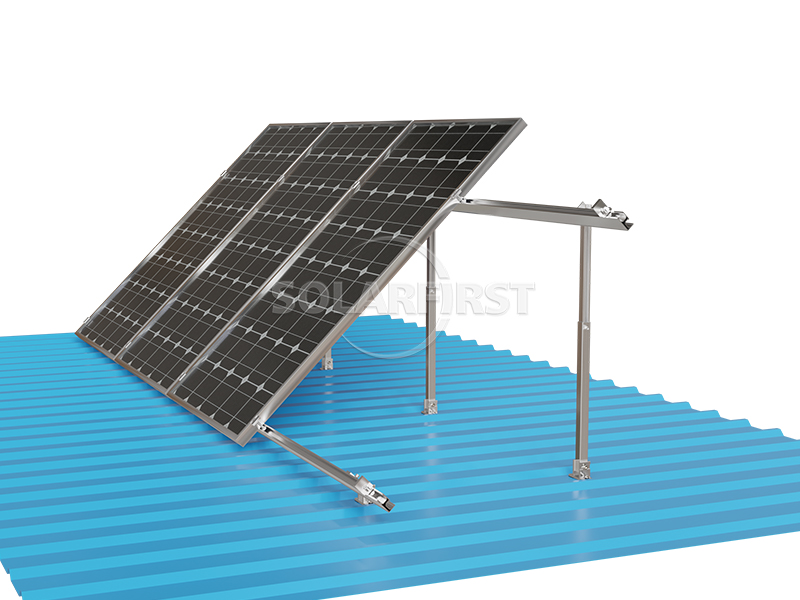
The adjustable front and rear leg solar mounting bracket is a solar panel mounting system specifically designed for installation on metal corrugated steel roofs. Its name comes from its unique front and rear support structure design, by adjusting the height difference between the front and rear legs, the tilt angle of the photovoltaic panels can be varied to adapt to different regional sunlight conditions, roof slopes, and load-bearing requirements.
Read More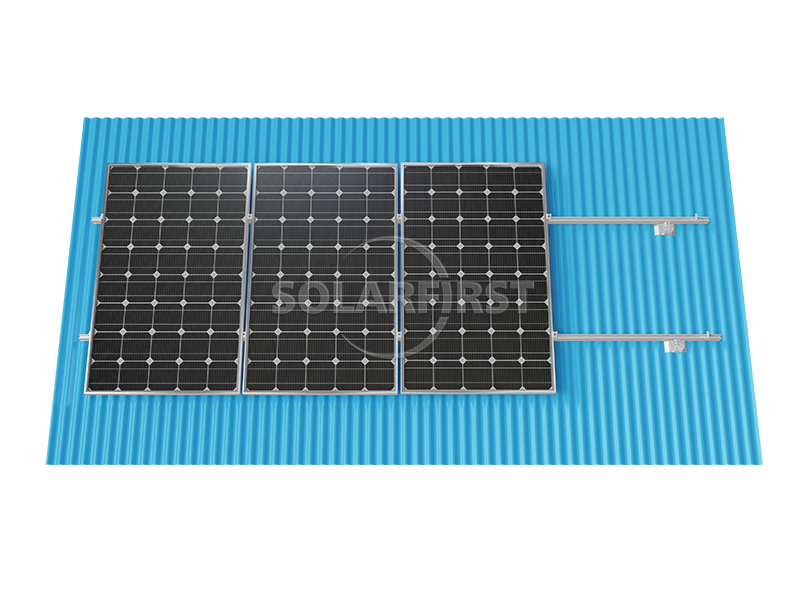
The wave-shaped roof clamp is specifically designed for wavy corrugated metal roofing sheet. Its curved bottom surface conforms to the roof profile, and it works with self-tapping screws to connect to the purlins, ensuring a stable installation for the solar module. Made of aluminum alloy, it is weather-resistant, durable, and easy to install.
Read More
When choosing solar panels for residential and small villa balconies, a key trend is now towards "lightweight, integrated, and plug-and-play solutions," rather than simply purchasing separate brackets. These products are becoming increasingly popular with families due to the convenience of "solar appliances."
Read More
 en
en fr
fr de
de zh-CN
zh-CN ru
ru es
es pt
pt ja
ja ko
ko ar
ar