Leave A Message
If you are interested in our products and want to know more details,please leave a message here,we will reply you as soon as we can.


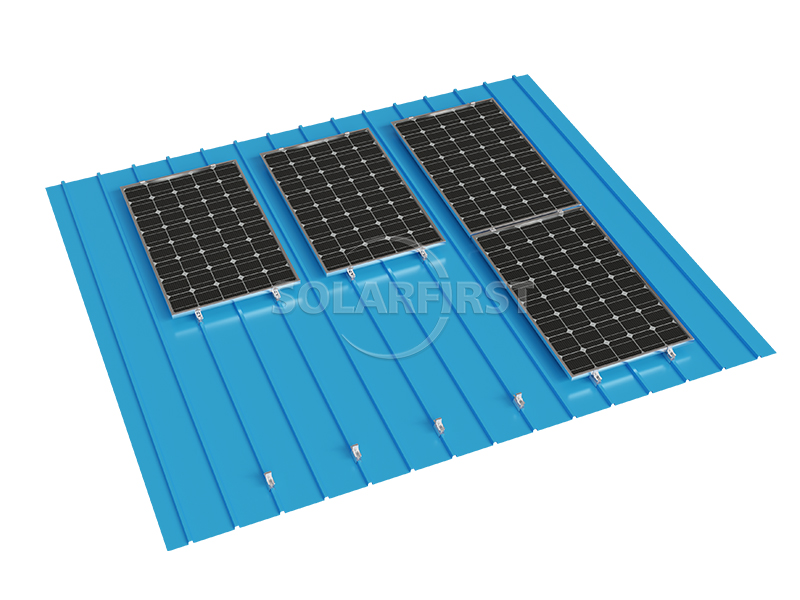
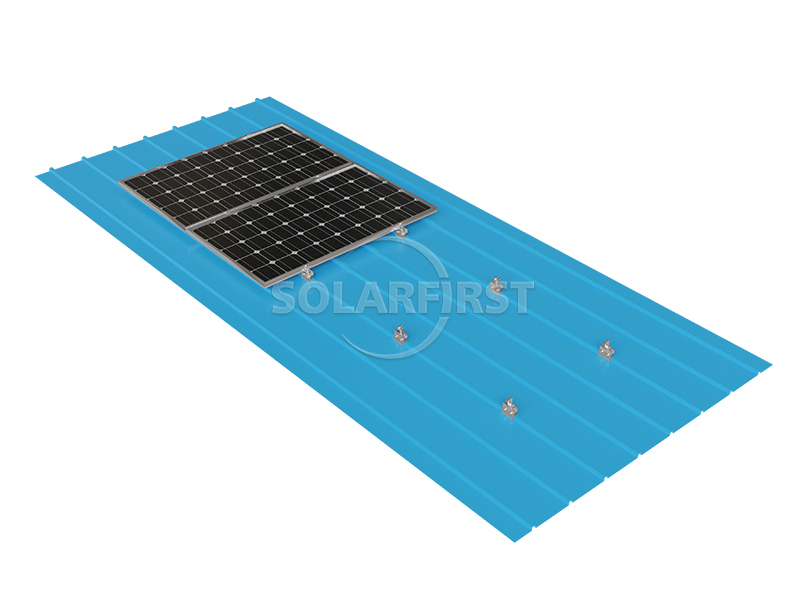
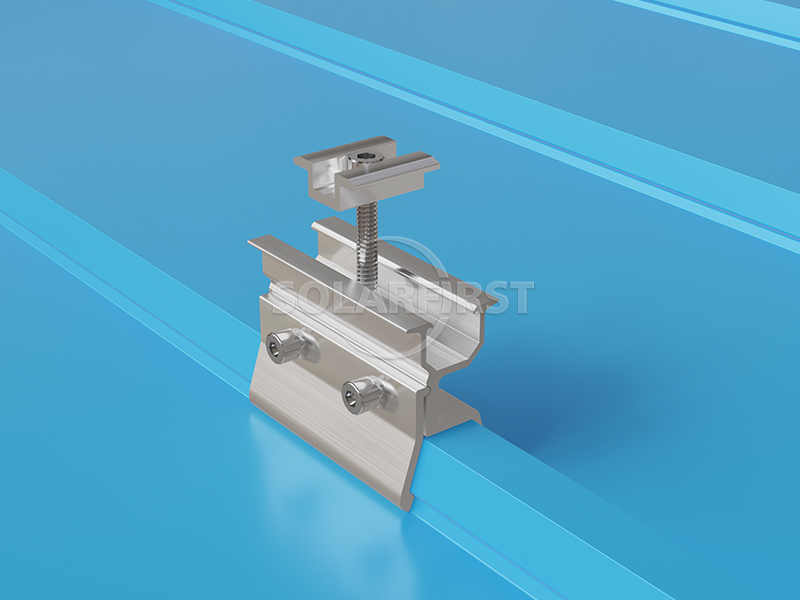
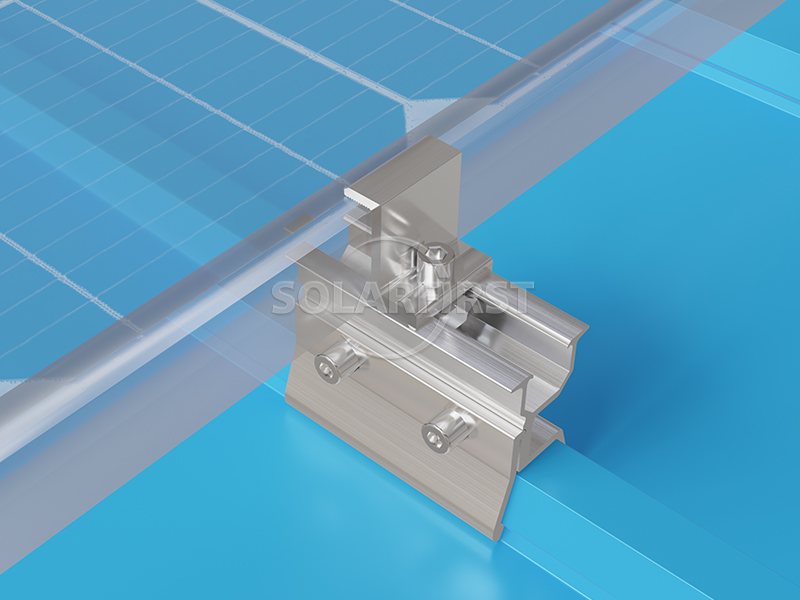
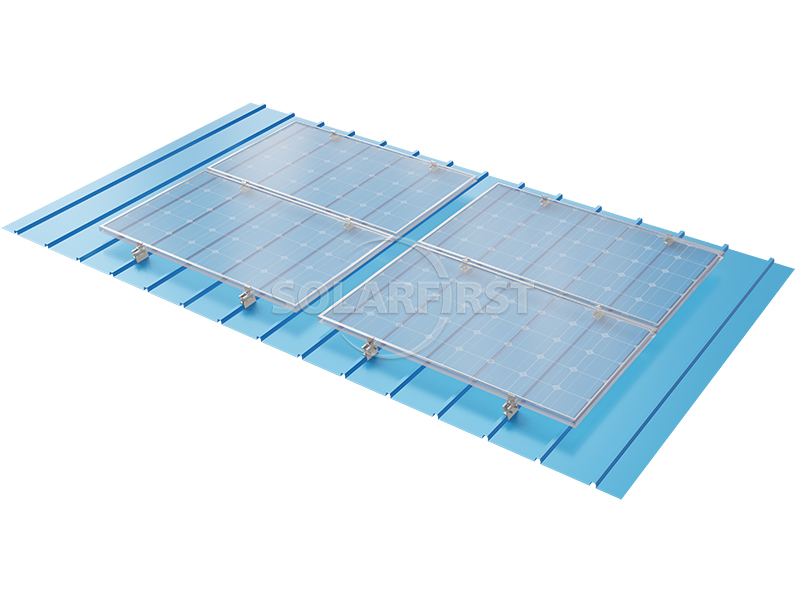
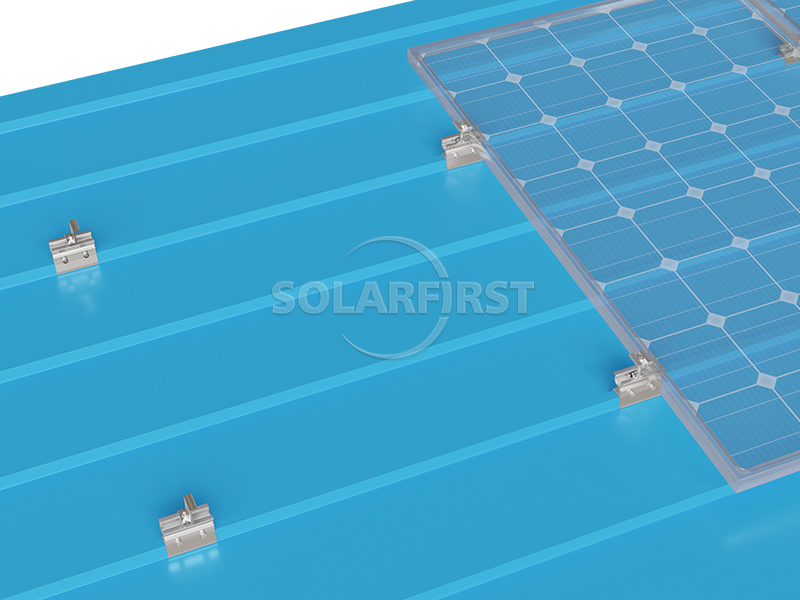
The Mini Rail with rail clamps is a non-penetrating solar mounting system specifically designed for metal roofs. Its core feature is the replacement of traditional continuous long rails with short aluminum alloy rails (Mini Rails), which are then clamped and secured to the ribs (crests) of the corrugated metal roof using specialized clamps, eliminating the need for drilling into the roof. This design avoids the risk of leaks from drilling, while providing a simple, quicker and stable installation for the PV modules.
Color :
Natural silver/ black(Colored according to customer requirements)Certification :
ISO,SGS,CEMaterial :
Anodized Aluminum 6005 T5, Stainless Steel 304Product Origin :
Tianjin, FujianShipping Port :
Shanghai, Ningbo, Tianjin, Xiamen, Shenzhen ports
Product Description
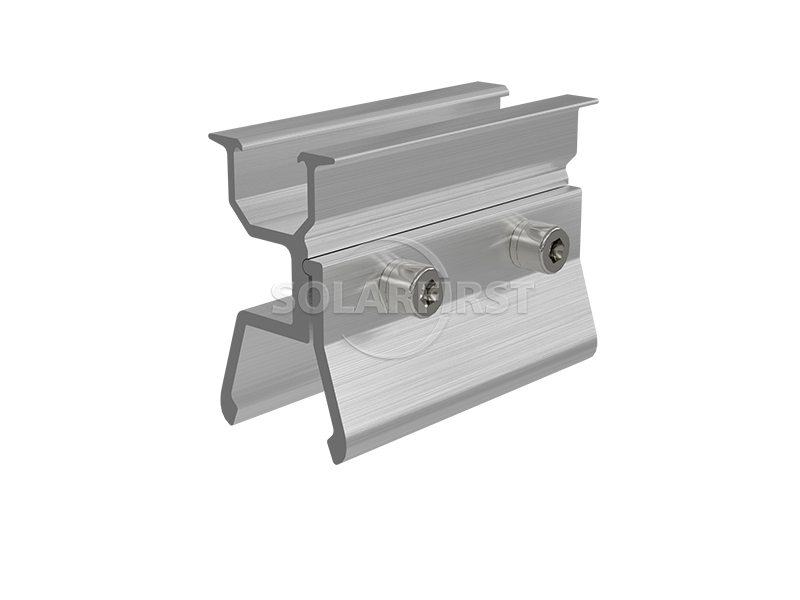
Mini Rail Clamps is a non-penetrating solar mounting system designed specifically for metal roofs.
The minirail series has various models for different types of metal roof. The minirails themselves are functionally both short aluminum alloy rails and roof clamps, so the minirail system need no addional long rails.
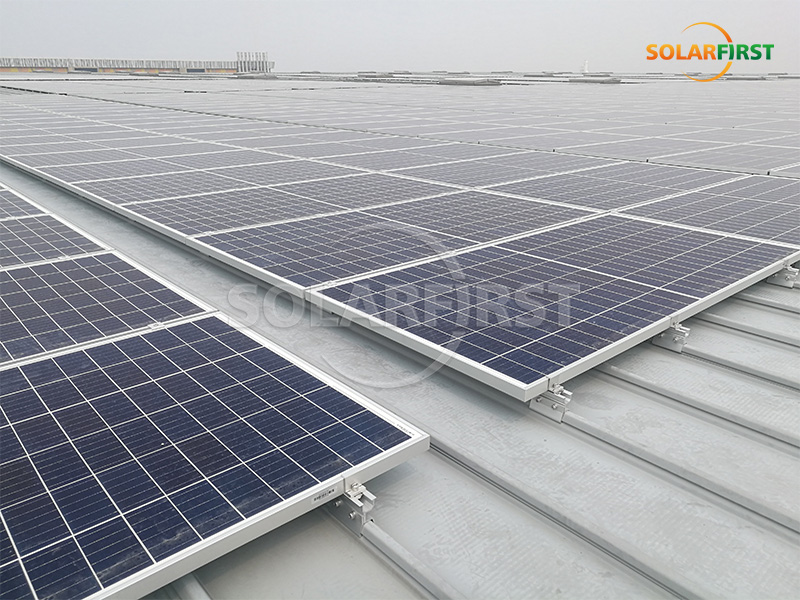
The minirails are clamped and fixed to the crests of the corrugated steel roof, without drilling through the roof. This design avoids the leakage or corrosion problems that can occur with drilling, while providing a lightweight and stable support base for the solar modules. This mounting system has a simple structure and modular components, making it suitable for various standard metal roofs.
Solar First has minirail clamps for various types of metal roof, such as Klip Lok, Standing Seam, and trapezoid.
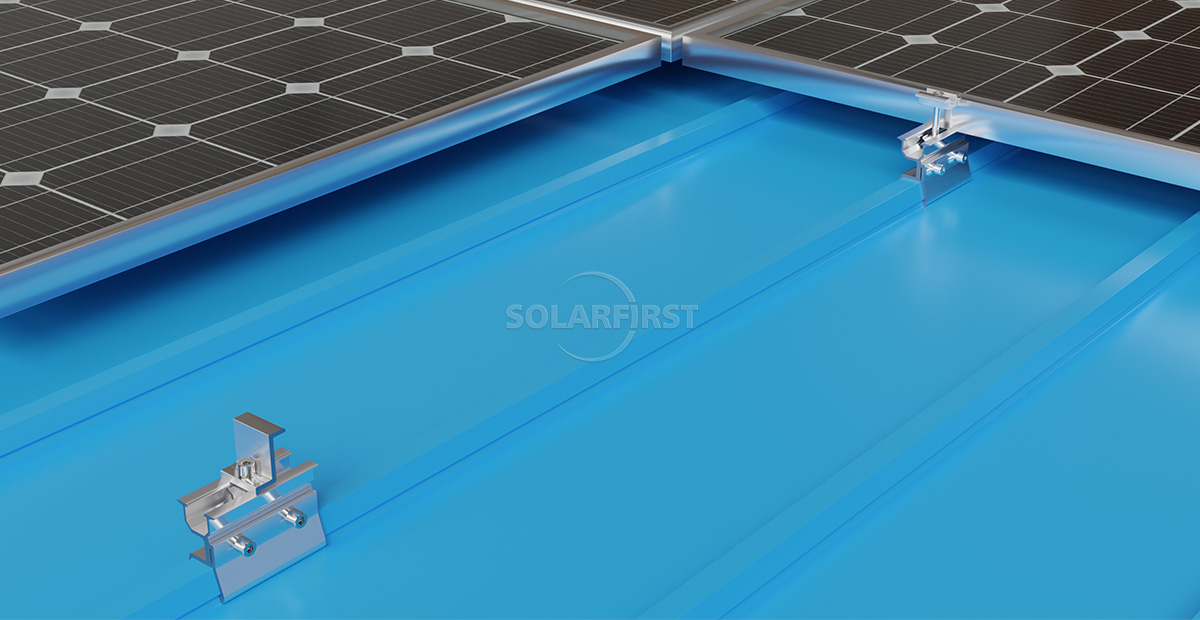
For flat metal roofs with zero pitch, this 5° degree base bracket can be installed to elevate the entire Mini Rail mounting system and create a tilt angle. It prevents waterponding on solar panels caused by insufficient inclination.
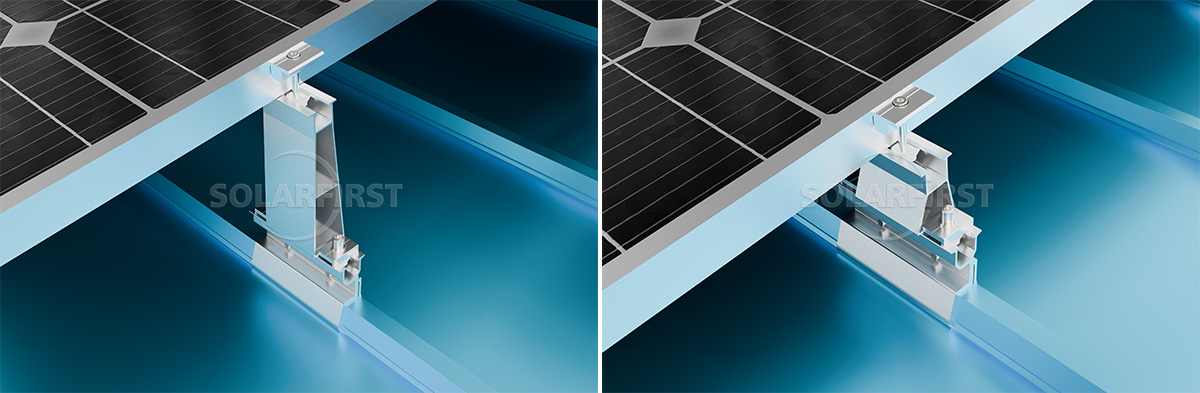
Mini Rail Clip Lock (raised)
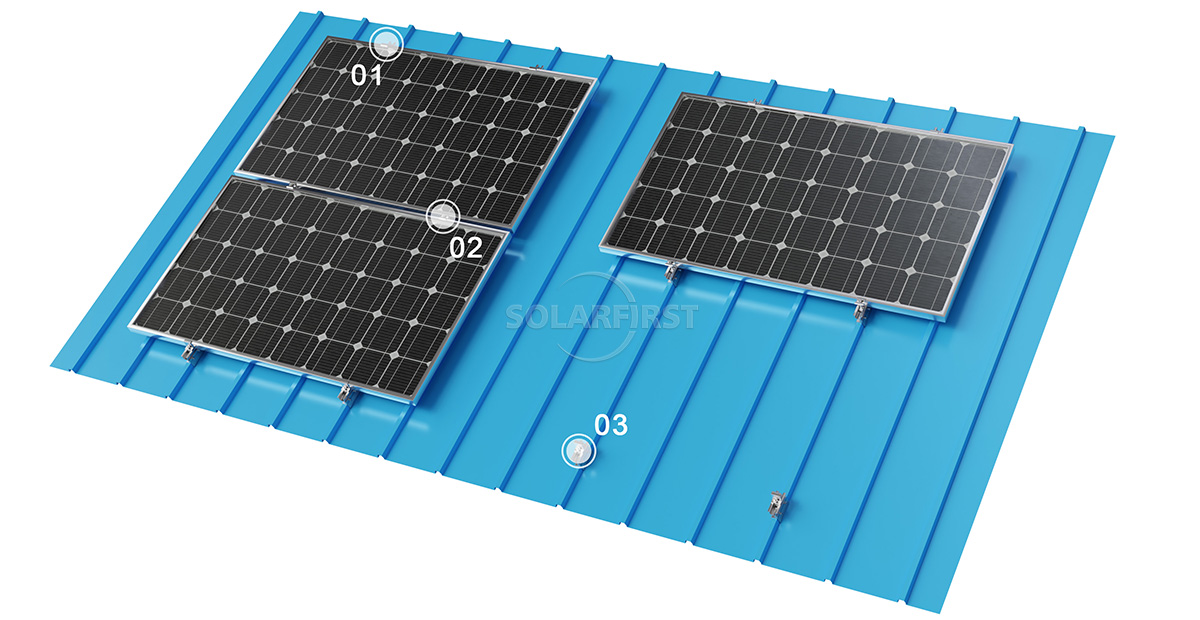
Product Components
Advantage
▶ Reduced risk of leakage
The system uses clamps for secure fixing, no need for drilling through the corrugated steel roof. This prevents potential leaks and corrosion caused by drilling.
▶ Savings on material costs
The minirail design reduces aluminum usage, compared to traditional long rail solutions, making cost and logistics more economical.
▶ High installation efficiency
Modular components simplify the installation, and reduce on-site construction time.
▶ Roof load-friendly
The system's lightweight design reduces the load on existing roofs, making it particularly suitable for metal roof buildings with limited load-bearing capacity.
▶ Flexible layout
Supports horizontal or vertical installation of photovoltaic modules, adaptable to various standard metal roof layouts.
Parameters
| Installation | Metal Roof |
| Wind Load | up to 60m/s |
| Snow Load | 1.4kn/m² |
| Tilt Angle | Parallel to Roof Surface |
| Standards | GB50009-2012, EN1990:2002, ASCE7-05, AS/NZS1170, JIS C8955:2017, GB50429-2007 |
| Material | Anodized Aluminum AL6005-T5, Stainless Steel SUS304 |
| Warranty | 10 Years Warranty |
Module
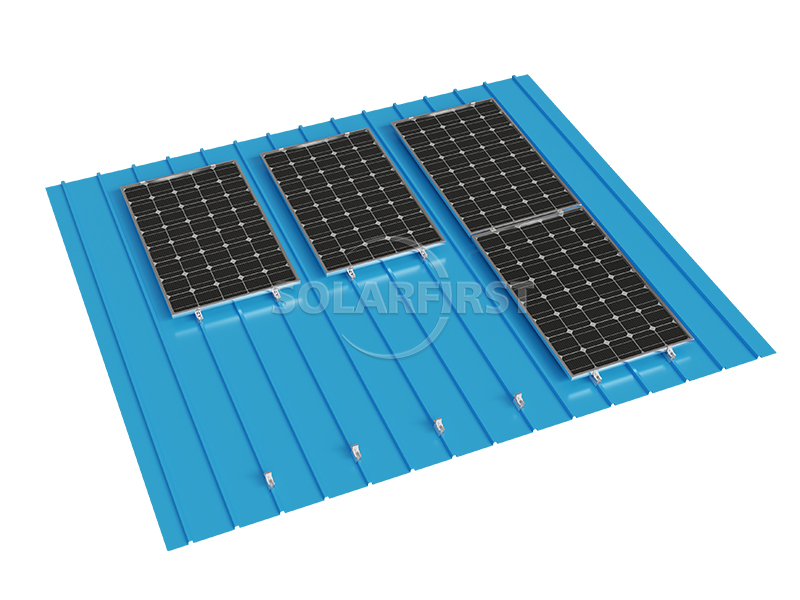
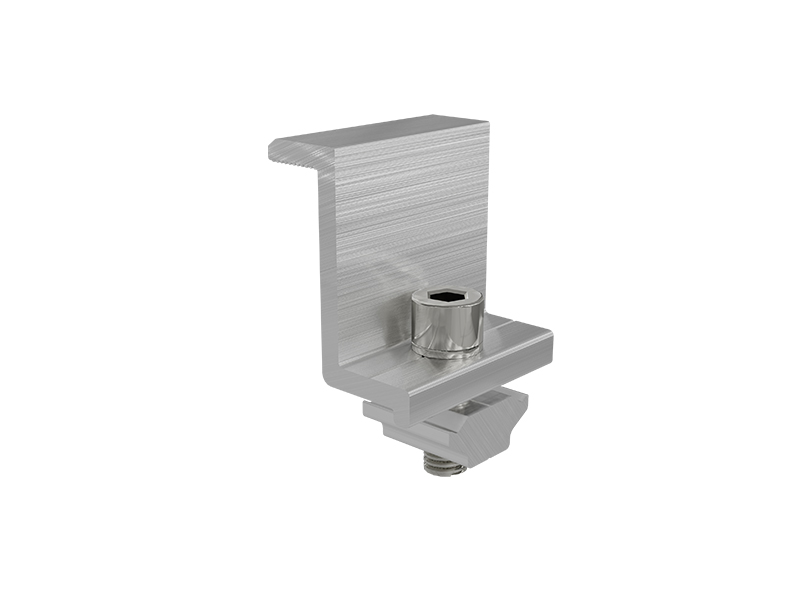
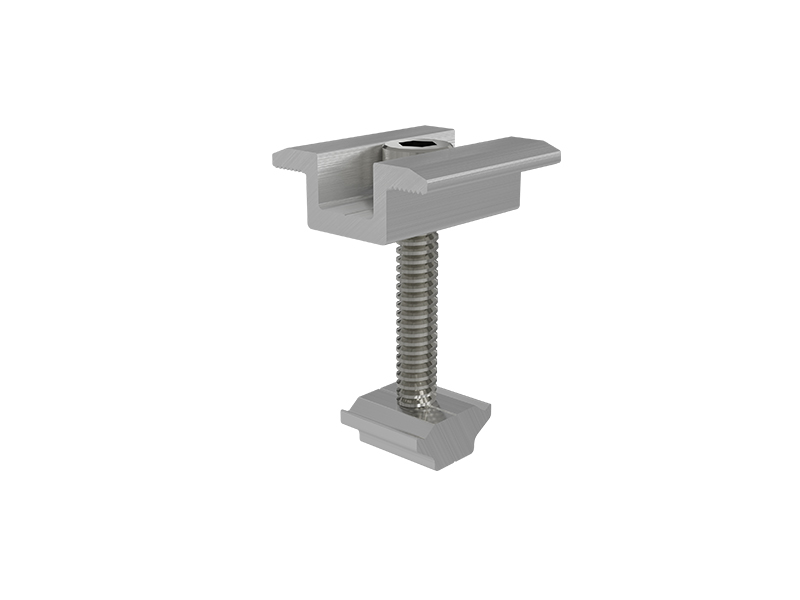
Mini Rail Roof Clamps
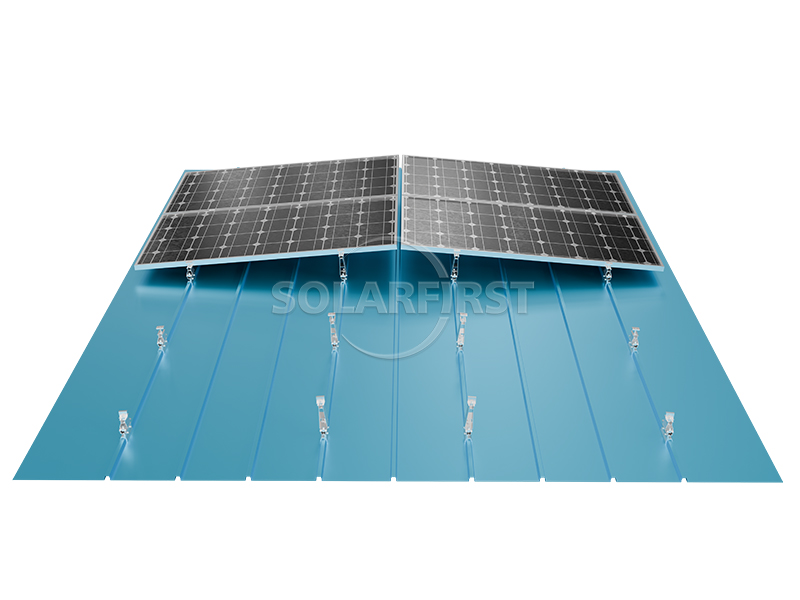
Mini Rail Roof Clamps (raised)
Applicable Scenarios
▪ Industrial and commercial buildings: Large-area standard metal roofs for factories, warehouses, logistics centers, etc.
▪ Existing building renovation: Suitable for adding photovoltaics without damaging the original waterproofing layer.
Important Notes:
▶ Roof Rib Matching
Before production, confirm the dimensions and type of rib of corrugated steel sheet (e.g., standing seam, Klip Lok, trapezoidal corrugated, etc.) and select the corresponding clamp specifications. Otherwise, the clamps may not steady enough.
▶ Installation Specifications
During installation, ensure the clamps are correctly secured at the crests of the corrugated metal roofing sheet, and the bolt torque must meet design requirements to ensure reliable clamping.
▶ Load Verification
Although the system is relatively lightweight, it is still recommended that a professional assessment on the bearing capacity of the roof under wind and snow loads.
▶ Construction Safety
Proper safety precautions must be taken when working at heights.
Summary
The Mini Rail solution for corrugated steel roof mounting system employs a non-penetrating installation method with clamps and a integrated rail design, achieving a good balance between reducing the risk of drilling into the roof, controlling material costs, and improving installation efficiency. It is suitable for commercial, industrial photovoltaic projects on standard metal roofs.
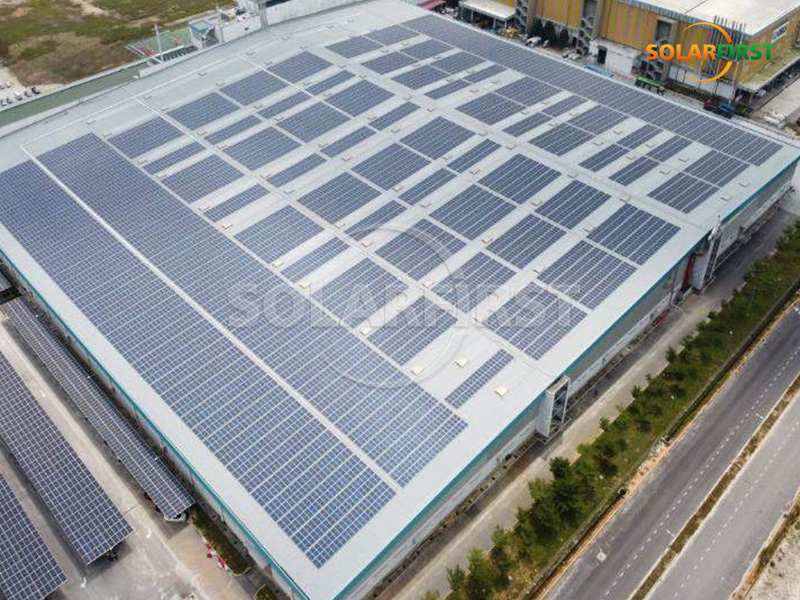
Solar First Project Reference

This product is a photovoltaic (PV) bracket accessory specifically designed for Klip-Lok metal corrugated roofs. It employs a non-penetrating clamping design, eliminating the need for drilling into the roof surface. The clamps secure themselves to the Klip-Lok rib of the roof ridge, providing a reliable connection point for rails and PV modules. This design avoids damage to the roof panels caused by drilling, effectively reducing the risk of roof leaks, and is particularly suitable for commercial and industrial roofs with high waterproofing requirements.
Read More
The "L" shaped roof clamp (often called L-foot, L leg, or L bracket) in a metal roof solar module mounting system is a simple but universal connector for reliably fixing the rails that supports solar modules to the trapezoid metal roof. It has a right angle (L-shape) shape, a lightweight structure, and mainly serves as an anchoring element connecting the upper and lower parts of the structure.
Read More
The standing seam roof clamp is specifically designed for standing seam (or seam lok) metal roofing sheet as a non-penetrating solution. It is fixed to the standing seam of the roof by clamping, allowing the photovoltaic modules to be installed securely without drilling a single hole in the roof.
Read More
The U rail for photovoltaic (PV) mounting on corrugated steel roofs is a solar panel installation solution specifically designed for trapezoid corrugated metal roofs. It is widely used due to its high efficiency and reliability. It is a design that ensures a balance between structural strength and ease of installation.
Read More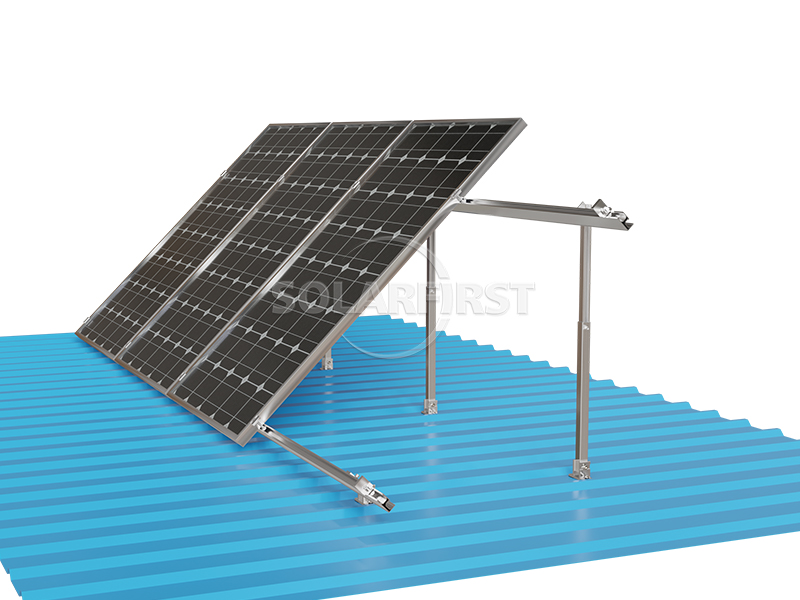
The adjustable front and rear leg solar mounting bracket is a solar panel mounting system specifically designed for installation on metal corrugated steel roofs. Its name comes from its unique front and rear support structure design, by adjusting the height difference between the front and rear legs, the tilt angle of the photovoltaic panels can be varied to adapt to different regional sunlight conditions, roof slopes, and load-bearing requirements.
Read More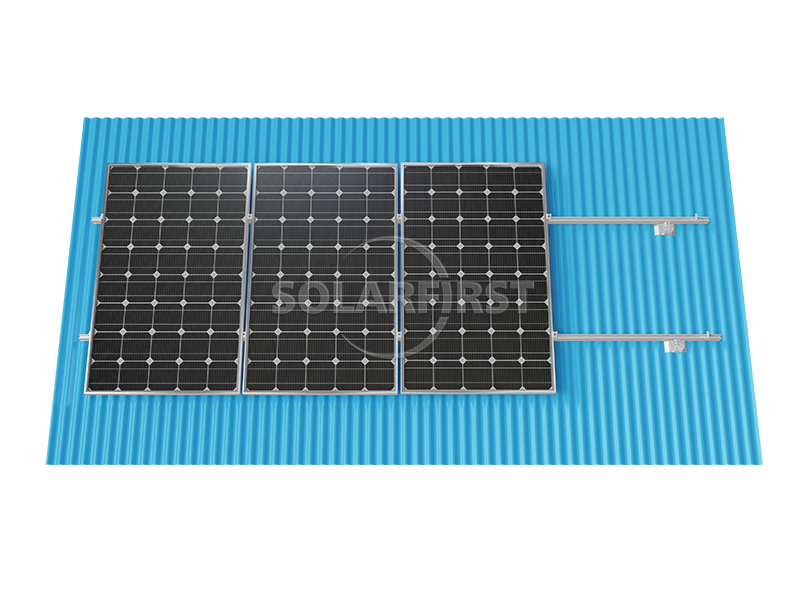
The wave-shaped roof clamp is specifically designed for wavy corrugated metal roofing sheet. Its curved bottom surface conforms to the roof profile, and it works with self-tapping screws to connect to the purlins, ensuring a stable installation for the solar module. Made of aluminum alloy, it is weather-resistant, durable, and easy to install.
Read More
 en
en fr
fr de
de zh-CN
zh-CN ru
ru es
es pt
pt ja
ja ko
ko ar
ar