Leave A Message
If you are interested in our products and want to know more details,please leave a message here,we will reply you as soon as we can.



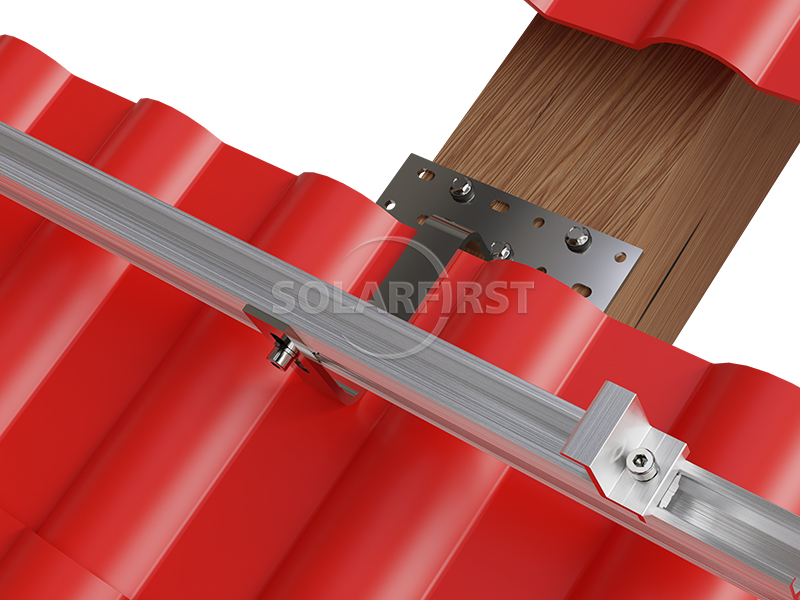
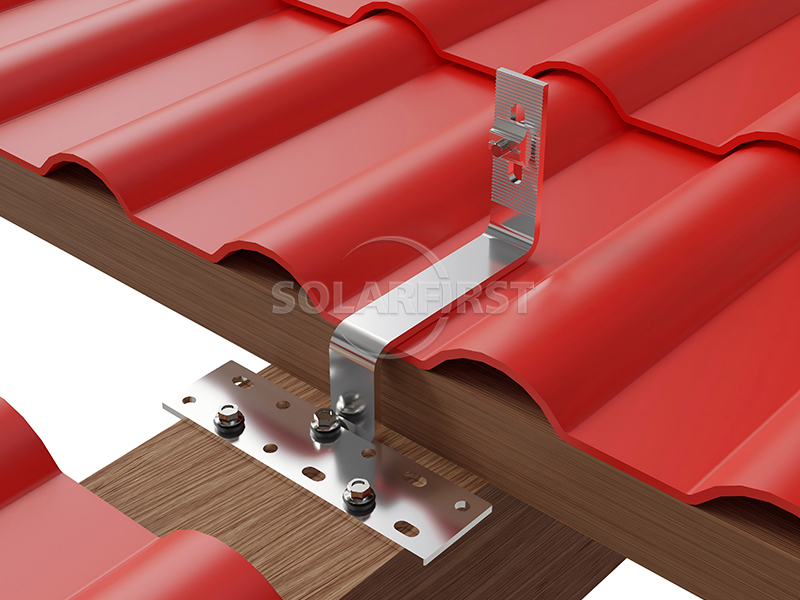
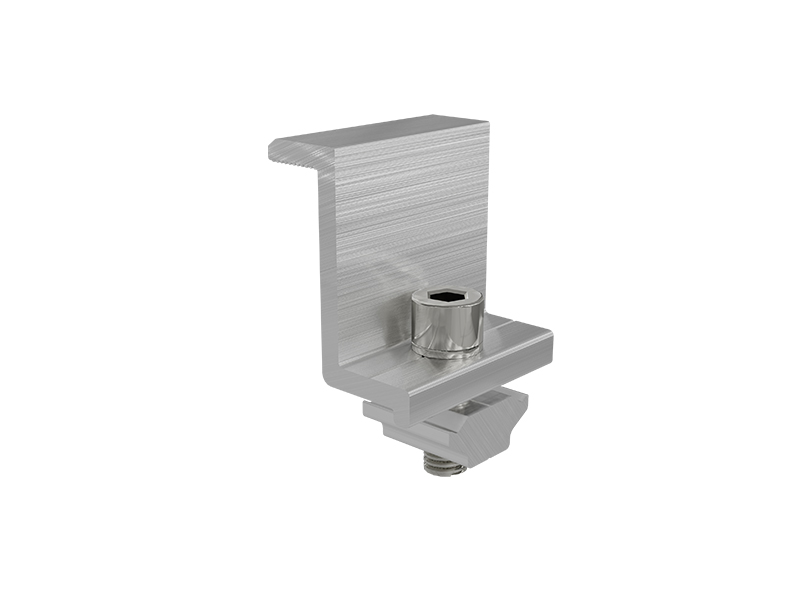
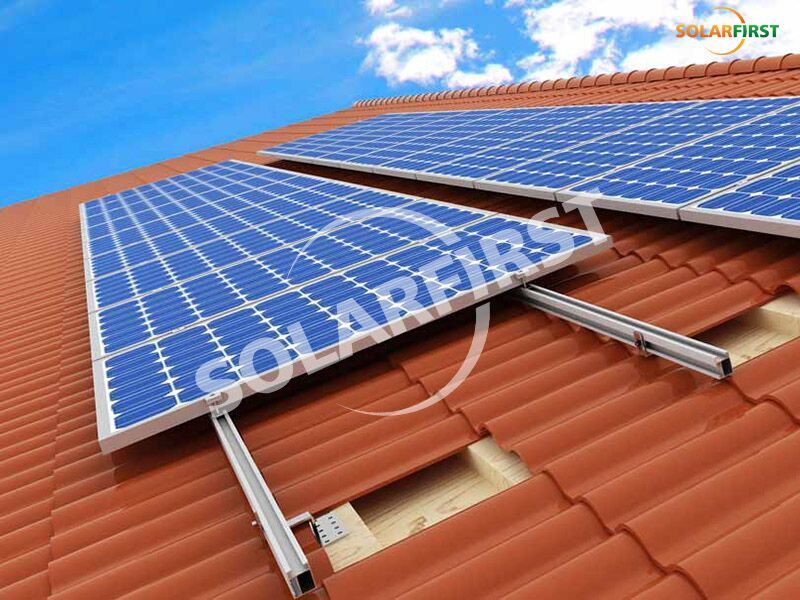
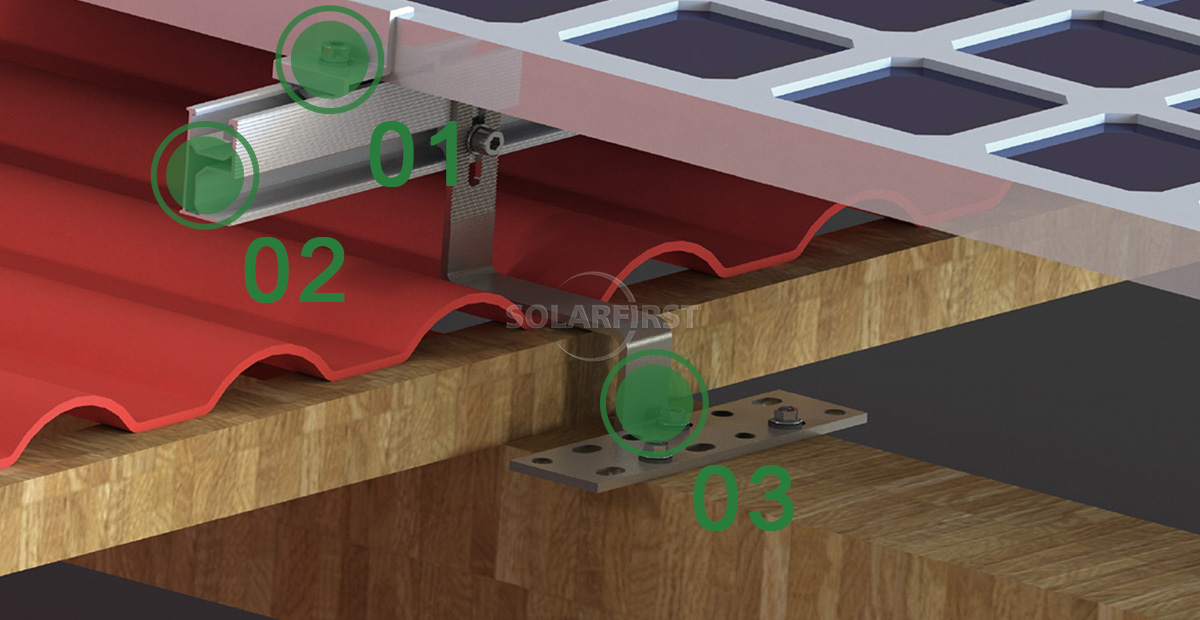
A rooftop photovoltaic (PV) support system is a photovoltaic panel support system specifically designed for pitched tiled roofs. It mainly consists of three components: hooks (connecting to the roof beams), guide rails (supporting the PV panels), and clamps (fixing the components). Its core feature is that the stress points are concealed beneath the tiles, using hooks that pass through the tile seams to connect to the structural layer, providing a stable foundation for the PV system without significantly compromising the roof's integrity. This system is suitable for various tile types, including ceramic tiles, glazed tiles, and slate tiles, and is typically made of stainless steel or aluminum alloy. It must meet requirements for wind and snow resistance, and its service life is generally over 25 years.
Color :
Natural silver/ black(Colored according to customer requirements)Certification :
ISO,SGS,CEMaterial :
Anodized Aluminum 6005 T5, Stainless Steel 304Product Origin :
Tianjin, FujianShipping Port :
Shanghai, Ningbo, Tianjin, Xiamen, Shenzhen ports
Product Description
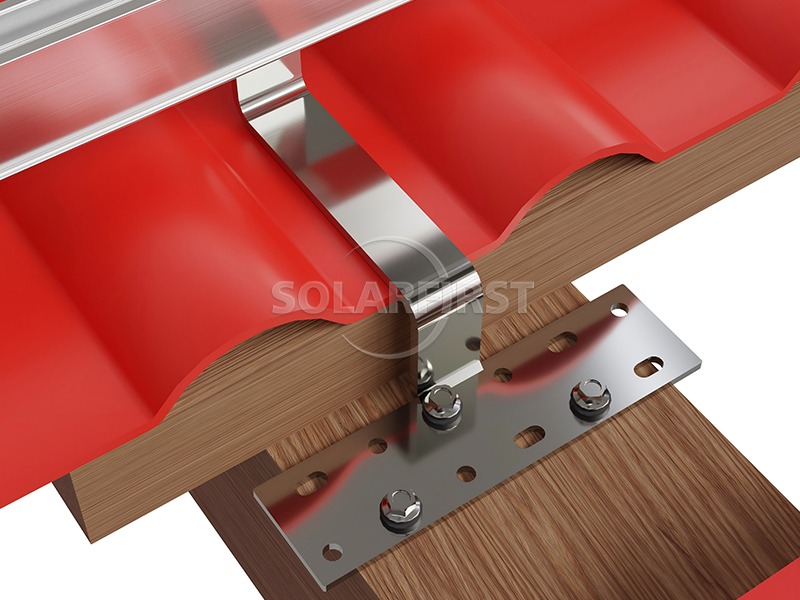
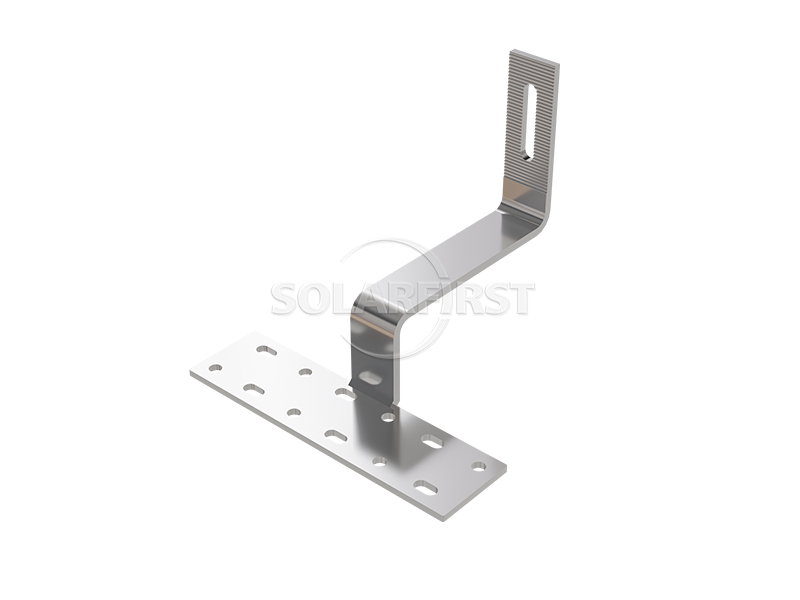
Structurally, rooftop photovoltaic (PV) hooks are typically L-shaped or near-J-shaped metal components, consisting of a base plate (the bottom plate connected to the wooden beam) and an upright arm (a vertical plate extending upwards to fix the guide rail). The upright arm usually has adjustment grooves or positioning holes for connection and fixation to the guide rail. The hook base is fixed to the roof structure with bolts or self-tapping screws. The upright arm extends through the tile gaps onto the tile surface, and the guide rail is then connected to the upright arm with T-bolts. A pressure block above the guide rail finally secures the PV module.
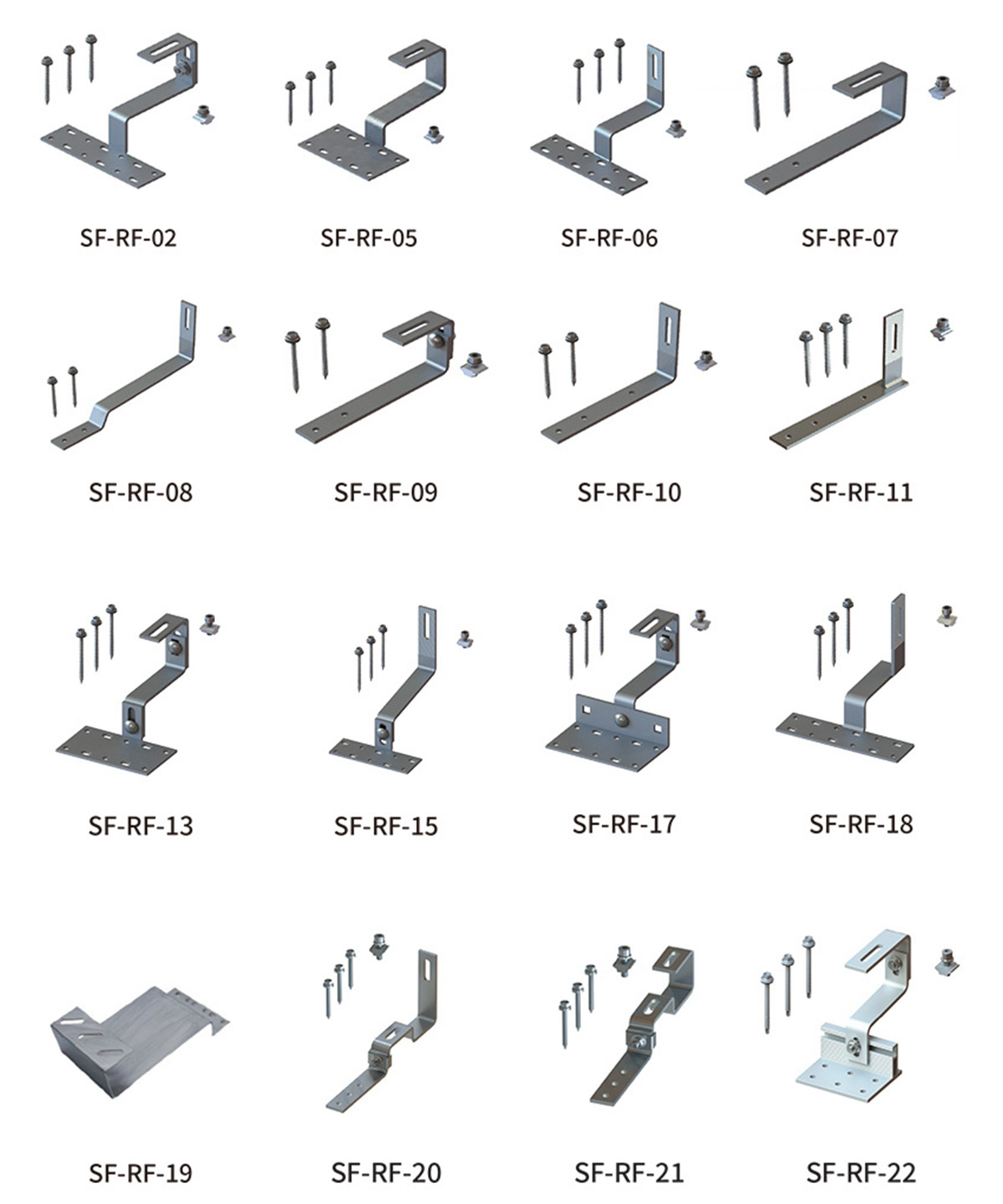
Different types of tiles require different hook shapes. For example, ceramic/glazed tiles usually use curved hooks, with the curvature of the upright arm matching the curvature of the tile back to ensure a good fit after the tile is repositioned. Flat tiles often use straight-arm or adjustable hooks. Double-groove tiles, Roman tiles, and Spanish tiles also have their own dedicated hook models. Recent product trends tend to favor adjustable hook designs with multi-directional adjustment capabilities, which adapt to different roof angles, beam spacing, and tile thicknesses through toothed engagement, long slots, and other methods.
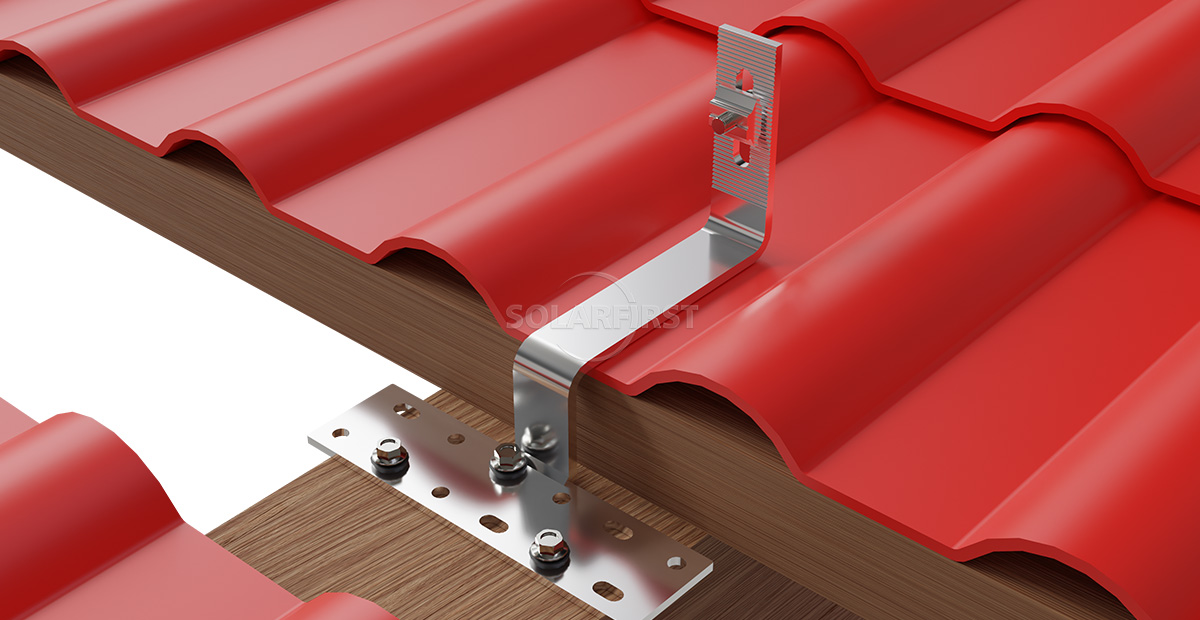
Product Components
Advantage
▪ Multiple Tile Type Compatibility:
Products typically offer dedicated models suitable for various tile types, including S-shaped tiles, flat tiles, Roman tiles, and slate tiles. Universal adjustable hooks are also available to meet the installation needs of most tiled roofs.
▪ Relatively Convenient Installation:
Utilizing bolt connections, installation generally eliminates the need for on-site drilling or welding. Some modular designs require only 3-4 parts and a maximum of three tools, saving on-site construction time.
▪ Excellent Weather Resistance:
Major components are typically made of 304 stainless steel or high-strength aluminum alloy AL6005-T5, offering excellent corrosion resistance and enabling long-term use in various outdoor climates.
▪ Reliable Structural Strength:
Professionally designed products boast a single-point tensile strength exceeding 400kg, effectively resisting wind, snow, and other natural loads, ensuring the safe operation of the photovoltaic system.
▪ Flexible and Adjustable Design:
Adjustable hooks typically support height and installation position adjustments to match different tile thicknesses and roof structural beam positions, reducing on-site cutting and adjustment work.
▪ Relatively Flexible and Adjustable Design:
Adjustable hooks typically support height and installation position adjustments to match different tile thicknesses and roof structural beam positions, reducing on-site cutting and adjustment work. It helps maintain the integrity of the roof: Since the main structure is installed under the tiles, there is usually no need to drill additional holes in the tiles, which helps to reduce the impact on the overall integrity and appearance of the roof.
Parameters
| Installation | Tile Roof |
| Wind Load | up to 60m/s |
| Snow Load | 1.4kn/m² |
| Tilt Angle | Parallel to Roof Surface |
| Standards | GB50009-2012, EN1990:2002, ASCE7-05, AS/NZS1170, JIS C8955:2017, |
| Material | Anodized Aluminum AL6005-T5, Stainless Steel SUS304 |
| Warranty | 10 Years Warranty |
Applicable Scenarios
▪ Traditional residential sloping roofs: Construction of distributed photovoltaic (PV) power stations for various types of tiled and glazed tile roofs, such as villas and self-built rural houses.
▪ Commercial building tiled roofs: Rooftop PV projects for commercial buildings with tiled roofs, such as hotels, clubs, and office buildings.
▪ PV retrofitting of preserved ancient building roofs: PV installation projects for old or historical buildings using slate tiles, antique-style tiles, etc.
▪ New PV-equipped roofs: Newly built tiled roofs with pre-planned PV installation conditions can be directly installed using a hook-and-loop system.
▪ PV retrofitting of existing residential tiled roofs: PV installation on existing residential tiled roofs. Since hook-and-loop systems typically do not require extensive tile fabrication, they are relatively suitable for this type of retrofitting project.
Important Notes:
▪ Tile Matching Issues:
Different types of tiles have corresponding hook models. Before installation, it is recommended to specify the exact tile type (e.g., S-type, W-type, flat tile, etc.) to avoid incompatible hooks that could prevent proper tile repositioning or cause poor load-bearing conditions.
▪ Structural Load-Bearing Capacity Confirmation:
Before installation, it is recommended to confirm the load-bearing capacity of the roof structure, especially for older buildings. Ensure the wooden beams are intact and free from rot to guarantee overall load safety.
▪ Precision of Installation Position:
The spacing and position of the hooks should generally be determined based on roof load-bearing calculations. It is recommended to refer to professional construction drawings and avoid arbitrarily arranging them based solely on experience, as this may affect the overall wind and snow resistance of the system.
▪ Fastener Quality and Installation:
Stainless steel square-head self-tapping screws are recommended for connection. Their quality directly affects the fixing strength of the hooks. During installation, ensure the screws are fully engaged with the wooden beam structure.
▪ Tile Repositioning:
After hook installation, the removed tiles need to be repositioned to ensure they properly cover the hook base and overlap tightly with surrounding tiles.
▪ Local Climate Factors:
In coastal areas with high salt spray, 316L stainless steel hooks are recommended as the preferred choice; in northern regions with heavy snowfall, it is necessary to ensure that the snow load parameters meet the project requirements.
▪ Follow Professional Construction Procedures:
Rooftop photovoltaic installation involves high-altitude work and should be carried out by a qualified professional installation team, strictly adhering to safety operating procedures.
▪ Regular Inspections:
It is recommended to conduct regular visual inspections of the hooks after the system is put into use (e.g., annually or after extreme weather events) to check for signs of loosening or corrosion.
Summary
As a key component connecting the roof and the photovoltaic (PV) rail system, rooftop PV hooks provide a feasible installation solution for PV power stations on tiled roofs without significantly altering the original roof structure. These products typically feature good adaptability, strong weather resistance, and relatively convenient installation, meeting the construction needs of most pitched tiled roof PV systems.
When selecting and installing these products, it is recommended to focus on key indicators such as tile type compatibility, material grade, technical parameters (especially wind and snow loads), and warranty period, while also considering the local climate conditions and intended use. The overall lifespan of a rooftop PV hook system can generally reach over 25 years, making it one of the more mature basic connection solutions for residential and small-to-medium-sized tiled roof distributed PV power stations.
Solar First Project Reference
Related Knowledge Points

This product is a photovoltaic (PV) bracket accessory specifically designed for Klip-Lok metal corrugated roofs. It employs a non-penetrating clamping design, eliminating the need for drilling into the roof surface. The clamps secure themselves to the Klip-Lok rib of the roof ridge, providing a reliable connection point for rails and PV modules. This design avoids damage to the roof panels caused by drilling, effectively reducing the risk of roof leaks, and is particularly suitable for commercial and industrial roofs with high waterproofing requirements.
Read More
The "L" shaped roof clamp (often called L-foot, L leg, or L bracket) in a metal roof solar module mounting system is a simple but universal connector for reliably fixing the rails that supports solar modules to the trapezoid metal roof. It has a right angle (L-shape) shape, a lightweight structure, and mainly serves as an anchoring element connecting the upper and lower parts of the structure.
Read More
The standing seam roof clamp is specifically designed for standing seam (or seam lok) metal roofing sheet as a non-penetrating solution. It is fixed to the standing seam of the roof by clamping, allowing the photovoltaic modules to be installed securely without drilling a single hole in the roof.
Read More
The U rail for photovoltaic (PV) mounting on corrugated steel roofs is a solar panel installation solution specifically designed for trapezoid corrugated metal roofs. It is widely used due to its high efficiency and reliability. It is a design that ensures a balance between structural strength and ease of installation.
Read More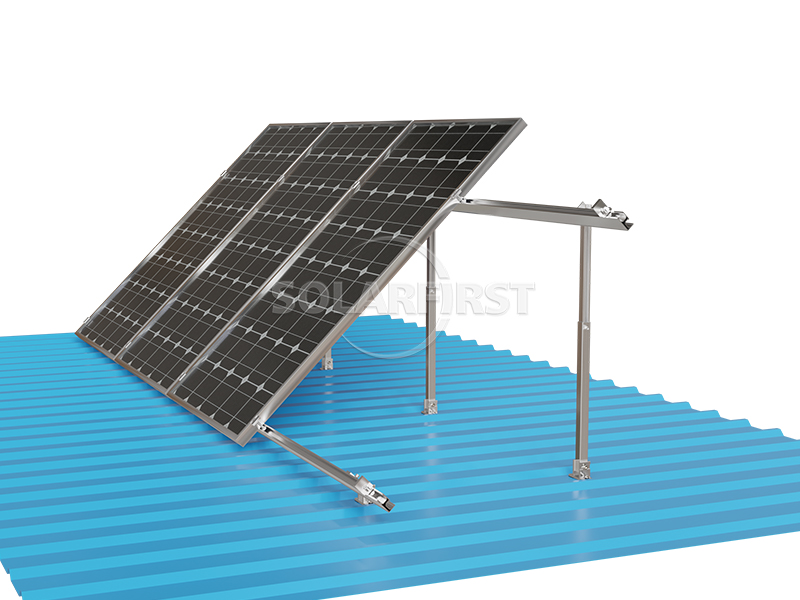
The adjustable front and rear leg solar mounting bracket is a solar panel mounting system specifically designed for installation on metal corrugated steel roofs. Its name comes from its unique front and rear support structure design, by adjusting the height difference between the front and rear legs, the tilt angle of the photovoltaic panels can be varied to adapt to different regional sunlight conditions, roof slopes, and load-bearing requirements.
Read More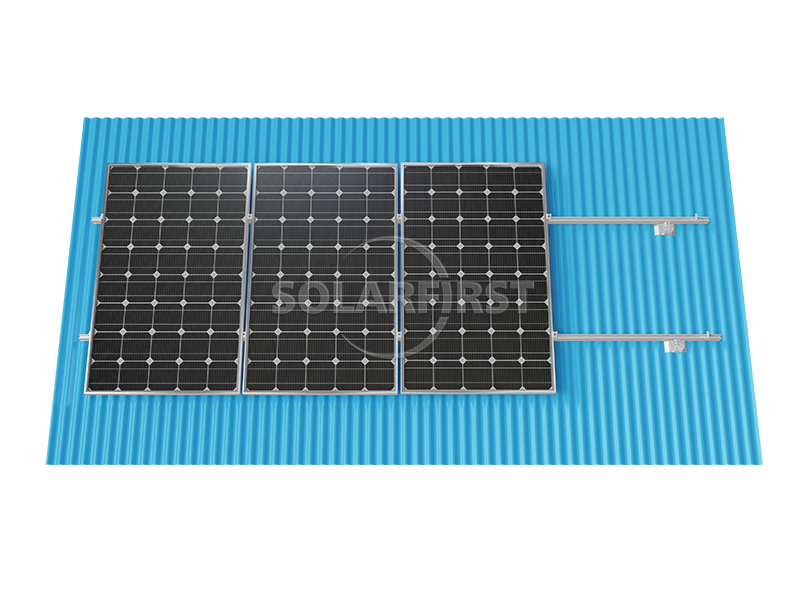
The wave-shaped roof clamp is specifically designed for wavy corrugated metal roofing sheet. Its curved bottom surface conforms to the roof profile, and it works with self-tapping screws to connect to the purlins, ensuring a stable installation for the solar module. Made of aluminum alloy, it is weather-resistant, durable, and easy to install.
Read More
A rooftop photovoltaic (PV) support system is a photovoltaic panel support system specifically designed for pitched tiled roofs. It mainly consists of three components: hooks (connecting to the roof beams), guide rails (supporting the PV panels), and clamps (fixing the components). Its core feature is that the stress points are concealed beneath the tiles, using hooks that pass through the tile seams to connect to the structural layer, providing a stable foundation for the PV system without significantly compromising the roof's integrity. This system is suitable for various tile types, including ceramic tiles, glazed tiles, and slate tiles, and is typically made of stainless steel or aluminum alloy. It must meet requirements for wind and snow resistance, and its service life is generally over 25 years.
Read More
Waterproof gaskets (also known as waterproof bases) are specialized sealing and connecting components installed at the fixing points of photovoltaic brackets on corrugated steel roofs or tile roofs. This product combines physical covering and elastic sealing to specifically reduce the risk of water leakage caused by nailing (bolt fixing) when connecting photovoltaic brackets to the roof. As a core component of photovoltaic installation waterproofing systems, waterproof gaskets are suitable for new photovoltaic buildings and photovoltaic renovation projects of existing buildings, especially on roofs made of corrugated steel roofs or various types of tiles.
Read More
 en
en fr
fr de
de zh-CN
zh-CN ru
ru es
es pt
pt ja
ja ko
ko ar
ar