Leave A Message
If you are interested in our products and want to know more details,please leave a message here,we will reply you as soon as we can.



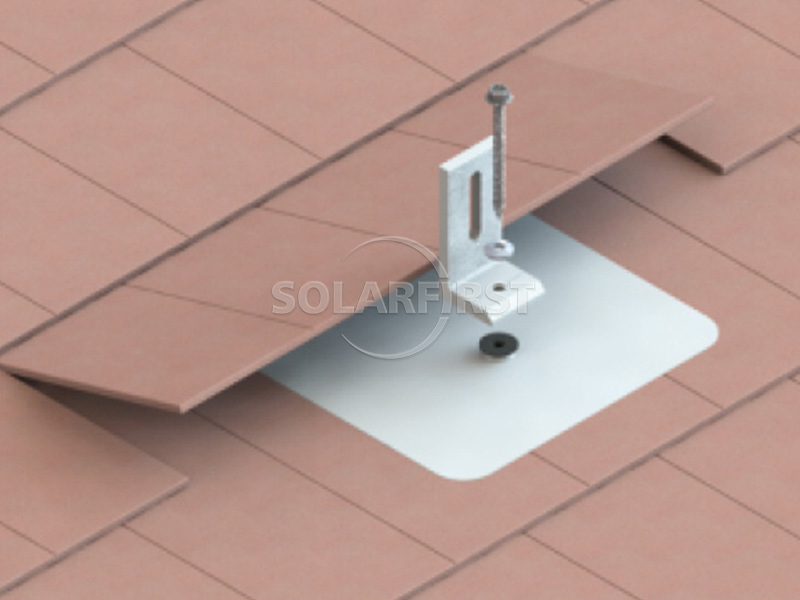
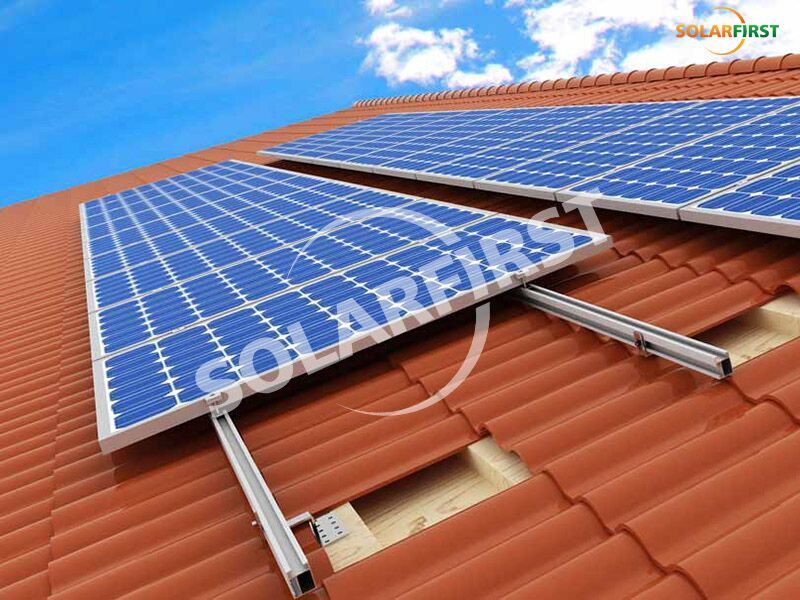
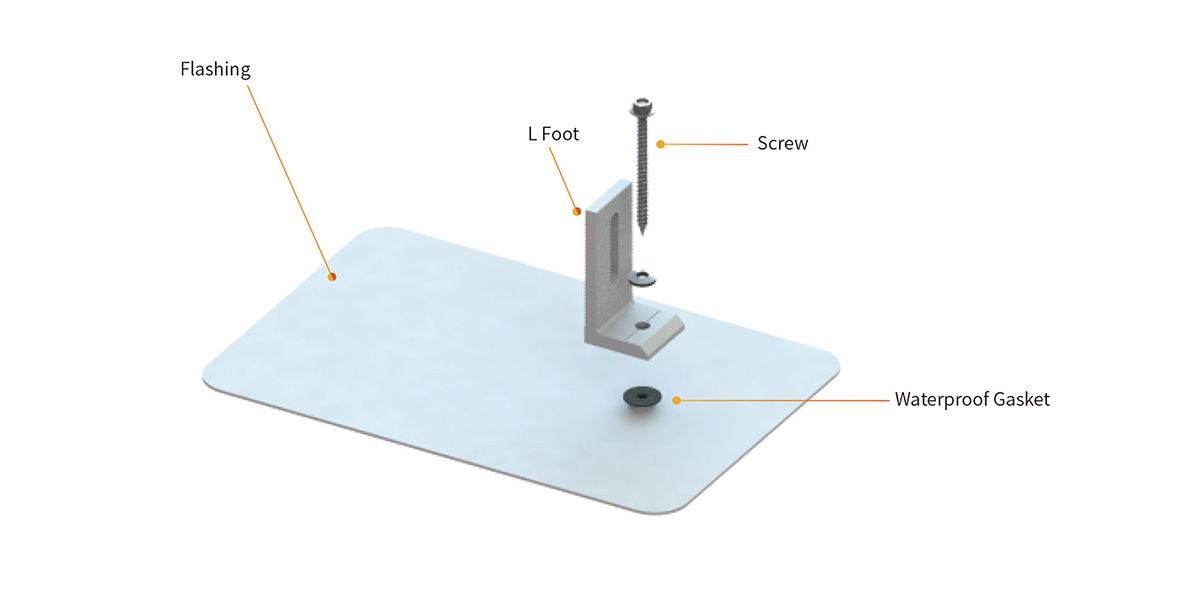
Waterproof gaskets (also known as waterproof bases) are specialized sealing and connecting components installed at the fixing points of photovoltaic brackets on corrugated steel roofs or tile roofs. This product combines physical covering and elastic sealing to specifically reduce the risk of water leakage caused by nailing (bolt fixing) when connecting photovoltaic brackets to the roof. As a core component of photovoltaic installation waterproofing systems, waterproof gaskets are suitable for new photovoltaic buildings and photovoltaic renovation projects of existing buildings, especially on roofs made of corrugated steel roofs or various types of tiles.
Color :
Natural silver/ black(Colored according to customer requirements)Certification :
ISO,SGS,CEMaterial :
Anodized Aluminum 6005 T5, Stainless Steel 304Product Origin :
Tianjin, FujianShipping Port :
Shanghai, Ningbo, Tianjin, Xiamen, Shenzhen ports
Product Description
Waterproof gaskets/bases are typically composed of a high-strength metal base plate and an elastic sealing layer, or are integrally molded elastomeric seals (such as EPDM rubber gaskets). During photovoltaic bracket installation, this product is placed at the location where roof holes are drilled or self-tapping screws are inserted, with a pre-drilled bolt or screw channel in the center of the gasket. When the bracket base (such as L-shaped feet) is connected to the roof structure with bolts, the waterproof gasket is pressed between the base and the roof surface, and its elastic sealing layer conforms to the minor unevenness of the roof, forming an effective sealing interface. In tiled roof scenarios, waterproof gaskets are often used in conjunction with metal waterproofing sheets, or embedded independently under the tiles; on corrugated steel roofs, the waterproof gasket is directly installed at the crest of the corrugated steel sheet, covering the screw entry point. This product aims to reduce the channels through which rainwater penetrates along fasteners through physical barrier and compression sealing.
Advantage
▶ Targeted Solution to Nail-Installation Leakage
The product is specifically designed to address the leakage risk at photovoltaic bracket fixing points. Through a dual mechanism of compression sealing and physical coverage, it helps reduce the possibility of rainwater entering the building interior along the fasteners.
▶ Suitable for Various Roof Types
Applicable to common metal or non-metal roofs such as corrugated steel sheets (angle-seam, standing seam, corrugated), asphalt shingles, and ceramic tiles.
▶ Strong Elastic Adhesion
The EPDM sealing layer has excellent compression resilience, adapting to minor unevenness on the roof surface and maintaining a certain sealing pressure even under thermal expansion and contraction caused by temperature changes.
▶ Reliable Weather Resistance
EPDM material is resistant to UV rays, ozone, and high and low temperatures (operating temperature range approximately -40℃ to +120℃). It is not prone to significant aging or cracking under long-term outdoor exposure.
▶ Relatively Simple Installation
The product adopts a prefabricated integrated structure. On-site installation only requires positioning and drilling holes, placing the gasket between the fastener and the roof, and tightening. No on-site sealant mixing is required.
▶ No additional roof height is added
The waterproof gasket is relatively thin (usually 2-5mm), which does not affect the installation angle of the photovoltaic panels or the appearance of the roof.
Parameters
| Installation | Tile Roof |
| Wind Load | up to 60m/s |
| Snow Load | 1.4kn/m² |
| Tilt Angle | Parallel to Roof Surface |
| Standards | GB50009-2012, EN1990:2002, ASCE7-05, AS/NZS1170, JIS C8955:2017, GB50429-2007 |
| Material | Anodized Aluminum AL6005-T5, Stainless Steel SUS304 |
| Warranty | 10 Years Warranty |
Applicable Scenarios
▪ Photovoltaic Installation in Industrial Plants with Corrugated Steel Sheets:
Self-tapping screws are used to secure the photovoltaic brackets at the crests of the corrugated steel sheets on the plant roof, and waterproof gaskets are used to cover the screw inlets.
▪ Photovoltaic Retrofitting on Residential Roofs with Tiled Roofs:
At the installation joints of the brackets on corrugated or asphalt shingle roofs, waterproof sheets are used in conjunction with waterproof boards or independently to reduce the risk of water seepage during drilling.
▪ Photovoltaic Addition Projects to Existing Buildings:
When adding photovoltaic systems to existing metal or tile roofs, waterproof gaskets become a critical waterproofing accessory because the original roof structure cannot be altered.
▪ Photovoltaic Carports and Awnings:
Waterproof gaskets are used at the fixing connection points of photovoltaic brackets on metal roofs to prevent rainwater from seeping down along the bolts.
▪ High Rainfall or Typhoon-Prone Areas:
In areas with high roof waterproofing requirements, waterproof gaskets are used as standard sealing accessories for photovoltaic installations.
Important Notes:
▶ Pre-installation Roof Condition Inspection:
Before installation, ensure that the corrugated steel sheets or tiles are free from severe rust, cracks, or looseness. For aging roofs, it is recommended to repair or replace some tiles first; otherwise, the sealing effect of the waterproof gasket may be affected.
▶ Hole Surface Cleaning Requirements:
During installation, ensure that the area around the drilled holes and the contact surface of the gasket are free of oil, dust, and frost; otherwise, an effective bonding interface may not be formed between the sealing layer and the roof.
▶ Bolt Pre-tightening Force Control:
When tightening the bolts, use an appropriate torque to compress the gasket to the designed thickness (usually 30%–50% of the original thickness). Insufficient torque may result in a poor seal; excessive torque may cause excessive deformation of the gasket or damage to the metal parts.
▶ Not Suitable for Single-Point Reliance:
Waterproof gaskets are a node-based waterproofing measure and cannot completely replace the overall roof waterproofing system. In areas with gentle slopes or prone to water accumulation, it is recommended to use them in combination with waterproof adhesives, waterproof boards, etc.
▶ Regular Inspection and Maintenance:
It is recommended to conduct a visual inspection of the bracket fixing points every 1-2 years after the system is put into operation, observing for cracks, aging, or leakage around the gaskets. Replace or re-apply sealant promptly if any problems are found.
▶ Avoid Contact with Incompatible Materials:
EPDM materials should not come into direct contact with asphalt, fuel oil, or strong solvents, as this may cause the sealing layer to swell or its performance to deteriorate.
▶ Low-Temperature Construction Precautions:
When the ambient temperature is below 5℃, the elasticity of EPDM will decrease. It is recommended to store the gaskets at room temperature for a period of time before installation, or to use appropriate heating measures to ensure compression sealing effect.
Summary
Photovoltaic waterproof gaskets (waterproof bases) are specialized sealing components designed to solve the problem of water leakage at nailed joints when connecting photovoltaic brackets to the roof. This product creates a compression seal between the fastener and the roof by setting an elastic sealing layer, helping to block rainwater from seeping inwards along the screw or bolt channels. Made of weather-resistant materials such as EPDM, it can adapt to the installation requirements of various corrugated steel sheets and tile roofs, and has a certain degree of temperature and aging resistance.
It is important to note that the actual waterproofing effect of the waterproof gasket is affected by multiple factors, including the original condition of the roof, installation torque, the quality of the sealing material, and the construction environment. No single component can guarantee a completely leak-proof roof. Therefore, in practical projects, waterproof gaskets should be used in conjunction with the overall roof waterproofing design, standardized construction, and regular maintenance as an important part of the photovoltaic installation waterproofing system.
Solar First Project Reference
Related Knowledge Points

This product is a photovoltaic (PV) bracket accessory specifically designed for Klip-Lok metal corrugated roofs. It employs a non-penetrating clamping design, eliminating the need for drilling into the roof surface. The clamps secure themselves to the Klip-Lok rib of the roof ridge, providing a reliable connection point for rails and PV modules. This design avoids damage to the roof panels caused by drilling, effectively reducing the risk of roof leaks, and is particularly suitable for commercial and industrial roofs with high waterproofing requirements.
Read More
The "L" shaped roof clamp (often called L-foot, L leg, or L bracket) in a metal roof solar module mounting system is a simple but universal connector for reliably fixing the rails that supports solar modules to the trapezoid metal roof. It has a right angle (L-shape) shape, a lightweight structure, and mainly serves as an anchoring element connecting the upper and lower parts of the structure.
Read More
The standing seam roof clamp is specifically designed for standing seam (or seam lok) metal roofing sheet as a non-penetrating solution. It is fixed to the standing seam of the roof by clamping, allowing the photovoltaic modules to be installed securely without drilling a single hole in the roof.
Read More
The U rail for photovoltaic (PV) mounting on corrugated steel roofs is a solar panel installation solution specifically designed for trapezoid corrugated metal roofs. It is widely used due to its high efficiency and reliability. It is a design that ensures a balance between structural strength and ease of installation.
Read More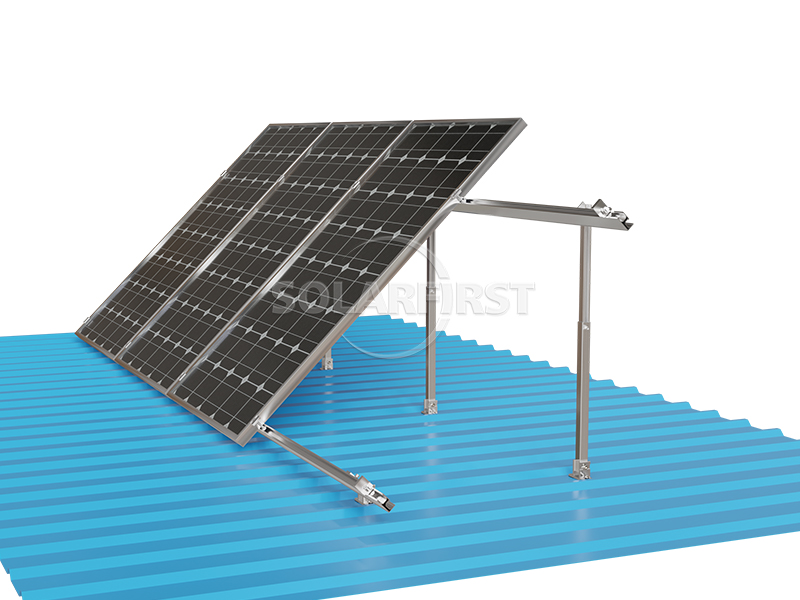
The adjustable front and rear leg solar mounting bracket is a solar panel mounting system specifically designed for installation on metal corrugated steel roofs. Its name comes from its unique front and rear support structure design, by adjusting the height difference between the front and rear legs, the tilt angle of the photovoltaic panels can be varied to adapt to different regional sunlight conditions, roof slopes, and load-bearing requirements.
Read More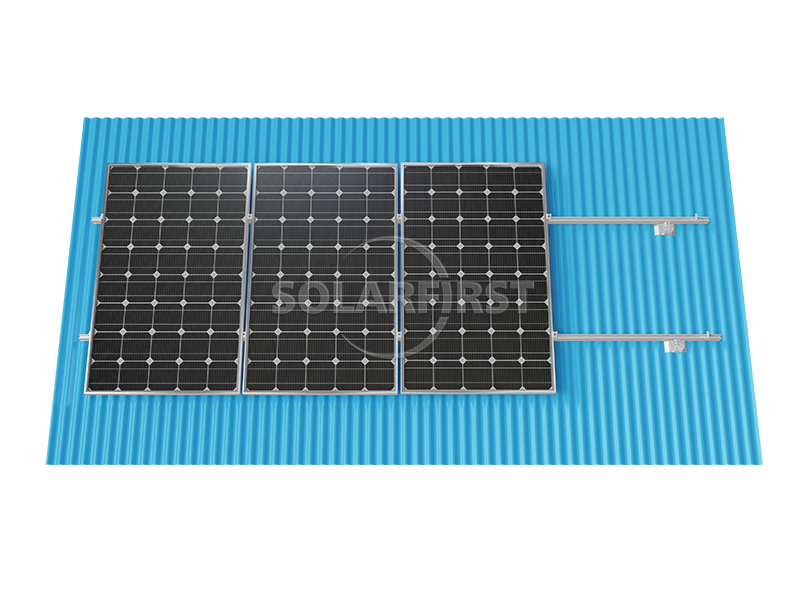
The wave-shaped roof clamp is specifically designed for wavy corrugated metal roofing sheet. Its curved bottom surface conforms to the roof profile, and it works with self-tapping screws to connect to the purlins, ensuring a stable installation for the solar module. Made of aluminum alloy, it is weather-resistant, durable, and easy to install.
Read More
A rooftop photovoltaic (PV) support system is a photovoltaic panel support system specifically designed for pitched tiled roofs. It mainly consists of three components: hooks (connecting to the roof beams), guide rails (supporting the PV panels), and clamps (fixing the components). Its core feature is that the stress points are concealed beneath the tiles, using hooks that pass through the tile seams to connect to the structural layer, providing a stable foundation for the PV system without significantly compromising the roof's integrity. This system is suitable for various tile types, including ceramic tiles, glazed tiles, and slate tiles, and is typically made of stainless steel or aluminum alloy. It must meet requirements for wind and snow resistance, and its service life is generally over 25 years.
Read More
Waterproof gaskets (also known as waterproof bases) are specialized sealing and connecting components installed at the fixing points of photovoltaic brackets on corrugated steel roofs or tile roofs. This product combines physical covering and elastic sealing to specifically reduce the risk of water leakage caused by nailing (bolt fixing) when connecting photovoltaic brackets to the roof. As a core component of photovoltaic installation waterproofing systems, waterproof gaskets are suitable for new photovoltaic buildings and photovoltaic renovation projects of existing buildings, especially on roofs made of corrugated steel roofs or various types of tiles.
Read More
 en
en fr
fr de
de zh-CN
zh-CN ru
ru es
es pt
pt ja
ja ko
ko ar
ar