Leave A Message
If you are interested in our products and want to know more details,please leave a message here,we will reply you as soon as we can.


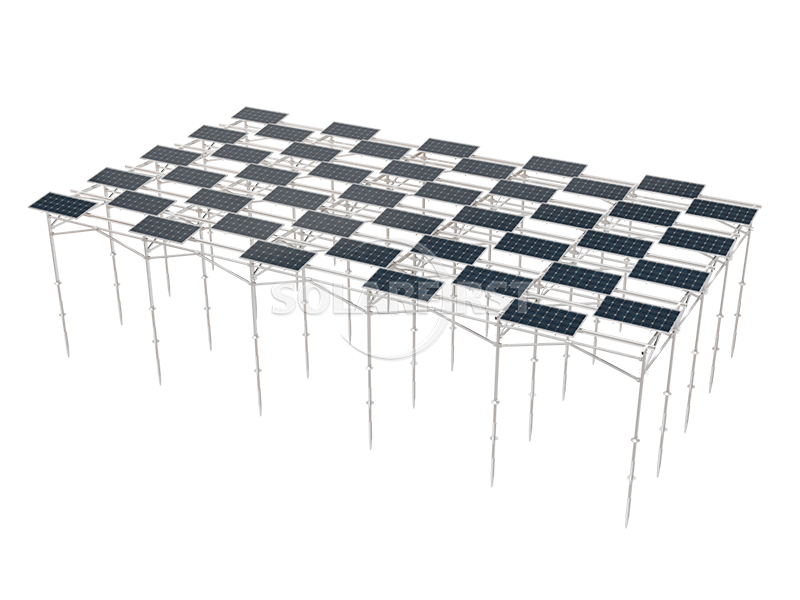
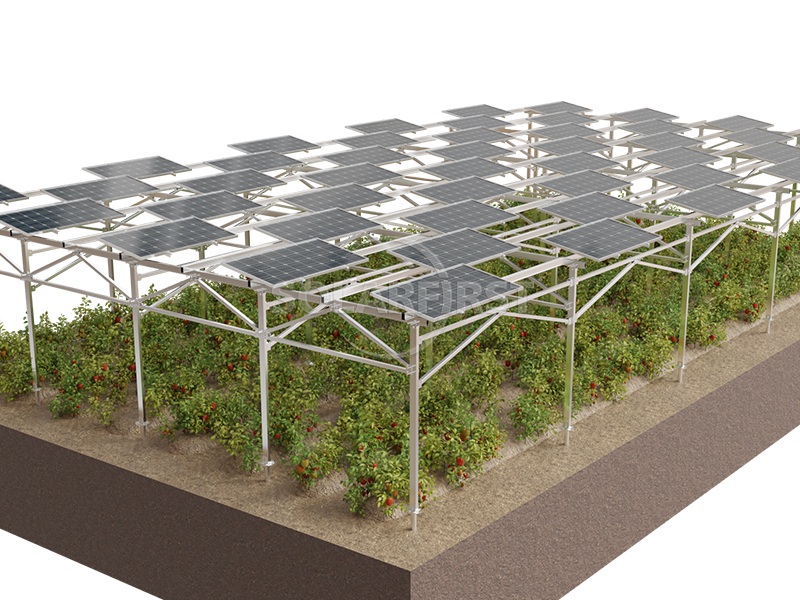
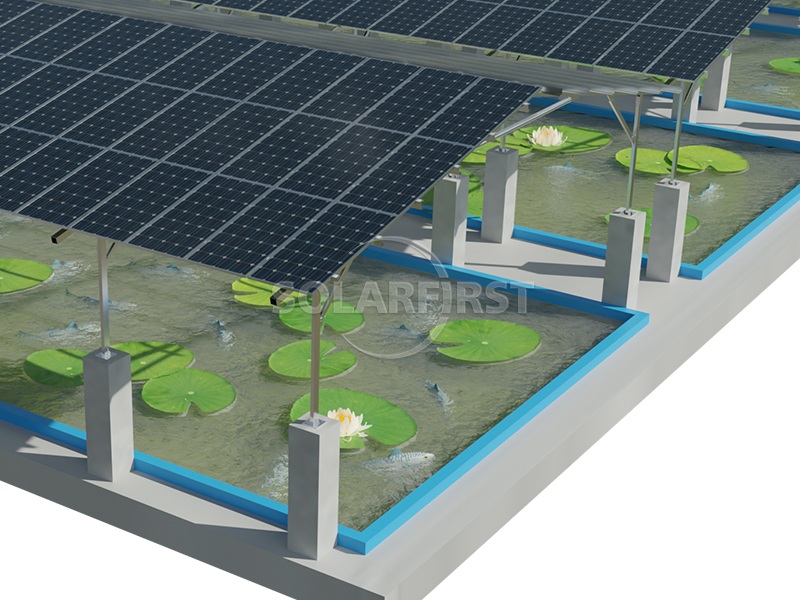
The Agricultural Solar Mount (or Agrivoltaic Mounting System) is an aluminum structure system specifically designed for the agricultrue solar (agri-voltaic) installation.
Color :
Natural silver(Colored according to customer requirements)Certification :
CE, TÜV, ISO9001, SGSMaterial :
Hot Dip Galvanized Steel, Stainless Steel SUS304Product Origin :
Tianjin, FujianShipping Port :
Shanghai, Ningbo, Tianjin, Xiamen, Shenzhen ports
Product Description
Agricultural solar mount systems primarily consist of columns, beams (girders), purlins (rails), photovoltaic modules, and accessories. They can flexibly design according to ground clearance (height 2.5m–5.5m), solar module spacing, and light transmittance (30%–100%) to meet the varying light requirements of crops or the space requirements of livestock farming.
Agricultural solar mount solution types include fixed-tilt mounts, flexible suspended wire type large-span mounts, and tracking systems, suitable for various agricultural scenarios such as tea gardens, orchards, medicinal herb cultivation, cattle and sheep grazing, poultry farming, and aquaculture-solar hybrid systems.
Their core value lies in increasing green electricity production without altering the agricultural use of the land, while simultaneously providing shading and cooling, reducing water evaporation, and improving agricultural product quality. The generated power can regulate temperature and humidity in livestock farming environments, reducing heat stress, and saving on operating electricity costs.
This product is a key infrastructure for achieving "agricultural-solar hybrid" and "livestock-solar hybrid" systems, and an important technological pathway for promoting intensive land use, rural revitalization, and helps to reduce carbon emmission.

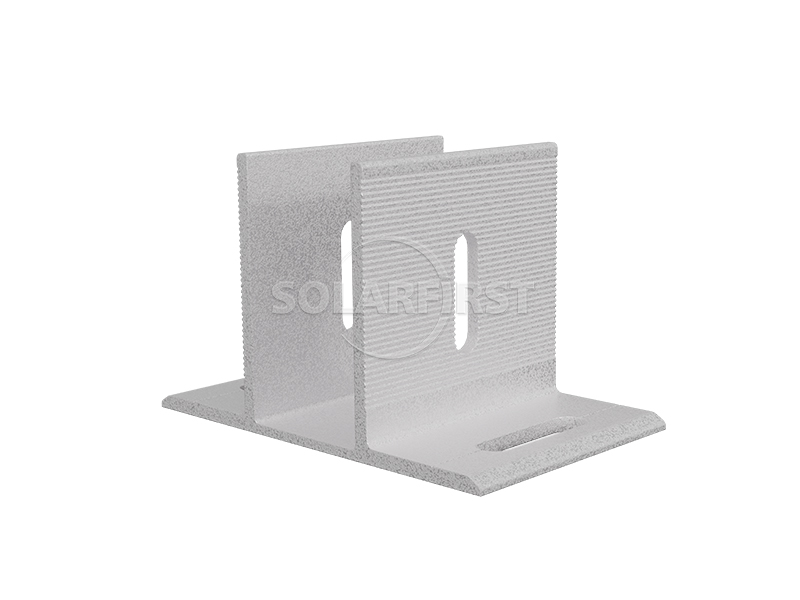
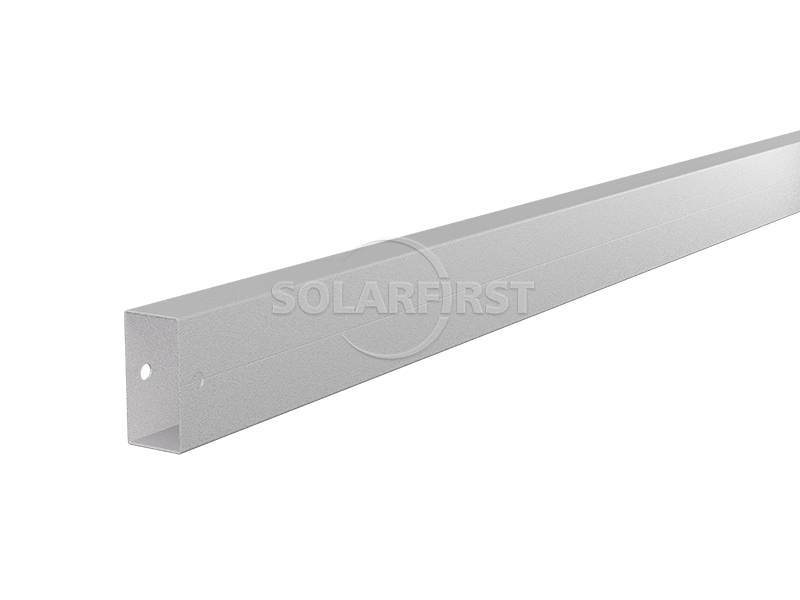
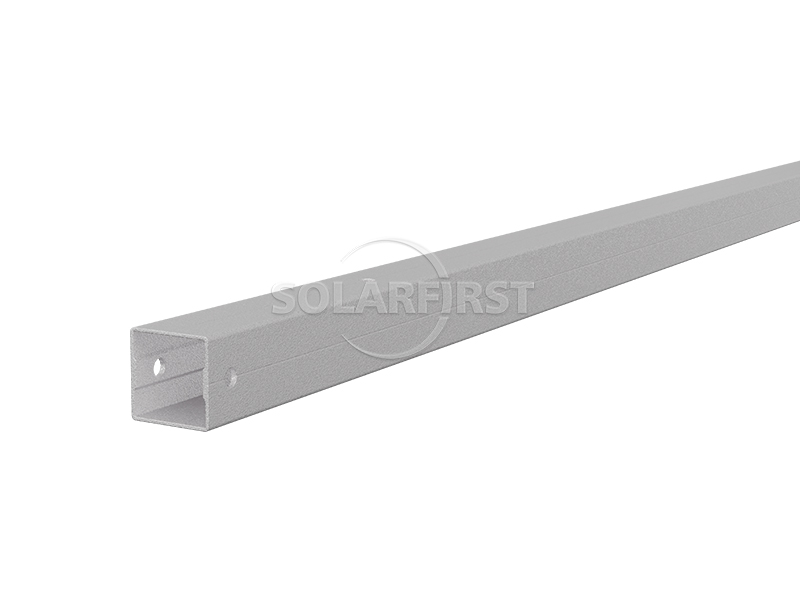
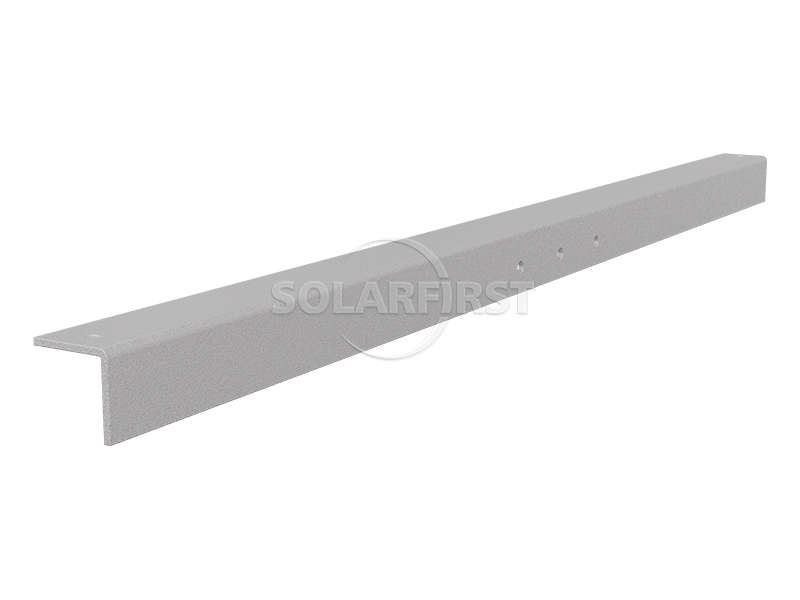
Product Components
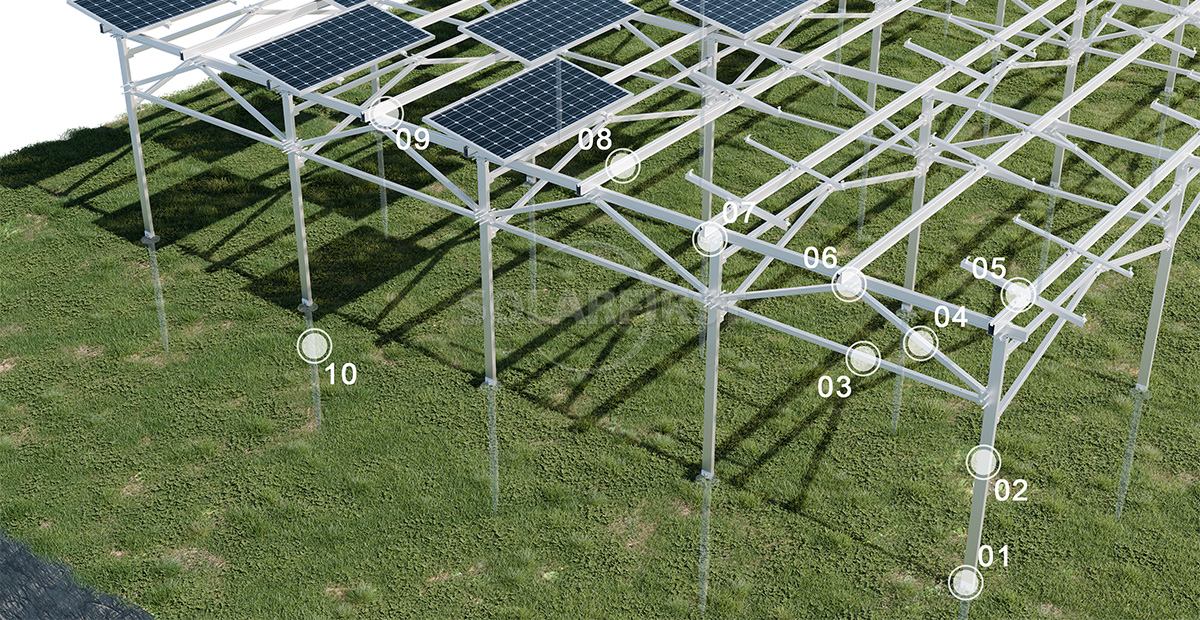
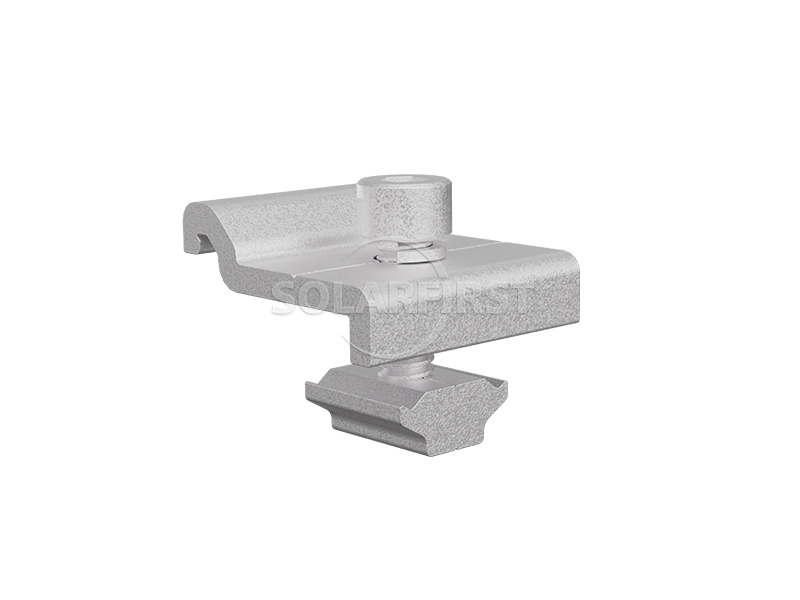
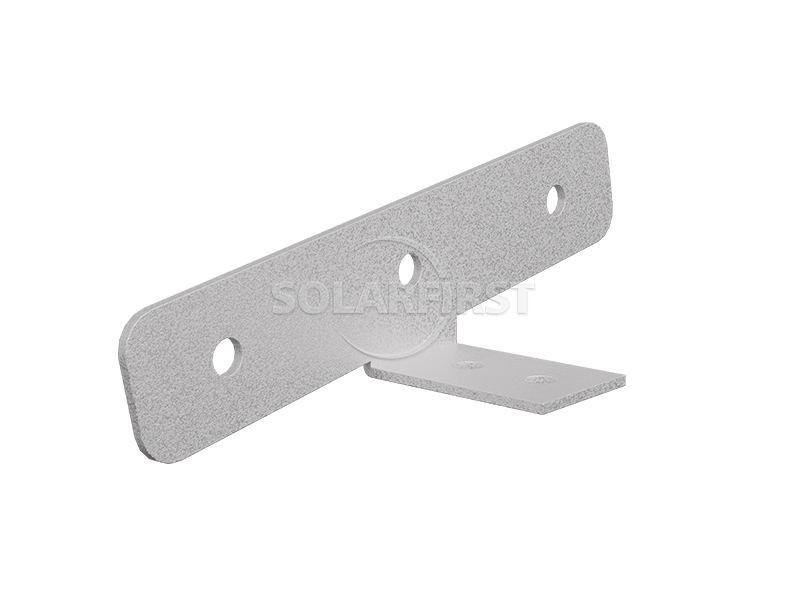
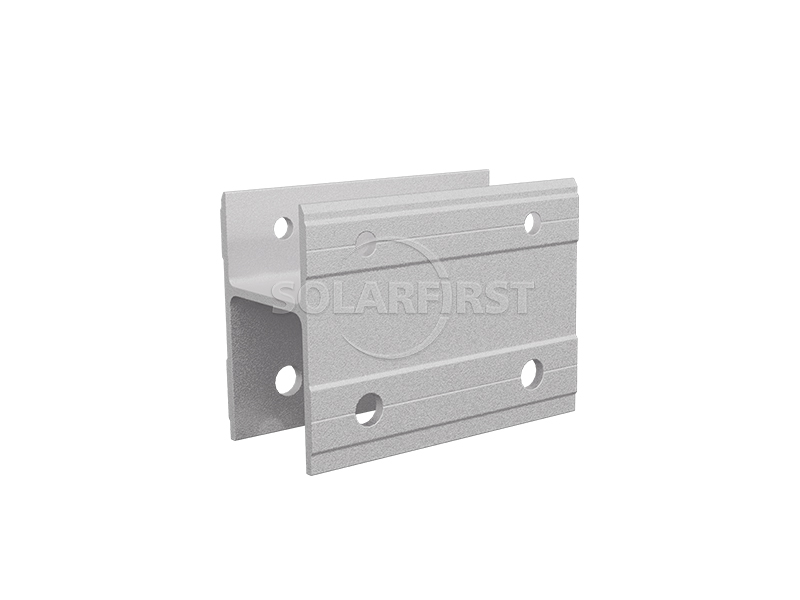
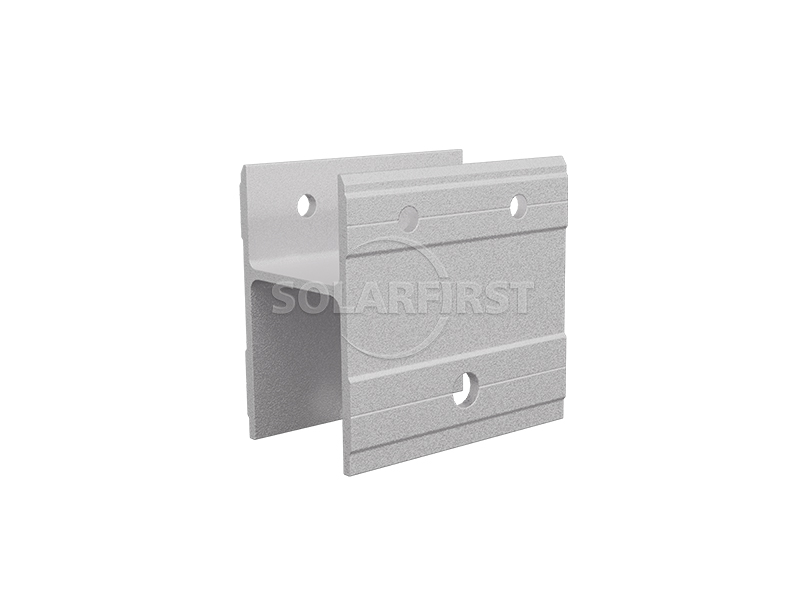
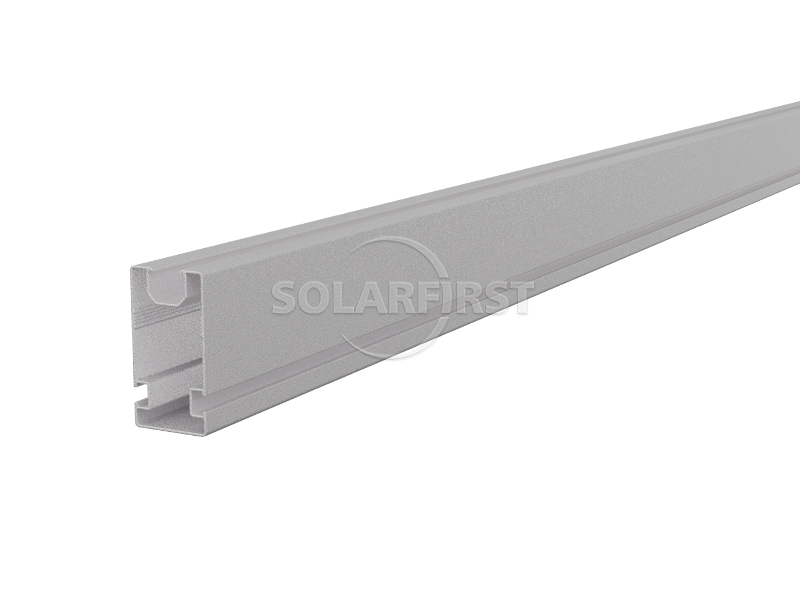
09 Rail Clamp Kit
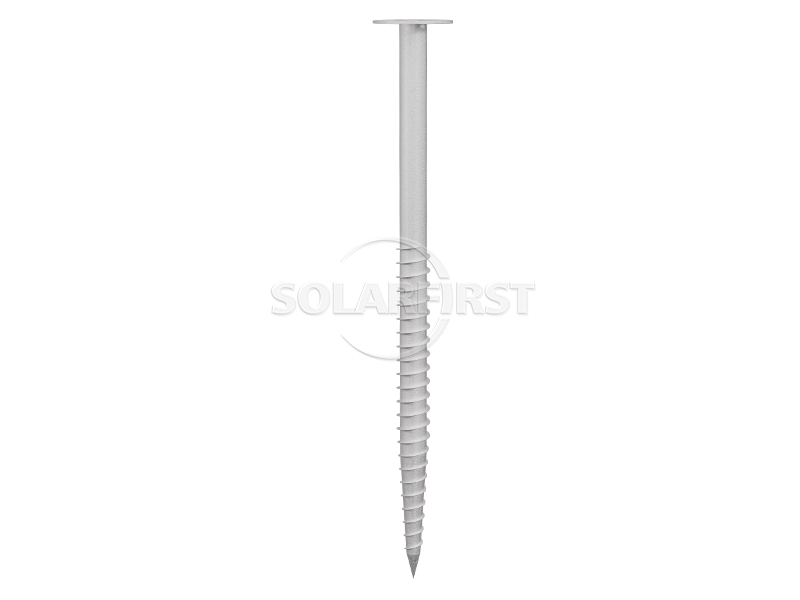
10 Screw Pile
Advantage
Agricultural photovoltaic (PV) mounting systems demonstrate multi-dimensional value advantages in planting and breeding scenarios, specifically in the following five aspects:
▶ Photovoltaic Power Generation, Increasing Income and Efficiency
▪ Electricity Revenue: The system continuously generates electricity by photovoltaic panels, which can be sold to the grid or used for self-consumption.
▪ Electricity Cost Savings: Photovoltaic panels can provide self-consumed electricity for farm facilities, reducing operating costs.
▶ Improving the Breeding Environment (Breeding Scenarios)
▪ Summer Shading and Cooling: Photovoltaic panels provide a natural "shade" for farmed animals in summer, effectively reducing the temperature of the breeding environment. In integrated livestock and solar power projects, solar panels can lower sheepfold temperatures by 3-5 degrees Celsius in summer, providing suitable conditions for livestock growth.
▪ Winter insulation and wind protection: Solar panels also provide insulation in winter, reducing heat loss and improving the winter living environment for livestock.
▪ Reducing heat stress: Solar panels provide shade for livestock, reducing heat stress and promoting a healthier breeding environment.
▶ Customizable and Rapid Assembly
▪ The product adopts a modular design. On-site installation requires no cutting or drilling, only bolt connections, significantly shortening the construction cycle. It can also flexibly adapt to customers' customized needs in terms of different spans, breeding place size, and structural forms.
▶ Optimizing the planting environment (planting scenarios)
▪ Regulating sunlight: By controlling the spacing between solar panels (wider spacing for plants, smaller spacing for livestocks, no spacing for mushrooms), suitable lighting conditions can be provided for crops with different light requirements.
▪ Protecting crops: Solar panels can protect crops from hail, frost, drought, and overheating, stabilizing yields.
▪ Significant water saving effect: The shading effect of solar panels reduces soil moisture evaporation, saving up to 20% of irrigation water.
▶ Efficient Land Use
▪ Dual-use of land: Achieve "power generation on the roof, planting/breeding beneath", significantly improving the comprehensive output efficiency per unit area of land.
▶ Promotion of Circular Agriculture
▪ In the livestock-solar project scenario, the manure from livestock raised under the photovoltaic panels, after fermentation, can be used as organic fertilizer for surrounding farmland, reducing the use of chemical fertilizers and forming a circular agricultural industry chain of "photovoltaic power generation—specialized breeding—ecological planting."
Parameters
| Installation | Ground |
| Foundation | Screw Pile / Concrete |
| Wind Load | up to 60m/s |
| Snow Load | 1.4kn/m² |
| Clearance Height | 2.5–5.5 meters |
| Solution Types | Fixed-tilt type, flexible suspended wire type, and tracking type |
| Standards | GB50009-2012, EN1990:2002, ASCE7-05, AS/NZS1170, JIS C8955:2017, GB50429-2007 |
| Material | Anodized Aluminum AL6005-T5, Stainless Steel SUS304 |
| Warranty | 10 Years Warranty |
Applicable Scenarios
▶ Photovoltaic + Planting Scenarios
Agricultural photovoltaic (PV) mounting systems have been successfully applied in various planting scenarios:
▪ Tea-PV Complementary System: In Menghai County, Xishuangbanna, Yunnan Province, a "power generation from the panels, tea planting underneath" model is adopted. Combining the characteristics of tea trees—their preference for shade, moisture, and diffused light—an innovative approach using large spacing, high supports, and single-row module arrangement improves tea quality while generating electricity, effectively achieving "dual use of land."
▪ Medicinal Herb-PV Complementary System: In Ningming County, Guangxi Province, a three-dimensional intercropping model of "PV project + enterprise + traditional Chinese medicine" is adopted. Five-finger peach is intercropped under more than 90 hectare of photovoltaic panels, with a yield of up to 15,000 kg per hectaure and a profit of over 150,000 yuan, achieving power generation on the panels and medicinal herb planting underneath.
▪ Orange/Fruit Photovoltaic Complementary Project: In Xinping County, Yuxi, Yunnan Province, a photovoltaic power generation project integrating agriculture and forestry with orchards has been combined to form an "orange-photovoltaic complementary" demonstration project.
▪ Conventional Planting: On barren mountains or slopes, a high-support, wide-spacing model is adopted. The photovoltaic mounting are raised to 2.5 meters above the ground, with a fixed tilt angle of 27 degrees, achieving "segmented" utilization of sunlight. High-efficiency medicinal herbs and high-efficiency agricultural economic products are planted under the panels.
▶ Photovoltaic + Livestock Farming Scenarios (Livestock Photovoltaic Complementary Project)
▪ Livestock Farming (Cattle and Sheep): In Shangyi County, Hebei Province, there is a 400 MW livestock photovoltaic complementary project. The modules are installed on structure with concrete pile, providing strong load-bearing capacity and resistance to friction and collisions from livestock. In the Xinhua Town livestock photovoltaic integrated project, the photovoltaic panels lower the temperature of the sheepfold by 3-5 degrees Celsius in summer, providing suitable conditions for sheep growth.
▪ Poultry Farming: In the "livestock-solar complementary" breeding area in Heli Town, Gaotai County, free-range chickens and geese are raised under PV panels. The PV panels provide a natural "shade" and a suitable microclimate for the poultry. At the Huamachi Photovoltaic Power Station of Fugu Energy Dingbian New Energy Company, the photovoltaic panels not only generate electricity but also provide natural shelter for livestock, offering shade in summer and wind protection in winter, resulting in healthier growth for chickens and sheep.
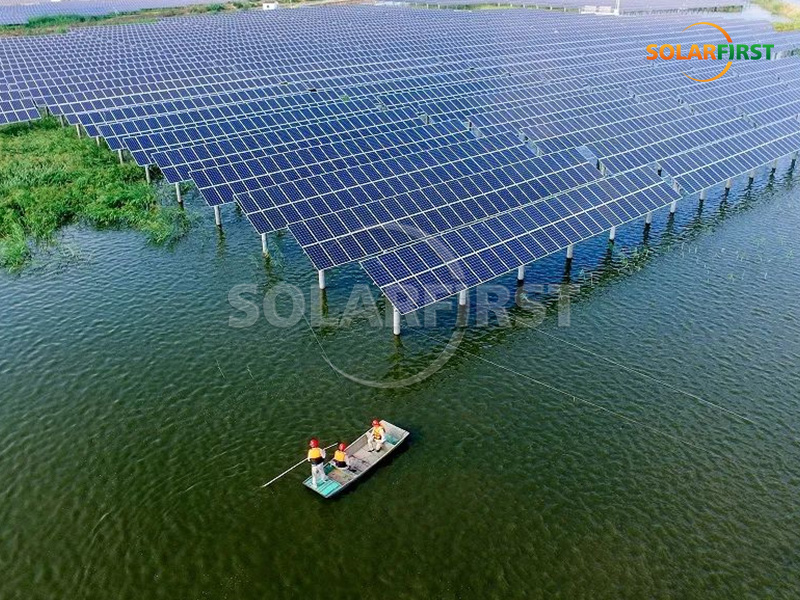
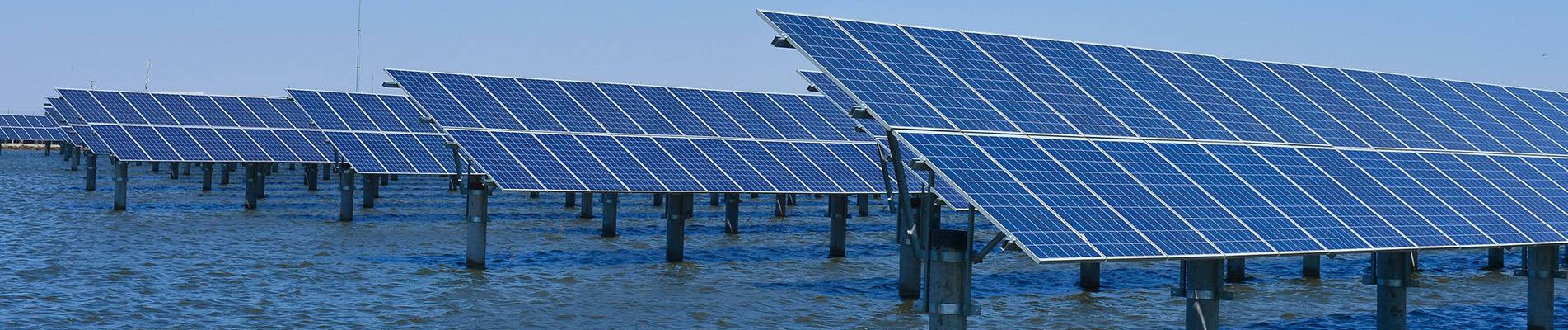
▪ Fish-Solar Complementary: In the Pearl River Delta and Central China lake areas, the flexible suspended wire mounting structure systems with a large-span design is used to reduce the number of pile foundations, greatly minimizing interference with fishpond aquaculture activities. Scientifically calculated row spacing ensures sufficient underwater sunlight, achieving a perfect integration of photovoltaic power generation and high-end aquaculture.
Important Notes:
▶ Design Phase Considerations
▪ Crop Light Requirements Survey: A thorough feasiblility survey of the light requirements of the crops being grown is necessary. The spacing and tilt angle of the solar panels should be designed according to the crop's light requirement.
▪ Agricultural Mechanization Compatibility: If large agricultural machinery is planned to use on the planting area, the lowest point of the structure should be designed to be at least 4-5 meters above the ground.
▪ Animal Husbandry Activity Space Provision: In livestock husbandry scenarios, sufficient space for livestock activity and personnel inspection should be provided. The spacing between structure's columns should meet the animal passage requirements.
▪ Prior Geological Survey: Appropriate foundation types should be selected based on soil type—soft soil foundations require careful evaluation.
▪ Climate conditions must be fully considered: In typhoon-prone areas, wind-resistant design needs to be enhanced; in high-altitude and cold regions, snow load calculation is required.
▶ Installation Stage Precautions
▪ Foundation Construction Quality: The foundation should be firm, with adequate pull-out resistance, and installation deviation controlled within ±5mm.
▪ Installation Accuracy Control: The angle between the horizontal and vertical planes should conform to the design tilt angle, with an installation error not exceeding ±2°.
▪ Fastener Specifications: Suitable parts must be used at the connection points of mounting structure components, and the tightening torque should meet the specifications. Reducing the number of bolts, flat washers, and spring washers is strictly prohibited.
▪ Corrosion Protection: Steel section cuts should be treated with anti-corrosion measures, welds should be ground smooth, and interfaces should be free of burrs.
Summary
Agricultural photovoltaic (PV) mounting systems are core infrastructure for agro-photovoltaic (or agrivoltaics, agrisolar) and pastoral-photovoltaic complementary models. They cleverly integrate photovoltaic power generation with agricultural production, achieving an innovative land use model of "power generation on the panels, planting/breeding underneath."
From a technical perspective, the system offers flexible configuration options based on specific application scenarios: In planting scenarios, designs such as high structure, large spacing, and controllable light transmittance create suitable lighting and growth space for crops underneath; in livestock scenarios, the PV panels combine power generation with shading, cooling, wind protection, and insulation, effectively reducing the temperature of the livestock environment by 3-5°C in summer and saving approximately 30% on electricity costs for livestock farms.
From an economic perspective, the system achieves the dual value of "increased income from power generation + agricultural output." Furthermore, it can be used for intercropping with medicinal herbs, tea, fruits, and other cash crops, increasing the income of surrounding farmers and forming a sustainable circular economy chain.
Solar First Project Reference
Related Knowledge Points
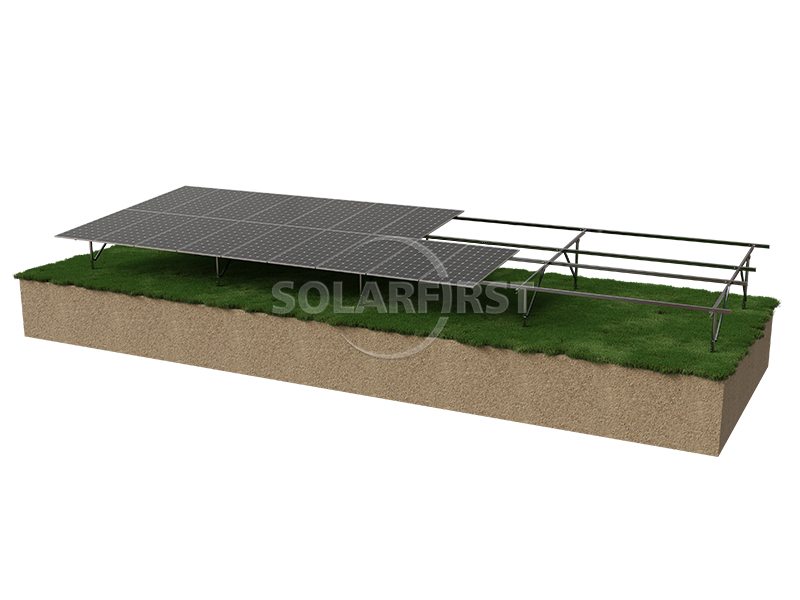
Carbon steel ground solar module mounting strucutre - ground screw pile foundation: The core material is galvanized or Zn-Al-Mg coated steel. It consists of screw piles buried underground, and the mounting structure above ground. The ground screw pile is installed by piling machine by screwing into the soil to serve as the load-bearing foundation for the photovoltaic array. All components are treated with hot-dip galvanizing or ZAM coating, achieving full metal connection.
Read More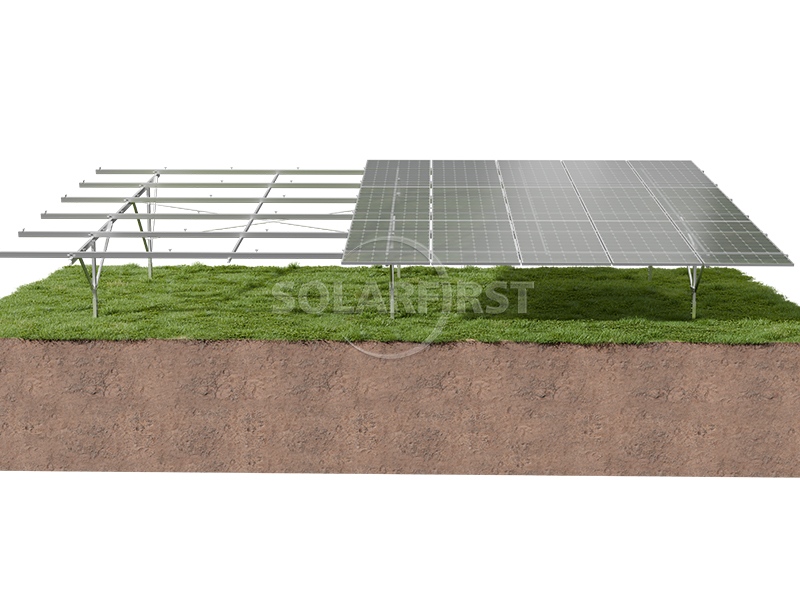
The ramming pile ground solar module mounting systems are PV mounting structure where foundation piles are driven directly into the soil using piling machine.
Read More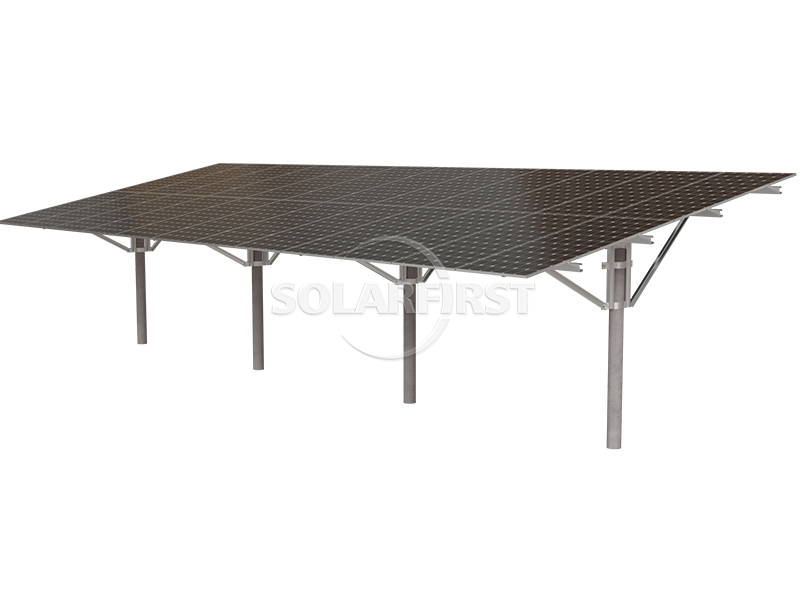
Carbon steel solar module ground mounting system integrated prestressed high-strength concrete piles (PHC piles) as the foundation.
Read More
The Agricultural Solar Mount (or Agrivoltaic Mounting System) is an aluminum structure system specifically designed for the agricultrue solar (agri-voltaic) installation.
Read More
The aluminum alloy spiral ground anchor-based photovoltaic support system adopts the "rotational insertion installation" and "fully aluminum anti-corrosion" design, providing a ground installation solution with lower environmental impact and higher construction efficiency for small and medium-sized photovoltaic projects.
Read More
Aluminum alloy ground photovoltaic mounting system - concrete foundation solution refers to a mounting structure that uses high-strength aluminum alloy as the main structural material and concrete blocks cast on-site or prefabricated as the load-bearing foundation, and is used to fix solar photovoltaic modules in open areas on the ground.
Read More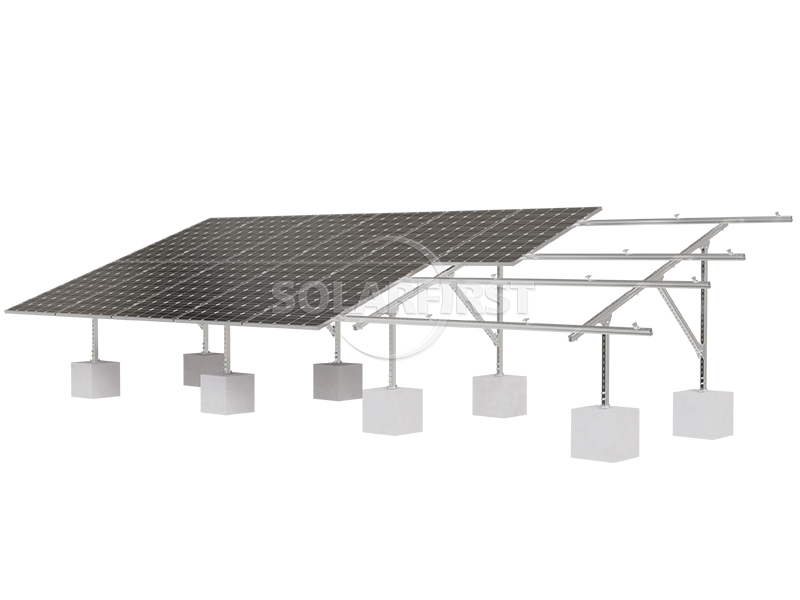
U steel is a core load-bearing component of ground-mounted photovoltaic mounting systems and belongs to a type of cold-formed thin-walled steel. Its cross-section is U shaped, with inward lips on both sides.
Read More
 en
en fr
fr de
de zh-CN
zh-CN ru
ru es
es pt
pt ja
ja ko
ko ar
ar