Leave A Message
If you are interested in our products and want to know more details,please leave a message here,we will reply you as soon as we can.


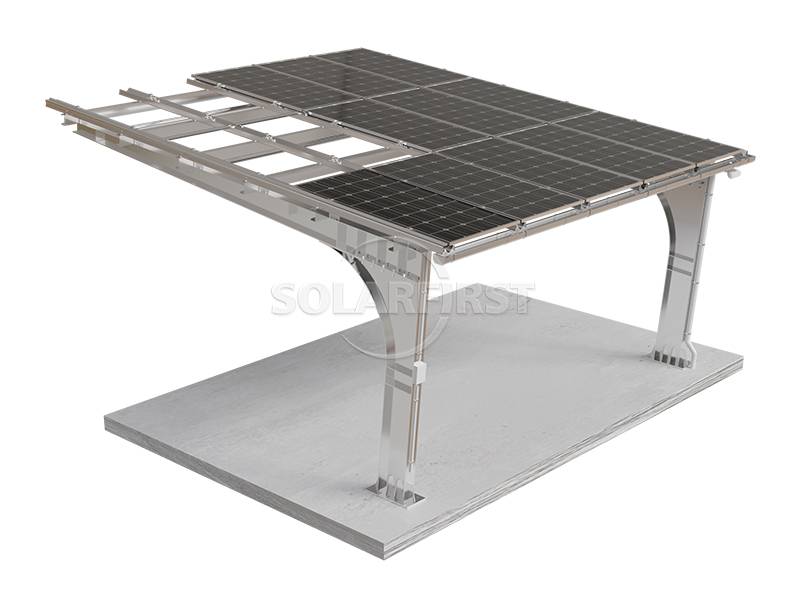
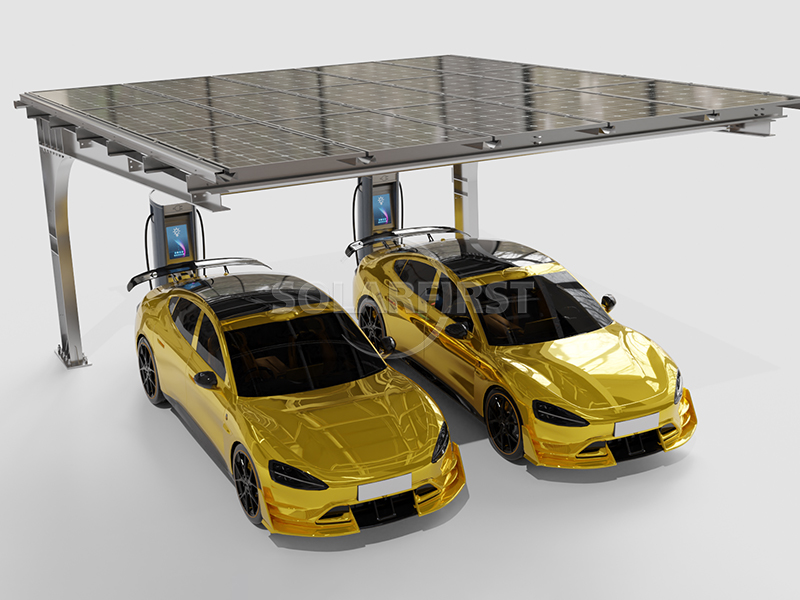
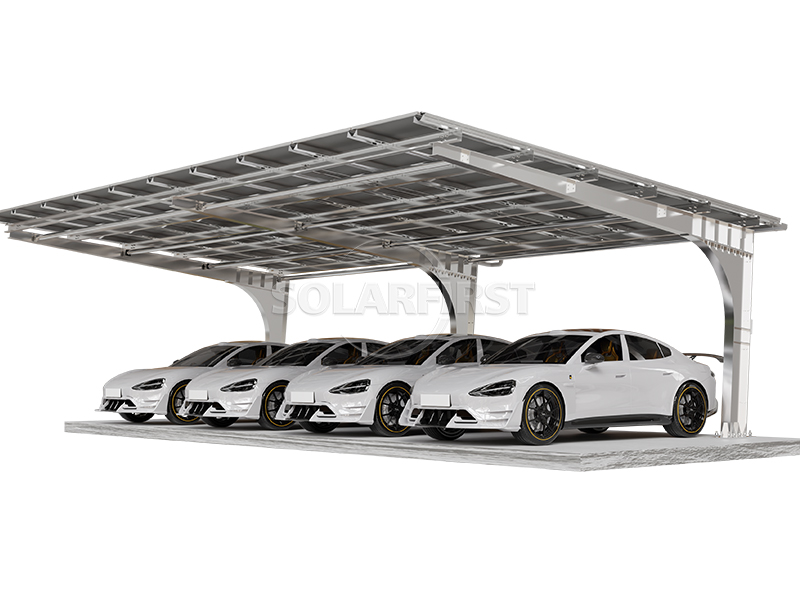
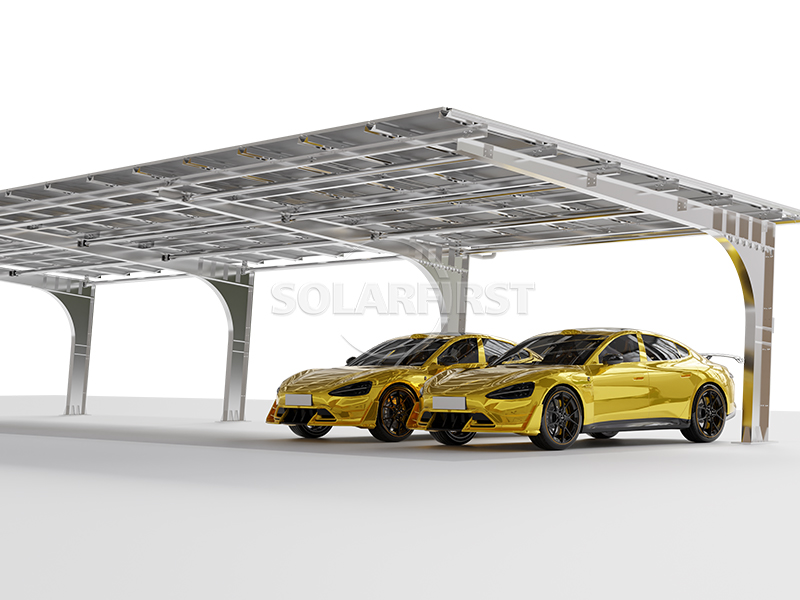
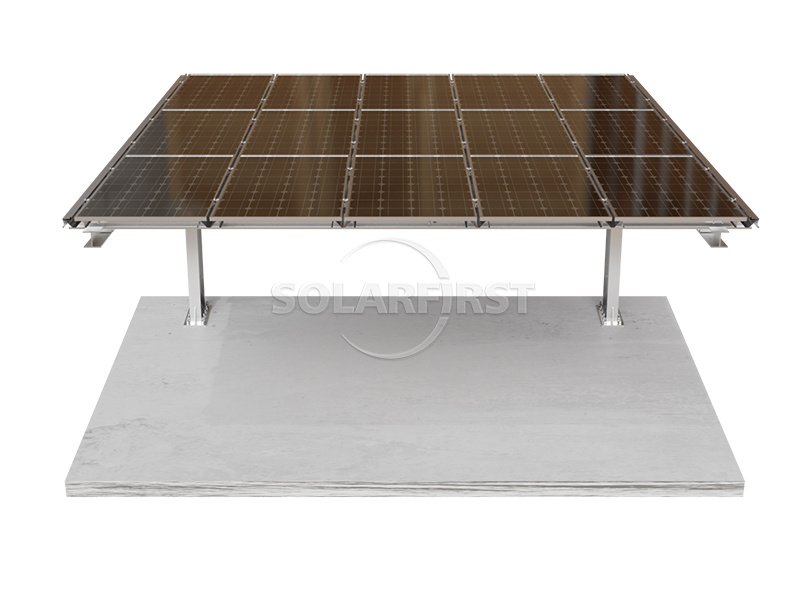
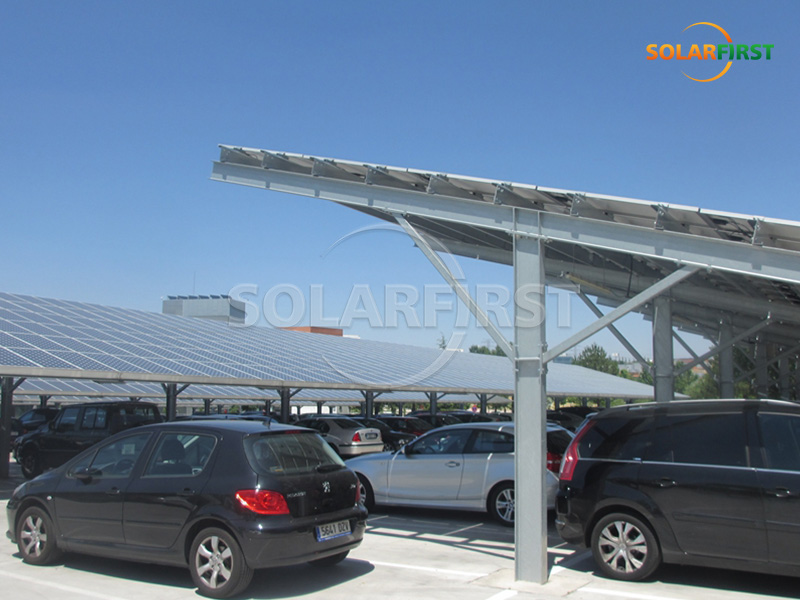
This carbon steel solar carport features a cantilever design for unobstructed parking and access. The roof integrates photovoltaic panels, providing power generation, sun shading, and rain protection.
The carbon steel body is corrosion-resistant and wind-resistant (withstanding wind speeds of up to 60 m/s). Suitable for industrial parks, commercial areas, and family parking spaces, it can be equipped with EV charging stations, offering long-term benefits from a one-time investment.
Color :
Natural silver(Colored according to customer requirements)Certification :
CE, TÜV, ISO9001, SGSMaterial :
Hot Dip Galvanized Steel, Zn-Al-Mg pre-coated steel, Stainless Steel SUS304Product Origin :
Tianjin, FujianShipping Port :
Shanghai, Ningbo, Tianjin, Xiamen, Shenzhen ports
Product Description
The carbon steel cantilever solar carport is a building-integrated photovoltaic (BIPV) product that deeply integrates photovoltaic power generation with parking functionality. Its core structure uses high-strength carbon steel as the main structure, paired with a waterproof system, combining structural stability, power generation efficiency, and space utilization as its three core values. Compared to traditional carports, this product not only provides vehicles with sun and rain protection but also converts solar radiation into clean electricity using solar panels on the roof, achieving a "two-in-one" function.
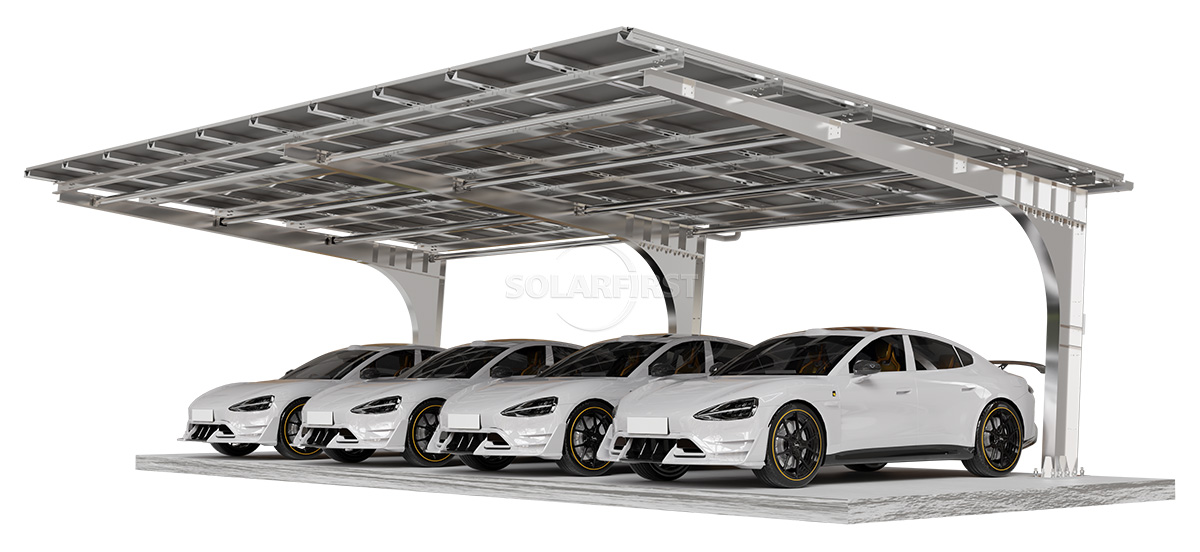
The cantilever structure is the most prominent design feature of this product, an optimized column layout achieves a "pillar-free" design, providing an unobstructed passage experience for vehicle entry, exit, and parking. The overall design is simple and modern, suitable for diverse scenarios ranging from private family parking spaces to large public parking lots, and offers flexible options such as bidirectional and unidirectional structures.
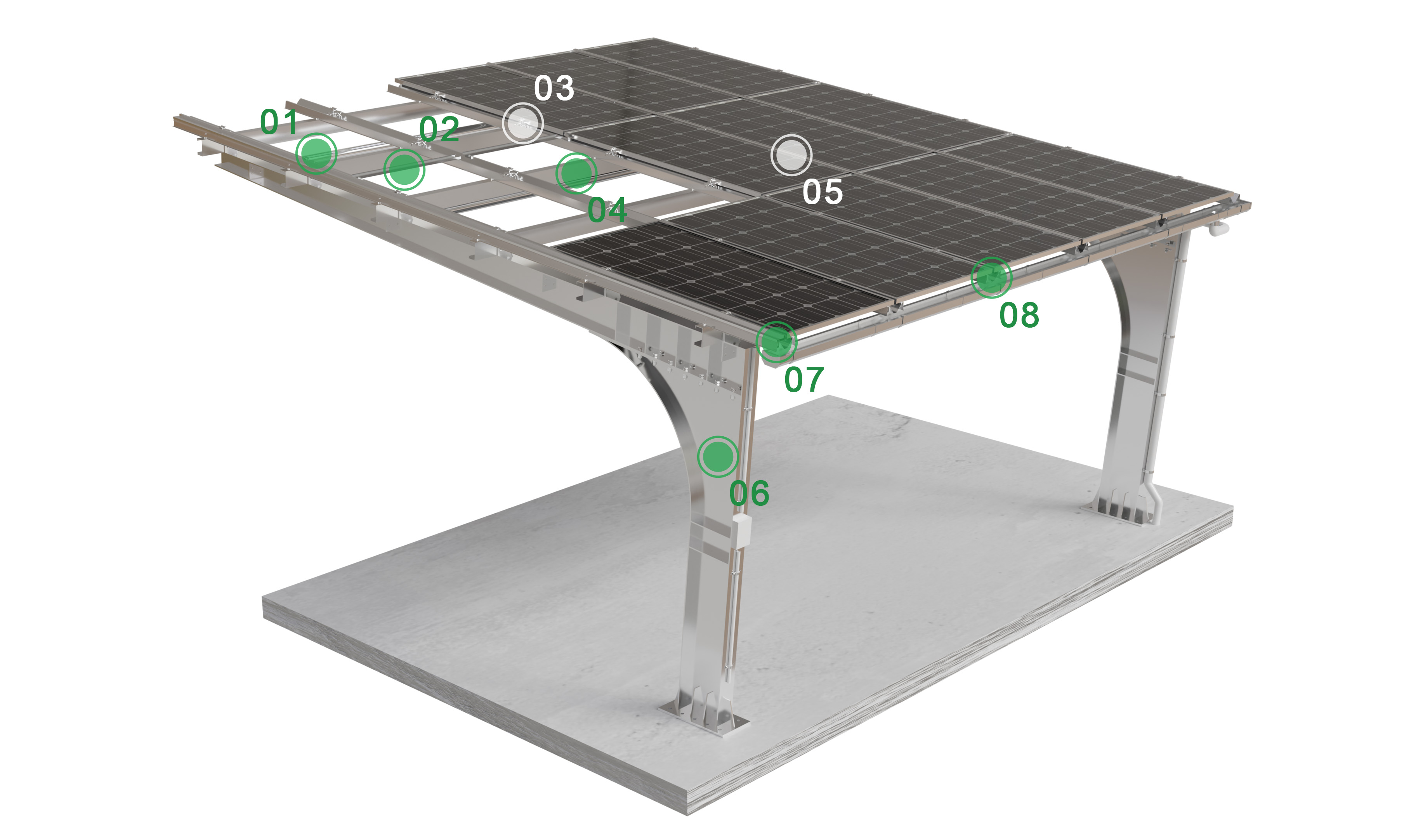
Product Components
Advantage
▶ Maximized Space Utilization – Minimum Column Parking Experience
The biggest advantage of the cantilever design is the elimination of the pillars on sides, for an unobstructed parking space. Vehicles can enter and exit without having to avoid pillars, significantly reducing the risk of scratches and collisions, making it especially suitable for large vehicles. The pillar foundation is buried underground, making vehicle parking more convenient.
▶ Combining Structural Strength and Durability
Using high-quality Q235B carbon structural steel, the cantilever carports undergo hot-dip galvanizing for corrosion protection. The core carbon steel structure is designed for a service life of up to 25 years, and manufacturers generally offer a 10-year warranty.
▶ Customizable and Rapid Assembly
On-site installation requires no cutting or drilling, only bolt connections, significantly shortening the construction cycle. It can also flexibly adapt to customers' customized needs in terms of different spans, parking space numbers, and structural forms, meeting the "one plan, one design" project requirements.
▶ Dual Economic and Environmental Benefits
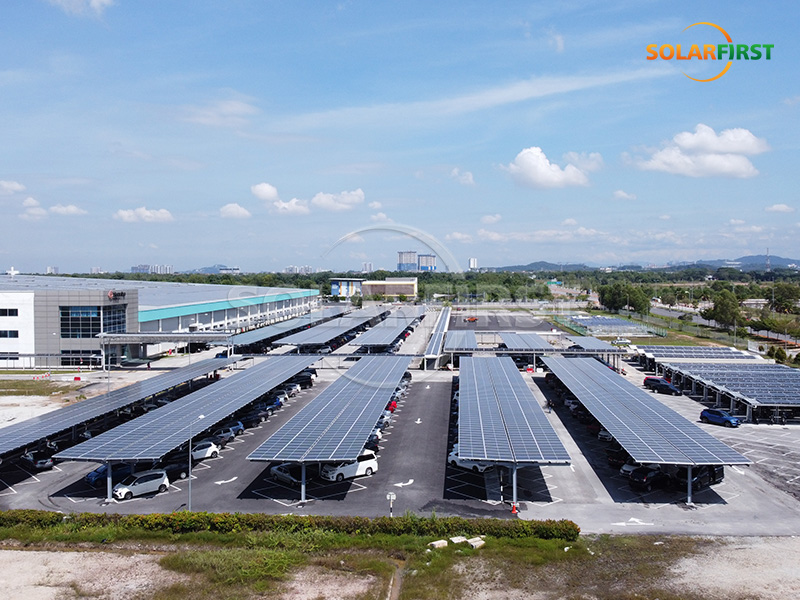
However, the cost can be quickly recovered through national and local electricity subsidies. The photovoltaic system can generate electricity sustainably for 25 years. For example, a 1.6MWp cantilever carport project in Malaysia generates an average of 2 million kWh of electricity annually, meeting 15% of the factory's operational electricity needs.
▶ Enhanced Vehicle Protection and Integrated Charging
Solar carports not only block direct sunlight, solving the problem of high temperatures inside vehicles in open-air parking lots during summer, but also provide a natural on-board charging location for electric vehicle owners. The system can integrate charging piles to achieve a three-in-one system of "parking + charging + power generation".
Parameters
| Installation | Ground |
| Foundation | Concrete |
| Wind Load | up to 60m/s |
| Snow Load | 1.4kn/m² |
| Clearance Height | 2.5~3.0m (preferably ≥2.2m) |
| Applicable Photovoltaic Modules |
Framed/frameless modules, horizontal or vertical arrangement |
| Standards | GB50009-2012, EN1990:2002, ASCE7-05, AS/NZS1170, JIS C8955:2017,GB50017-2017 |
| Material | Anodized Aluminum AL6005-T5, Hot Dip Galvanized Steel, Stainless Steel SUS304 |
| Warranty | 10 Years Warranty |
Applicable Scenarios
▪ Industrial Carpark Project: Industrial parking lots.
▪ Commercial plazas and office buildings: Ground-level parking and rooftop parking.
▪ Residential communities and private villas: Fixed parking spaces and driveways.
▪ Public parking lots and municipal facilities: Parking facilities for parks, hospitals, schools, and transportation hubs.
▪ Electric bus depots and taxi charging stations: Operating sites requiring a large number of charging piles.
Important Notes:
▶ Confirm Site Foundation Conditions
The ground must be flat and firm to avoid uneven settlement that could lead to structural deformation.
Inspect underground pipelines (cables, water pipes, gas pipes, etc.) in advance to avoid construction damage.
Consider drainage direction to ensure smooth connection between the carport's drainage channels and the site's drainage system.
▶ Strictly Calculate Wind and Snow Loads
Prior calculations on the structural strength should be done based on 25 or 50 year return period wind and snow pressure.
▶ Pay Attention to Waterproofing Details
The effectiveness of structural waterproofing depends on installation quality. The construction work should be conducted according to manual or drawing provided by Solar First.
Summary
Carbon steel cantilever solar carports are a mature product in the field of building-integrated photovoltaics, combining practicality, economy, and environmental value. Using high-strength carbon steel as its framework and a cantilever structure as its highlight, it achieves unobstructed passage without side pillars; simultaneously, it integrates photovoltaic power generation, generating clean energy benefits for 25 years.
From private family parking spaces to large commercial parking lots, from industrial parks to public institutions, this product can provide customized solutions to fit into different application scenarios.
With the rapid popularization of eletric vehicles, carbon steel solar cantilever carports are not only a green upgrade for parking spaces but also an important infrastructure for achieving low-carbon transformation and enhancing asset value.
Solar First Project Reference
Related Knowledge Points
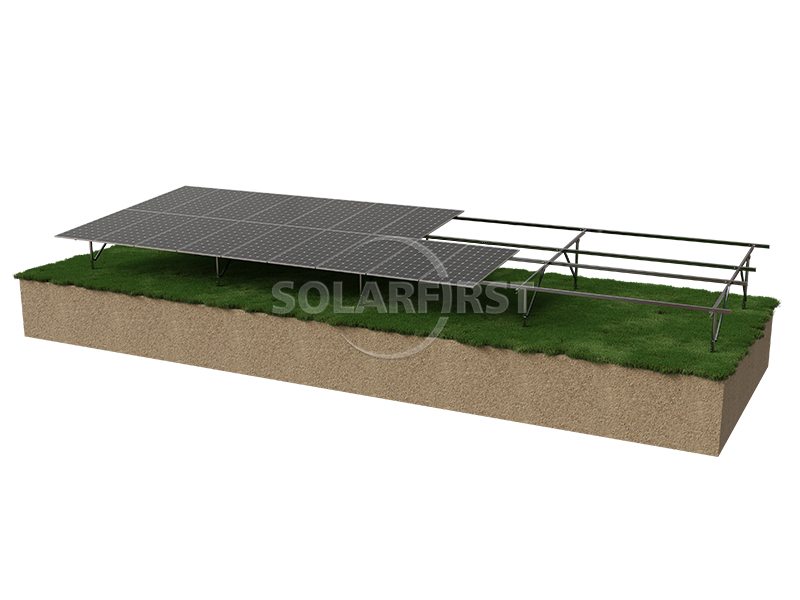
Carbon steel ground solar module mounting strucutre - ground screw pile foundation: The core material is galvanized or Zn-Al-Mg coated steel. It consists of screw piles buried underground, and the mounting structure above ground. The ground screw pile is installed by piling machine by screwing into the soil to serve as the load-bearing foundation for the photovoltaic array. All components are treated with hot-dip galvanizing or ZAM coating, achieving full metal connection.
Read More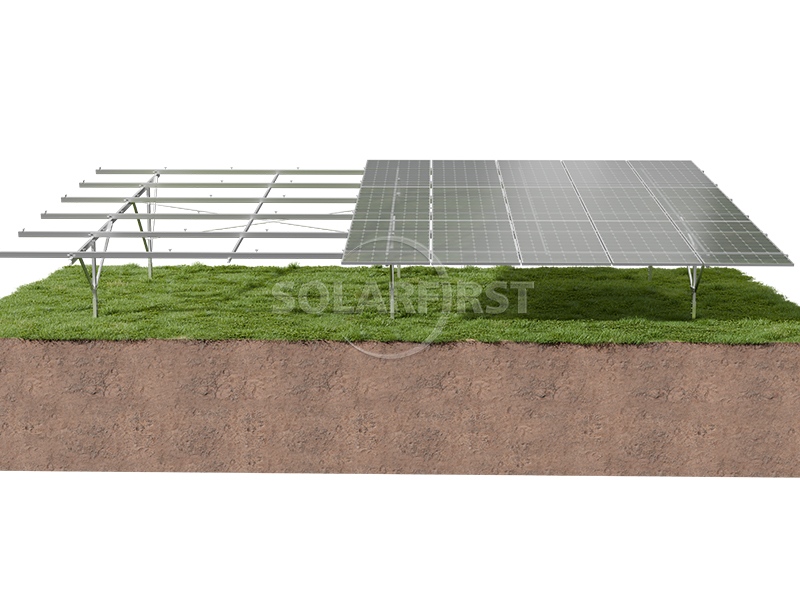
The ramming pile ground solar module mounting systems are PV mounting structure where foundation piles are driven directly into the soil using piling machine.
Read More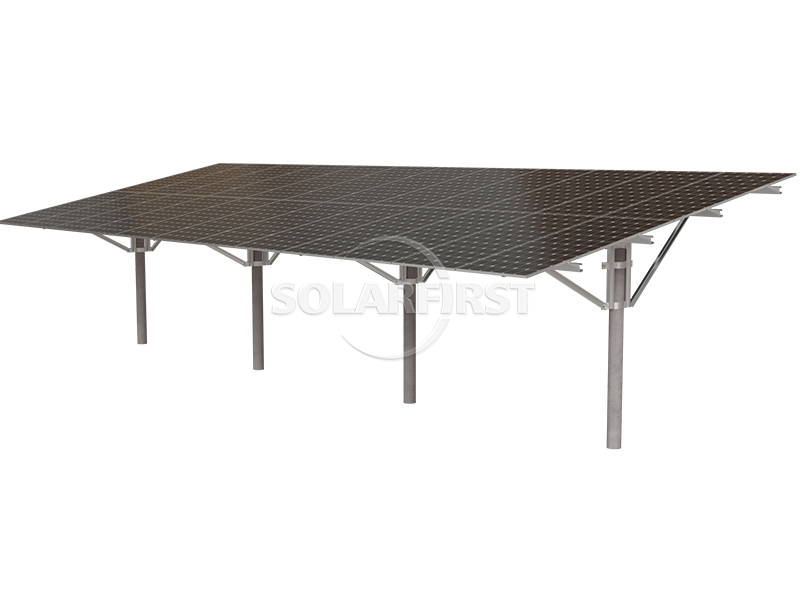
Carbon steel solar module ground mounting system integrated prestressed high-strength concrete piles (PHC piles) as the foundation.
Read More
Aluminum alloy solar carports use photovoltaic modules instead of the traditional carport roof, providing not only shelter from wind and rain but also generating electricity from solar energy, achieving dual use of the land. The core component is the aluminum alloy structure, which brings several unique advantages.
Read More
This carbon steel solar carport features a cantilever design for unobstructed parking and access. The roof integrates photovoltaic panels, providing power generation, sun shading, and rain protection. The carbon steel body is corrosion-resistant and wind-resistant (withstanding wind speeds of up to 60 m/s). Suitable for industrial parks, commercial areas, and family parking spaces, it can be equipped with EV charging stations, offering long-term benefits from a one-time investment.
Read More
The aluminum alloy spiral ground anchor-based photovoltaic support system adopts the "rotational insertion installation" and "fully aluminum anti-corrosion" design, providing a ground installation solution with lower environmental impact and higher construction efficiency for small and medium-sized photovoltaic projects.
Read More
Aluminum alloy ground photovoltaic mounting system - concrete foundation solution refers to a mounting structure that uses high-strength aluminum alloy as the main structural material and concrete blocks cast on-site or prefabricated as the load-bearing foundation, and is used to fix solar photovoltaic modules in open areas on the ground.
Read More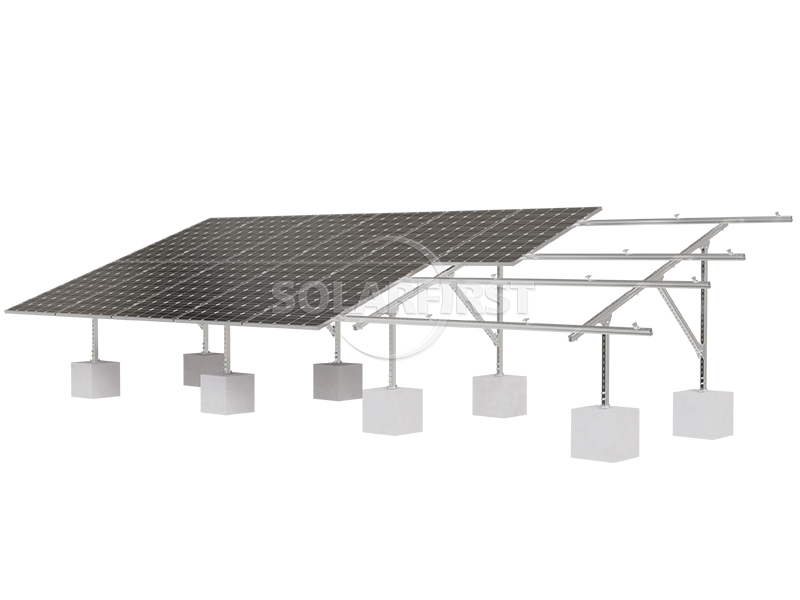
U steel is a core load-bearing component of ground-mounted photovoltaic mounting systems and belongs to a type of cold-formed thin-walled steel. Its cross-section is U shaped, with inward lips on both sides.
Read More
 en
en fr
fr de
de zh-CN
zh-CN ru
ru es
es pt
pt ja
ja ko
ko ar
ar