Leave A Message
If you are interested in our products and want to know more details,please leave a message here,we will reply you as soon as we can.




Product Description
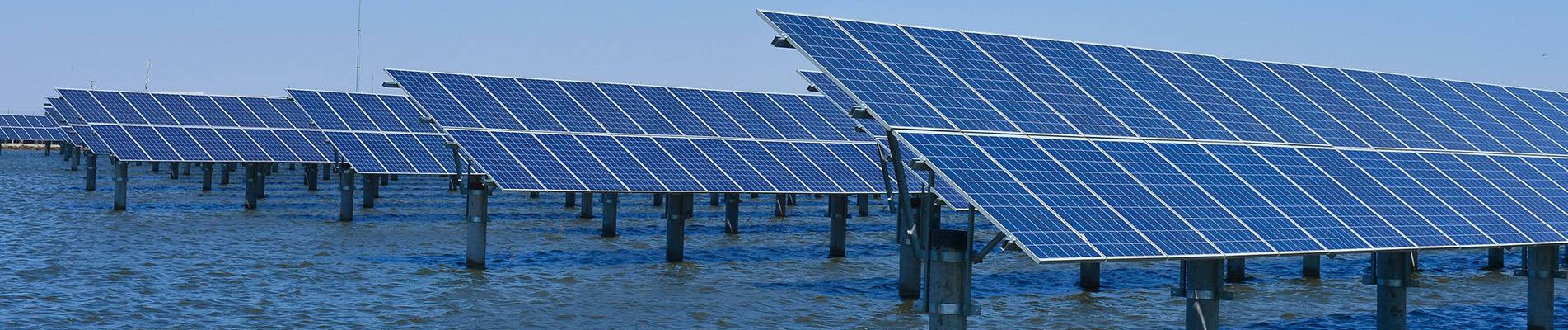
PV Off-grid System is a high-performance off-grid solar power supply solution. Stable control is achieved through a dual-core MCU architecture, supporting flexible switching among three modes: mains power mode, energy-saving mode, and battery mode, to meet the diverse power consumption scenarios. The system provides pure sinusoidal AC output, which is suitable for precision equipment and conventional electrical loads. The wide voltage input range and fully automatic voltage regulation function ensure the accuracy of power output, and the LCD screen monitors the operating status in real time.
It is equipped with multiple protection mechanisms such as overcharge, high and low voltage, overload, short circuit and overheating, providing safe and reliable new energy power support for areas without grid coverage such as households, industries, border defense and ships.
Advantage
▪ Self-sufficient power supply:
Operates independently without relying on the public power grid, suitable for areas without grid coverage or with unstable grids.
▪ 24/7 power supply guarantee:
Photovoltaic power generation and storage during the day, with batteries discharging at night, can be supplemented with a backup generator interface or mains power, forming multiple power supply guarantees.
▪ Intelligent monitoring and management:
Supports multiple communication methods such as RS485, mobile APP, WiFi, and GPRS. Users can view power generation, remaining battery power, and equipment operating status in real time via mobile phone or computer.
▪ Controllable long-term operating costs:
Solar panels have a lifespan of over 20 years, resulting in relatively low system maintenance requirements.
▪ Flexible customization:
Customized solutions can be tailored to site size, sunlight conditions, power load, and budget requirements.
Parameters
| System power | 1kw | 3KW | 5KW | 10KW | 15KW | 20KW |
| Solar panel power | 335w | 420W | ||||
| Number of solar panels | 3 PCS | 9 PCS | 12 PCS | 24 PCS | 36 PCS | 48 PCS |
| Photovoltaic DC cable | 1 SET | |||||
| MC4 connector | 1 SET | |||||
| Controller | 24V40A | 48V60A | 96V50A | 216V50A | 216V75A | 216V75A |
| Lithium battery/Lead-acid battery(Gel) | 24V | 48V | 96V | 216V | ||
| Battery capacity | 200Ah | 250Ah | 200Ah | 300Ah | 400Ah | |
| Inverter AC input side voltage | 170-275V | |||||
| Inverter AC input side frequency | 45-65Hz | |||||
| Inverter off-grid rated output power | 0.8KW | 2.4KW | 4KW | 8KW | 12KW | 16KW |
| Maximum output apparent power on off-grid side | 1KVA30S | 3KVA30S | 5KVA30S | 10KVA10min | 15KVA10min | 20KVA10min |
| Rated output voltage on off-grid side | 1/N/PE, 220V | |||||
| Rated output frequency on off-grid side | 50Hz | |||||
| Working temperature | Working temperature | |||||
| Cooling method | Air-cooling | |||||
| AC output copper core cable | 1 SET | |||||
| Distribution box | 1 SET | |||||
| Auxiliary material | 1 SET | |||||
| Photovoltaic bracket type | Aluminum /Carbon steel bracket (one set) | |||||
| Electrical equipment | No. | Power (W) | Daily Expense (h) | Total electricity consumption (Wh) |
| Desk fan | 2 | 45 | 5 | 450 |
| LED lights | 4 | 2/3/5/7 | 6 | 204 |
| TV set | 1 | 100 | 4 | 400 |
| Micro-wave oven | 600 | 0.5 | 300 | |
| Juicer | 300 | 0.6 | 180 | |
| Refrigerator | 150 | 24 | 150*24*0.8=2880 | |
| Air conditioner | 1100 | 6 | 1100*6*0.8=5280 |
Application Scenarios
▪ Remote Housing: Self-built houses in rural areas, remote villas, mountain dwellings, etc.
▪ Fieldwork and Temporary Facilities: Fieldwork bases, temporary resettlement sites, border outposts, etc.
▪ Special Infrastructure: Communication base stations, microwave relay stations, field meteorological monitoring stations, ecological monitoring points, etc.
▪ Mobile Scenarios: Power needs of mobile vehicles such as RVs and boats.
▪ Industrial and Commercial: Oilfield well sites, farms, off-grid communities, etc.
Professional Technical Services
▶ Solution design and structural analysis:
Provide customized solution drawing, load calculation reports (including wind load/snow load/seismic force analysis) or assembly drawing.
▶ On-site survey:
Engineers conduct on-site investigations ground conditions with local soil investigation professionals.
▶ Installation training and guidance:
Provide installation videos, installation manuals and on-site installation guidance to ensure safe and complete installation.
Technical verification system
Provide standardized installation videos, operation manuals and on-site technical guidance to ensure zero error in construction.
▶ Extreme environmental testing
• Pass the low-temperature impact at -40℃
• Salt spray corrosion (3,000 + hours)
• Extreme tests such as 60m/s hurricane simulation.
▶ Third-party certification
• We hold wind pressure, snow pressure, seismic resistance and material certification certificates issued by TUV, SGS and other institutions to ensure the compliance of global projects.
Important Notes
▪ Preliminary Survey and Design:
Before project construction, a detailed assessment of the site's solar resources and load power consumption is required. The installation location of the photovoltaic panels must ensure unobstructed sunlight during critical periods of sunshine (e.g., 9:00 AM to 3:00 PM).
▪ Capacity Matching and Safety:
The system design must reasonably match the capacity of the photovoltaic panels with the battery capacity, ensuring power supply during consecutive cloudy or rainy days while also considering economic efficiency. Simultaneously, proper lightning protection and grounding measures must be implemented to ensure the safety of equipment and personnel.
▪ Installation and Operation & Maintenance:
During installation, ensure the photovoltaic panel junction box faces downwards to prevent rainwater infiltration. In areas with high dust levels, the surface of the photovoltaic panels must be cleaned regularly; otherwise, dust accumulation may lead to a 15%-30% decrease in power generation efficiency. Furthermore, regular inspection using an infrared thermal imager can prevent damage to the photovoltaic panels due to hot spot effects.
Summary
Photovoltaic communication base stations are a mature solution integrating clean energy and communication technologies. Through the coordinated operation of photovoltaic modules, intelligent controllers, and energy storage systems, they provide reliable, efficient, and environmentally friendly power for communication base stations. This system is not only suitable for solving power supply problems in remote areas but also provides a feasible path for the green and low-carbon transformation of urban communication infrastructure. With continuous technological advancements and cost optimization, photovoltaic communication base stations are expected to play an increasingly important role in future communication networks.

Photovoltaic communication base stations refer to a new type of infrastructure that uses solar photovoltaic power generation to provide all or part of the power for communication equipment (such as 4G and 5G base stations). Against the backdrop of the dual goals of "carbon peaking" (i.e., carbon neutrality) and the high energy consumption of 5G networks, it is becoming a key path for the green transformation of the communications industry.
Read More
 en
en fr
fr de
de zh-CN
zh-CN ru
ru es
es pt
pt ja
ja ko
ko ar
ar