Leave A Message
If you are interested in our products and want to know more details,please leave a message here,we will reply you as soon as we can.


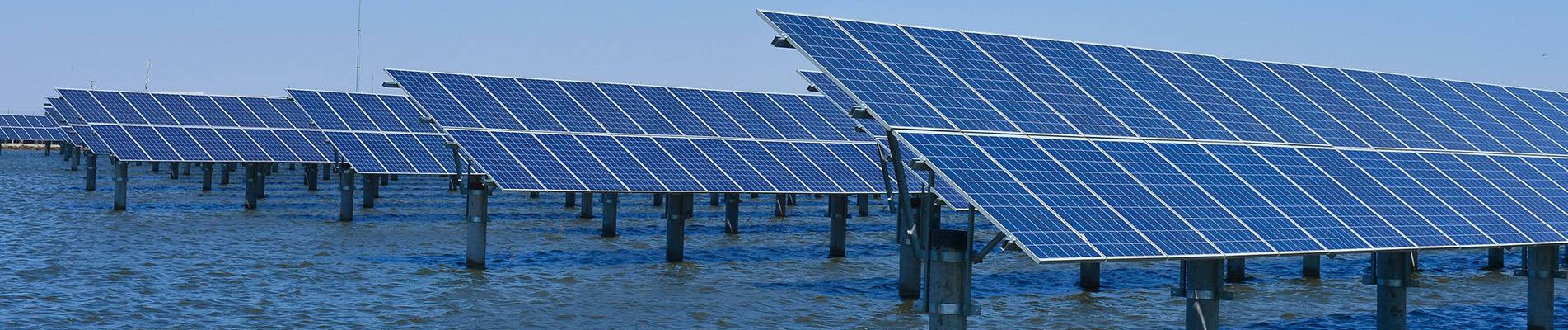

The residential photovoltaic grid-connected system is a solar power generation system that is connected to the local public power grid. The system captures sunlight through solar panels installed on the roof or in the courtyard. It converts solar energy into direct current using the photovoltaic effect, and then the inverter converts it into alternating current that is compatible with household appliances and the power grid.

Product Description
The Residential PV Grid-connection System is optimized for household and agricultural scenarios and ADAPTS to complex power grids through an ultra-wide voltage range and automatic voltage regulation technology. It is equipped with standard anti-backflow protection and multi-protocol communication interfaces. The optional AFCl arc protection significantly enhances safety. The ready-to-use design meets the grid connection requirements of clean energy in scenarios such as family rooftops, greenhouses, and fish ponds.
Unlike off-grid systems that operate independently and rely on battery energy storage, grid-connected systems view the power grid as an extended energy storage mechanism. When the photovoltaic power generation exceeds the household electricity demand, the excess electricity can be transmitted to the grid; when the power generation is insufficient (such as at night or on cloudy days), the household can draw electricity from the grid to supplement. This two-way energy flow mode makes the residential photovoltaic grid-connected system the most widely used type in the current distributed photovoltaic field.
The typical residential grid-connected system usually has an installed capacity ranging from 3kW to 25kW, and is connected to the public grid or the user's grid at a voltage level of 220V or 380V.
Core technical characteristics
• Ultra-low starting voltage & ultra-wide voltage range: Adapt to complex power grid environments and enhance power generation efficiency.
• Intelligent anti-backflow function: Complies with grid connection safety standards and prevents current backflow.
• Multiple communication interfaces: Supports RS485/Wi-Fi/GPRS remote monitoring (choose one configuration among the three).
• Automatic voltage stabilization technology: Real-time adaptation to grid fluctuations to ensure stable operation.
• Fire safety upgrade: Built-in AFCl arc protection (optional function), reducing fire risk by 99%.
• onvenient installation and maintenance: The modular design simplifies the operation process.
Safety protection system
• Output overload protection
• Multi-level parameter protection of battery (supporting password lock)
• Automatic protection mechanisms such as abnormal temperature
Parameters
| System power | 3.6KW | 6KW | 10KW | 15KW | 20KW | 30KW |
| Solar panel power | 450W | 430W | 420W | |||
| Number of solar panels | 8 PCS | 14 PCS | 24 PCS | 36 PCS | 48 PCS | 72 PCS |
| Photovoltaic DC cable | 1 SET | |||||
| MC4 connector | 1 SET | |||||
| Rated output power of inverter | 3KW | 5KW | 8KW | 12KW | 17KW | 25KW |
| Maximum output apparent power | 3.3KVA | 5.5KVA | 8.8KVA | 13.2KVA | 18.7KVA | 27.5KVA |
| Rated grid voltage | 1/N/PE.220V | 3/N/PE,400V | ||||
| Grid voltage range | 180~276Vac | 270~480Vac | ||||
| Rated grid frequency | 50Hz | |||||
| Grid frequency range | 45~55Hz | |||||
| Maximum efficiency | 98.20% | 98.50% | ||||
| Island effect protection | YES | |||||
| DC reverse connection protection | YES | |||||
| AC short circuit protection | YES | |||||
| Leakage current protection | YES | |||||
| Protection level | IP65 | |||||
| Working temperature | -25 ~ +60°C | |||||
| Cooling method | Natural cooling | |||||
| Maximum working altitude | 4km | |||||
| Communication | 4G (optional) / WiFi (optional) | |||||
| AC output copper core cable | 1 SET | |||||
| Distribution box | 1 SET | |||||
| Auxiliary material | 1 SET | |||||
| Photovoltaic mounting type | Aluminum /Carbon steel mounting (one set) | |||||
Applicable Scenarios
▪ Residential rooftops:
Including flat concrete roofs, corrugated steel roofs, and tiled pitched roofs, these are the most typical installation scenarios for residential photovoltaics (PV). South-facing or southeast/southwest-facing roofs receive better sunlight.
▪ Villas and high-end residences:
Building-integrated photovoltaics (BIPV) or photovoltaic tiles can be used, balancing power generation with architectural aesthetics.
▪ Balconies and yards:
Homes with limited space can install lightweight PV systems on balconies; families with yards can build PV sunshades, carports, etc.
▪ Rural self-built houses:
Rural houses have ample roof space, suitable for installing larger-capacity grid-connected systems.
▪ New buildings:
Integrating distributed PV power generation equipment into building roofs, parking sheds, and other areas is encouraged.
Professional Technical Services
▶ Solution design and structural analysis:
Provide customized solution drawing, load calculation reports (including wind load/snow load/seismic force analysis) or assembly drawing.
▶ On-site survey:
Engineers conduct on-site investigations ground conditions with local soil investigation professionals.
▶ Installation training and guidance:
Provide installation videos, installation manuals and on-site installation guidance to ensure safe and complete installation.
Important Notes:
▶ Pre-installation Assessment
▪ Before installation, the roof's load-bearing capacity should be assessed to ensure it meets the load requirements of the photovoltaic system. The load-bearing capacity for flat roofs should generally not be less than 2.5 kN/m², and for pitched roofs, not less than 2.0 kN/m².
▪ Inspect the roof's orientation, slope angle, and whether there are trees or buildings obstructing the view. Obstruction will significantly affect power generation efficiency.
▪ Confirm the remaining service life of the roof should generally not be less than 10 years, and ensure proper waterproofing during installation.
▶ Grid Connection Procedures
▪ Residential photovoltaic projects require submitting a grid connection application and relevant documents (ID card, property ownership certificate or roof ownership certificate, system plan, etc.) to the local power supply company.
▪ Residential distributed photovoltaic projects for individuals can be centrally registered by the power grid company or registered by the individual themselves.
▶ Safety and Compliance
▪ Grid-connected equipment should be subject to grid dispatch management or remote control as required. Unauthorized external control interfaces should not be installed.
▪ The inverter output voltage should meet relevant standards. The power supply company may inspect the inverter parameters.
▪ Distribution boxes and other equipment should preferably be installed in public areas or non-residential rooftop areas, and should not be installed near bedrooms or living rooms.
▶ Operation and Maintenance
▪ Investors should strengthen the monitoring of the operating status of grid-connected equipment and fulfill their responsibilities for grid voltage control.
▪ System installation should be carried out by professional personnel to ensure standardized wiring and adequate lightning protection grounding.
Summary
Residential grid-connected photovoltaic (PV) systems are a home energy solution that combines solar power generation with the public power grid. The system consists of core components such as photovoltaic modules, grid-connected inverters, mounting systems, and power metering devices, enabling a "self-consumption with surplus power fed into the grid" energy management model. Compared to off-grid systems, grid-connected systems do not require battery storage, resulting in lower initial investment, while the grid provides a supplementary guarantee for continuous power supply.

Photovoltaic communication base stations refer to a new type of infrastructure that uses solar photovoltaic power generation to provide all or part of the power for communication equipment (such as 4G and 5G base stations). Against the backdrop of the dual goals of "carbon peaking" (i.e., carbon neutrality) and the high energy consumption of 5G networks, it is becoming a key path for the green transformation of the communications industry.
Read More
 en
en fr
fr de
de zh-CN
zh-CN ru
ru es
es pt
pt ja
ja ko
ko ar
ar